Exploring Seosan Haemi Eupseong: A Historical Gem


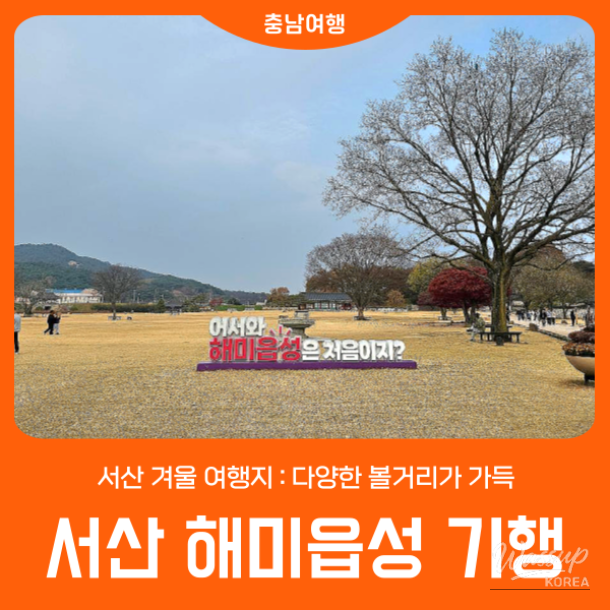
One of the three major fortress towns of the Joseon Dynasty, Seosan Haemi Eupseong is located at 491 Eumnae-ri, Haemi-myeon, Seosan, Chungcheongnam-do.
Recognized as the best-preserved fortress among Haemi, Nagaan, and Gochang, it was designated as Historic Site No. 116 on January 21, 1963. The fortress walls stretch an impressive 1500 meters in length and rise to a height of 5 meters, encompassing an area of 196,381 square meters.
The name 'Haemi' originates from the combination of Jeonghaehyeon and Yeomihyeon in 1407, which was moved from the current area of Deoksan-myeon in Yesan-gun.
Visitors can engage in various traditional games near the Ok-sa, such as Tuho, Yutnori, Jegichagi, and rolling hoops.
A kite-selling booth is also available, and on the day we visited, there was a national kite-flying competition held the previous day, marking its 9th year. It looked like a lot of fun, so I encourage anyone who missed it this year to visit next year!

On the west side, there is a traditional archery experience area. Although I missed out due to strong winds on my visit, it costs 4,000 won for ten shots. There are also experiences available for traditional clothing, and next to the management office, you can find a horse carriage ride, which costs 40,000 won for a family of four.
As you walk along the main road from the south gate, various military artifacts are displayed, including Daegunghwa, Byeoldae Wangu, and Bullanggi.
Inside the fortress, you can find the Ok-sa, where soldiers once guarded prisoners from 1790 for over a century. The current structure was restored in 2005 based on records from 1935. You can learn about the punishments of the Joseon era and even take photos as if you were a prisoner.
In front of the Ok-sa stands a large tree, a Sophora tree, designated as a natural heritage site in Chungcheongnam-do on October 21, 2024. This tree is connected to the persecution of Catholic believers during the late Joseon period.
We also explored the Dongheon, the administrative office for the military governor and local magistrate, where general administrative tasks and trials were conducted. The landscape surrounding Dongheon features beautiful red maple trees to the west and yellow ginkgo trees to the east, creating a picturesque scene for photography.
After passing through Dongheon, we entered the Nae-a, the residence for the officials and their families, which was restored in November 2000.
We then climbed 108 stone steps to reach Cheongheojeong, a pavilion built by the military governor in the early Joseon period. It provides a serene atmosphere and was a place where officials practiced martial arts and composed poetry.
Walking further, we discovered a bamboo forest path that leads to the folk houses, where visitors can compare the typical homes of a low-ranking official, a merchant, and a wealthy farmer. There are also traditional wedding photo zones and a traditional tea house within the fortress.
Seosan Haemi Eupseong offers free admission, making it easy to explore both inside and outside the fortress. Nearby attractions include various cultural sites and scenic spots in Chungcheongnam-do, making it a perfect destination for a day trip.


No comments yet.