Exploring Cheongyang's Unique Parks: Alpums Park and Jangseung Park



Walking along the Jangok Stream at the foot of Mount Chilgapsan, known as the Alps of Chungcheongnam-do, you encounter two entirely different worlds side by side.
On one side, there is a modern sculpture park that expresses the beginning of life through eggs, and on the other, a traditional park filled with guardian stones called 'Jangseung' that have protected the village for generations.
Alpums Park
Alpums, named after the seven essential elements of creation and the character 'Gap' which signifies the beginning, is set against the backdrop of the 99 valleys of Mount Chilgapsan (elevation 561m). It symbolizes the source of life represented by eggs and their nests.
Opened in April 2022, Cheongyang Alpums Park is located beneath Mount Chilgapsan along the Jangok Stream.
The first thing you encounter at the entrance of Alpums Park is 'Cheongyang-i', the character of Cheongyang County. This cute figure embodies the park's concept of eggs and nature, serving as a perfect photo spot for children.
It feels like a guide saying, 'This is a space of life and nature.'
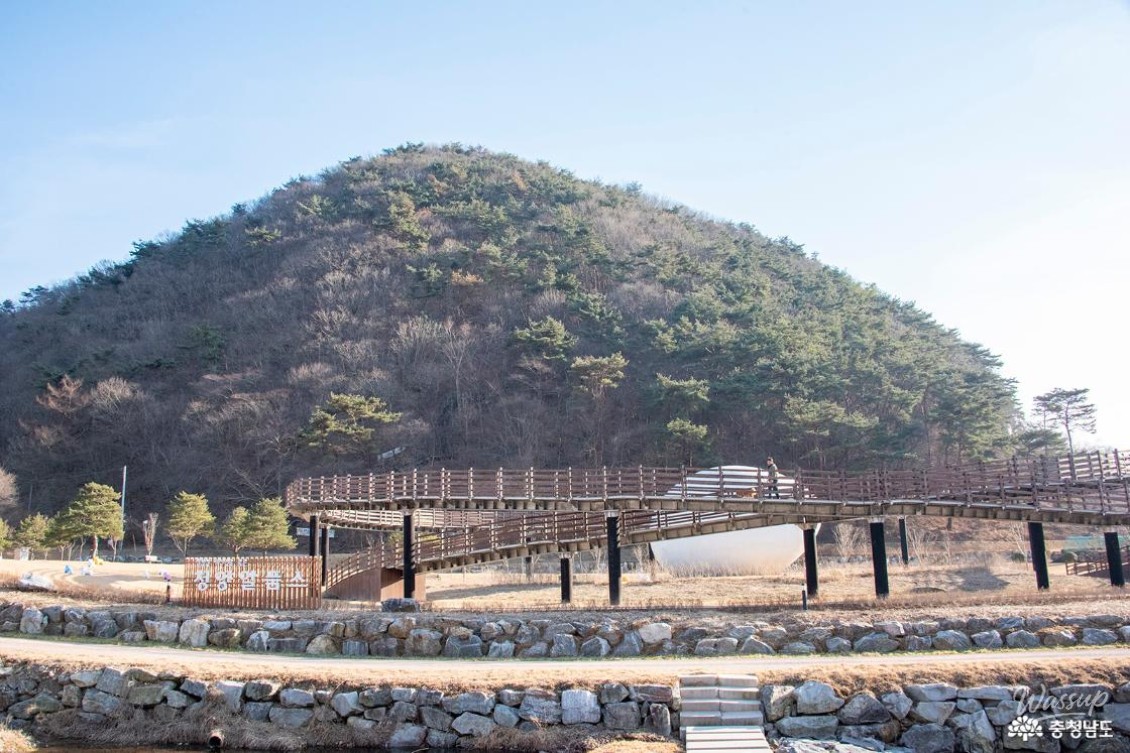
A gentle sloping walking path and sculptures come into view against the backdrop of a small mountain peak. The park harmonizes with Mount Chilgapsan, creating a picturesque landscape.
Surrounding the sloped walking path shaped like a nest are sheep sculptures grazing, allowing both children and adults to play and enjoy.
The large egg sculpture in Alpums Park, titled 'Embracing Nature!', is the park's symbolic piece.
* Dimensions: Height 11m, Width 8m, Depth 7m
* Material: Stainless steel, urethane paint
This artwork, which embodies the starting point of life, features a sloped walking path in the shape of a nest that blends beautifully with the surrounding mountains.
It is not just a simple sculpture but a 'space for rest and contemplation.'
Cheongyang Alpums Park, with its gentle grassy areas and mountainous backdrop, evokes the image of a small Swiss Alpine pasture.
The sight of sheep grazing appears leisurely, although they are sculptures rather than real sheep, placed naturally in the meadow.
The combination of eggs, nests, and sheep sculptures tells the story of 'the cycle of life.'
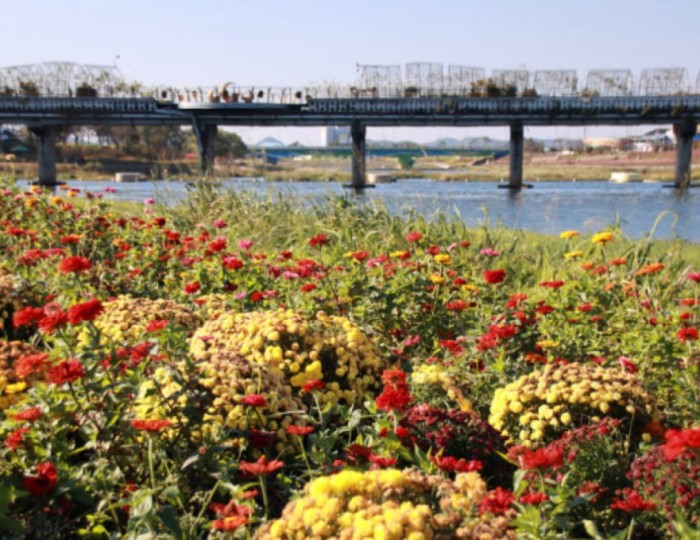
The maze garden with a flower tunnel is filled with climbing plants like bottle gourds, honeysuckle, and roses. It showcases different expressions with each season and provides shade in the summer.
There is a fountain placed between natural stones and small pine trees. However, due to winter, the fountain was not in operation.
The clear waters of Jangok Stream serve as a natural boundary connecting the two parks. Walking along the riverside path (about 500m) allows for a seamless transition from Alpums Park to Jangseung Park.
Jangseung Park
Jangseung Park was established in May 1999 during the 'Chilgapsan Jangseung Festival' to preserve the vanishing traditional culture of Jangseung, which has evolved and been distorted over time.
At the park entrance, there is a square iron structure with a sign reading 'Chilgapsan Jangseung', indicating that this is not just an exhibition space but a theme park dedicated to Jangseung culture.
It is heartwarming to see foreigners visiting the park, showcasing that traditional folk beliefs have become a cultural heritage appreciated globally.
The Jangseung figures, representing various aspects of Cheongyang, stand in line with phrases like 'General of Chilgapsan' and 'I will live in Cheongyang eating chili and goji berries'.
Their playful expressions create a friendly atmosphere.
The Jangseung lined along the walking path give the impression of a 'forest path where Jangseung are planted instead of trees,' making the walk entertaining as you read their amusing expressions.
These figures recreate the Jangseung that were traditionally used in rituals in villages around Chilgapsan, reflecting the uniqueness of villages like Ihwari, Daechiri, Nongsori, and Yongduri.
The largest Jangseung in Korea, the Cheonha Daejanggun, stands 10m tall and weighs 15 tons, while the Jihaya Janggun is also 10m tall and weighs 14 tons. Interestingly, both figures are the same height and appearance, but the female general has a hairpin, showcasing gender equality in Cheongyang.
The largest Jangseung symbolizes the hope for peace in the nation and the well-being of its residents.
Jangseung created by international artists from Canada and the USA are also displayed here, conveying the common concepts of 'guardianship' and 'marking'.
This place exhibits creations from Jangseung sculptors across the country, showcasing unique personalities and images of each artist at the annual Jangseung Culture Festival.
These works reinterpret traditional forms in a modern context, and various sotdae (wooden poles) are also displayed here.
The Central Daejanggun, Chilgapsan Daejanggun, and Rabbit Jangseung stand side by side, their playful expressions bringing smiles to visitors.
Even children can approach these figures without hesitation due to their charming appearances.
Jangseung representing the twelve zodiac animals, from rat to pig, evoke feelings of folklore and the passage of time.
You can also see stone Jangseung alongside wooden ones. The change in material alters the atmosphere, giving entirely different impressions of the same 'Jangseung'.
The stone Jangseung express the virtue of women in the past who were told to 'not see, hear, or speak.' Although this meaning has faded today, it seems to impart a different lesson in our current era filled with misinformation.
These two parks in Cheongyang go beyond mere attractions; they are spaces where modern sculpture art and past folk beliefs converse in neighboring areas. Experiencing the imagery of life at Alpums Park and the hopes and beliefs of ancient people at Jangseung Park transforms travel into 'walking through time.'
Both parks, along with the Jangok area, which includes the Baekje Cultural Experience Center and Jangoksaji Temple, are becoming key regions for tourism in Cheongyang.




Source :https://blog.naver.com/sinmunman/224197280296
No comments yet.