Discovering the Charm of Jincheon Hyanggyo: A Center of Confucian Tradition
- Place
- Jincheon Hyanggyo
- Region
- Jincheon-gun, Chungcheongbuk-do
- Address
- 30, Munhwa 5-gil, Jincheon-eup, Jincheon-gun, Chungcheongbuk-do
- Original source
- blog.naver.com



Jincheon Hyanggyo, located in Jincheon-gun, is a traditional Confucian school and shrine offering free admission and convenient parking, making it easily accessible. Visitors can appreciate traditional architecture and historical significance at a glance, including the Hongsalmun gate, Punghwaru pavilion, Myeongnyundang lecture hall, and Daeseongjeon shrine. It's an excellent place for those who want to stroll in a tranquil atmosphere and experience the characteristics of Korean Hyanggyo and Confucian traditions.
Jincheon Hyanggyo is located at 30, Munhwa 5-gil, Jincheon-eup, Jincheon-gun, Chungcheongbuk-do. Parking is available, and admission is free.
The Hongsalmun gate, erected at the entrance of the Hyanggyo, is a traditional Korean structure consisting of red pillars and horizontal beams. It generally marks the entrance to sacred or important places, emphasizing sanctity and reverence while asking visitors to show respect.
At the entrance, information about the role and layout of Hyanggyo, as well as the history and floor plan of Jincheon Hyanggyo, is provided. Those interested can easily understand the structure and historical significance through detailed explanations.
Visiting Jincheon Hyanggyo also allows you to see the Gongdeokbi (merit stele) and Jonseongbi (Confucian scripture recitation stele) erected at the entrance. The Gongdeokbi commemorates the achievements of those who contributed to the Hyanggyo, while the Jonseongbi commemorates the recitation of Confucian scriptures. These are symbolic structures that allow you to feel the history and tradition of the Hyanggyo.
Passing through the Hongsalmun gate, the first building you see is Punghwaru. This pavilion serves as the main gate of the Hyanggyo and was built in the form of a multi-tiered structure in the 4th year of King Sunjo's reign. To this day, it remains a symbolic building that showcases the dignity and tradition of the Hyanggyo. The first floor was used as a gate for entry, while the second floor was a pavilion where students could go up to enjoy the surrounding scenery or write, compose poems, and gain academic inspiration.
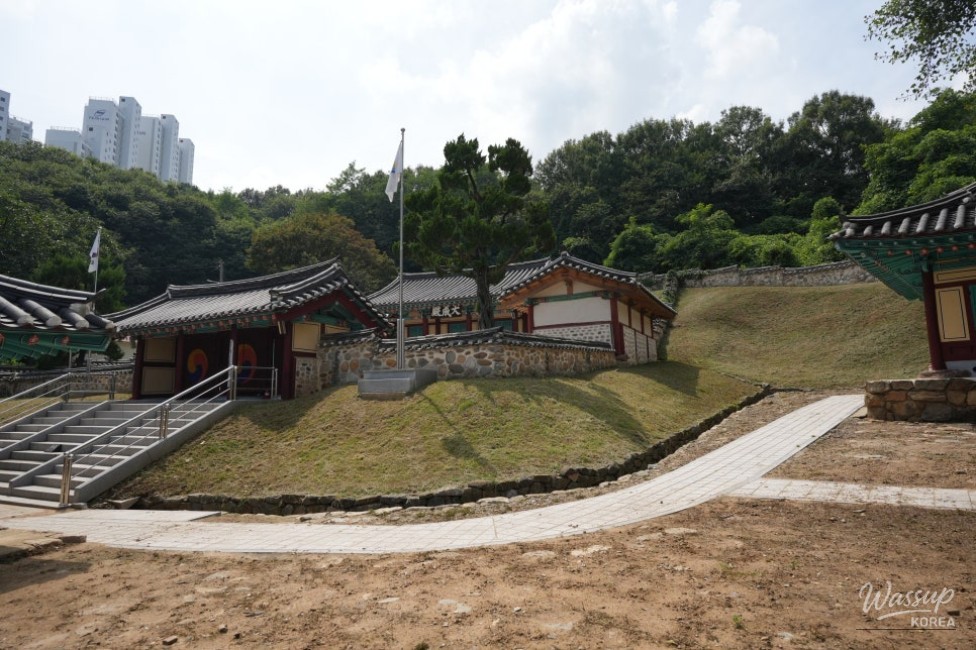
Typically, Hyanggyo have a layout with the Myeongnyundang lecture hall in the front and the Daeseongjeon shrine in the back (Jeonhak-Humyo). However, Jincheon Hyanggyo has a Seomyo-Donghak structure, with the shrine to the west and the school to the east, which is different from the typical Hyanggyo layout. This can vary depending on the slope of the terrain or the surrounding environment, and Jincheon Hyanggyo appears to have been built with a unique structure to suit these conditions.
In Jincheon Hyanggyo, the lecture hall and Myeongnyundang for Confucian education are located to the east, while the Daeseongjeon and Dongmu/Seomu shrines are located to the west. In this Daeseongjeon, ancestral tablets of Confucian sages are enshrined, and the tradition of holding memorial rites in spring and autumn continues.
However, with the introduction of the modern education system after the Gabo Reform, the educational function of Hyanggyo gradually disappeared, and now only the function of holding memorial rites at the Munmyo remains, continuing the tradition.
Jincheon Hyanggyo is a place where you can feel traditional Confucian architecture and historical significance, making it a great place to visit for those who want to understand the characteristics of Korean Hyanggyo. Passing through the Hongsalmun gate, you can see symbolic structures such as Punghwaru, Gongdeokbi, and Jonseongbi, and you can get a glimpse of the traditions of education and memorial rites through the Myeongnyundang and Daeseongjeon, which have a Seomyo-Donghak layout. Admission is free and parking is convenient, making it easy to visit, and it is also a good place to take a walk while learning about history and culture in a tranquil atmosphere.




Source :https://blog.naver.com/jincheongun/224088585849
More from Travel



No comments yet.