An Inspiring Journey to Kim Hong-sin Literary Museum


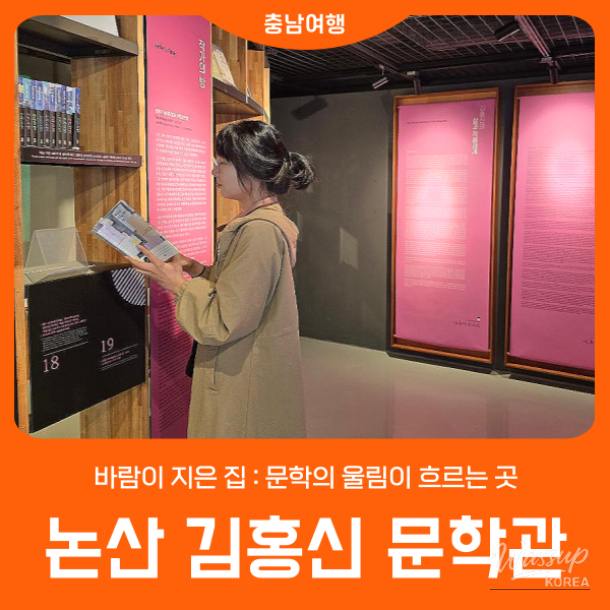
Hello! Today, I would like to share my inspiring journey to the Kim Hong-sin Literary Museum, a special cultural space located in Nonsan, Chungcheongnam-do.
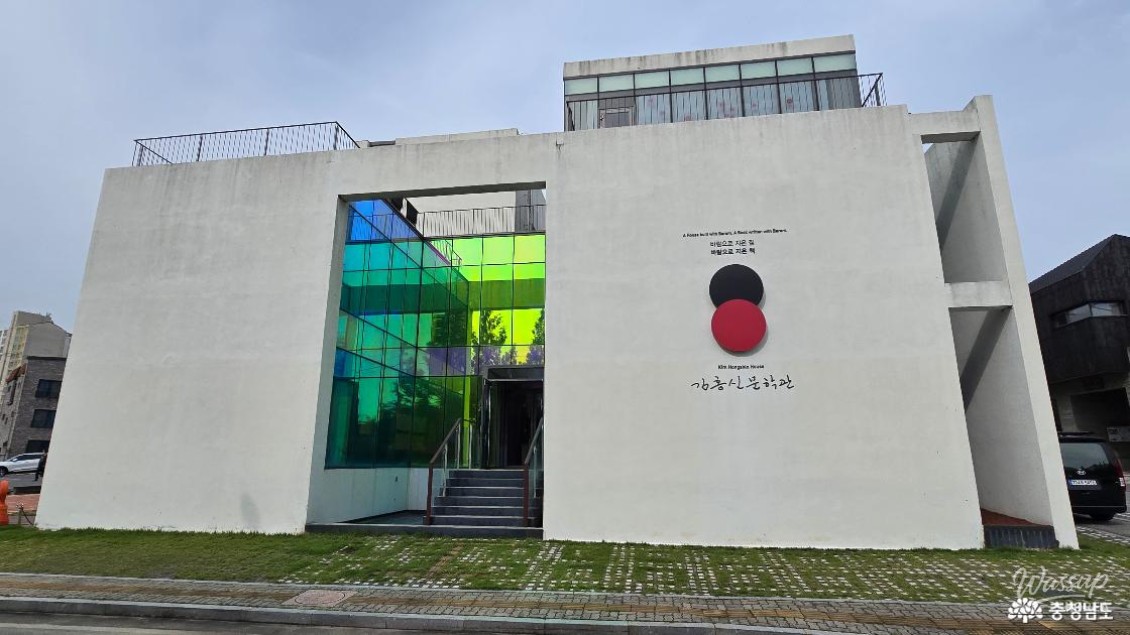
▲ Overview of Kim Hong-sin Literary Museum.
This place is more than just an exhibition of a single author's achievements; it embodies the literary spirit of a master who made significant contributions to Korean literature and the warm stories created by the friendship of hometown seniors and juniors. It was a sensory exploration that satisfied all five senses, allowing us to enjoy the deep resonance of literature, artistic spatial beauty, and engaging experiences.
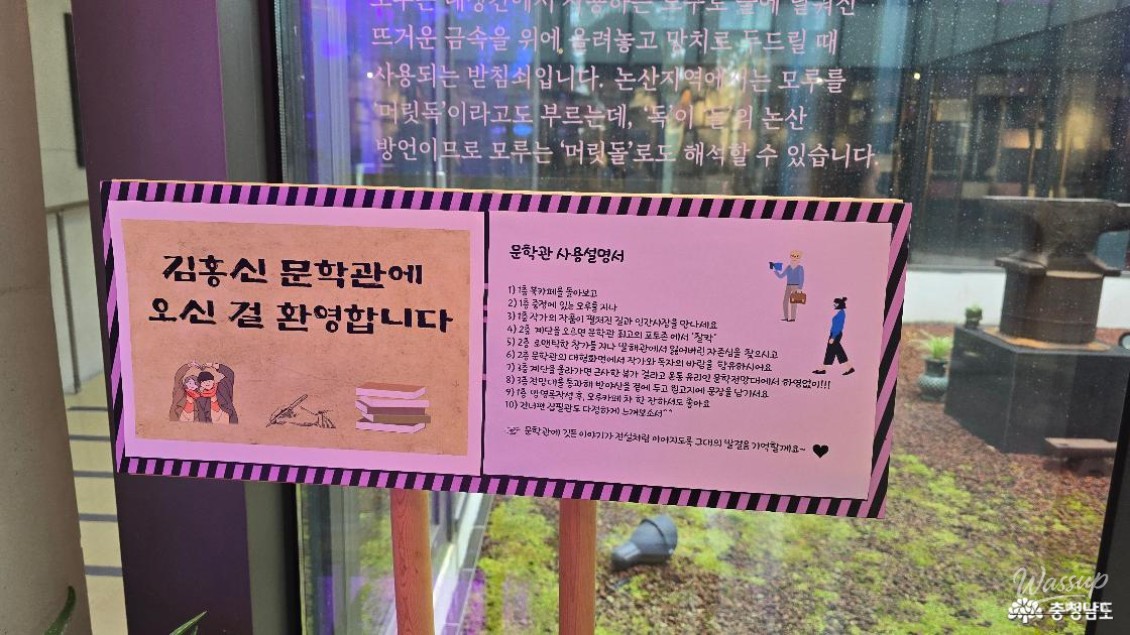
▲ Instruction sign for Kim Hong-sin Literary Museum.
Kim Hong-sin, the author of the novel Human Market, which became Korea's first million-seller, has published over 136 works, continuously posing questions to our society. The establishment of this museum to honor his literary spirit and contribute to local cultural and artistic promotion holds great significance. It is particularly impressive that this museum was founded with generous support and deep affection from Chairman Nam Sang-won, a fellow hometown native.
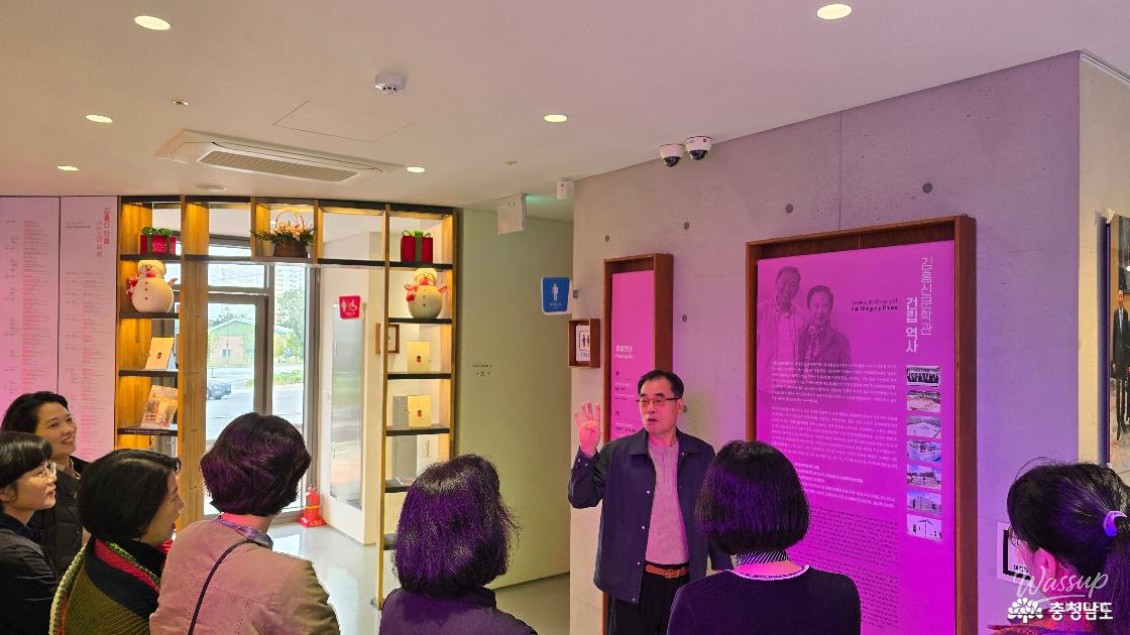
▲ Scene of a museum staff member explaining.
They established the Hong-Sang Cultural Foundation, named after the first letters of the author’s name 'Hong' and Chairman Nam’s name 'Sang', and actively promoted the museum's construction.
It felt as if the warm emotions of friendship and love between hometown seniors and juniors were the foundation of this space, making the museum resonate with warmth.
Construction began in the summer of 2018, and it opened in June of the following year with a meaningful exhibition titled 'A House Built by the Wind, A Book Written by the Wind'.
▲ Buildings within Kim Hong-sin Literary Museum.
True to its nickname 'A House Built by the Wind', the museum's architecture feels like a work of art. The design allows natural light and wind to flow horizontally and vertically, creating an organic connection throughout the building, reflecting the meaning and aspiration of 'wind', a key motif of the author.
▲ Overview of the museum's office.
I truly enjoyed the deep appreciation of literary works and the beautifully designed photo zones scattered throughout the museum!
From the exterior of the museum to the internal stairs and cozy sunlight-filled resting areas, every spot was sophisticated and beautiful enough to capture 'life photos'.
▲ Taking photos inside the museum.
Especially, I was able to take many memorable photos by the windows where light streamed in beautifully and in front of walls inscribed with the author's powerful quotes. The architectural beauty enriched my visit to the museum, creating wonderful memories.
▲ Photo taken in the library.
The museum comprises a writing hall of 394.53㎡ and a literary museum of 1210㎡.
Within the museum, there is a permanent exhibition hall where visitors can view the author's life at a glance and various themed planning/special exhibition halls.
The space displaying the author's works creates a spectacular sight rarely seen in other literary museums.
▲ Space exhibiting the author's works.
Particularly, the original manuscripts and first editions of the author's representative work, Human Market, along with exhibits that vividly capture the intense historical background, left a deep impression.
The numerous books seemed to eloquently express how intensely Kim Hong-sin has contemplated and documented our era.
▲ Exhibition hall inside the museum.
There is also a multipurpose room open to visitors and a cozy café with warm wooden interiors, perfect for enjoying quiet contemplation with a book.
Next to the museum, the writing hall, built in a unique architectural style, consists of the author's actual writing room and residency creative space.
It was exciting to know that Kim Hong-sin is still engaged in writing here, allowing us to indirectly feel the energy of creativity.
▲ Overview of the writing hall.
One of the most memorable experiences during my visit to the Kim Hong-sin Literary Museum was being able to strike the 'jing' (a traditional Korean gong)!
The museum houses the magnificent 'Taejing', the largest gong in Korea, donated for special events and citizen experiences.
▲ Space to strike the gong.
Holding the heavy mallet and striking the gong produced a deep, resonant sound that enveloped my whole body.
The simple act of striking the gong added special meaning to the experience, making it truly enjoyable and memorable.
I appreciated the museum's effort to provide such unique cultural experiences to the public.
▲ Two-circle logo of Kim Hong-sin Literary Museum.
Throughout my exploration of the museum, I was curious about the logo consisting of two circles in black and red.
A staff member kindly explained that the logo symbolizes 'mixing a drop of ink with a drop of one's blood to write'.
This logo represents the literary spirit of Kim Hong-sin, who pours his struggles and soul into his writing, which I found very meaningful.
▲ Taking a commemorative photo in front of the gong.
The Kim Hong-sin Literary Museum is located at 146-23 Jungang-ro, Nonsan, Chungcheongnam-do.
How about visiting this place, where the beautiful friendship between hometown seniors and juniors and the passionate literary spirit of the author come alive? You can capture 'life shots' against the backdrop of stunning architecture and experience the grand resonance of the gong while feeling the deep echoes of literature.
▲ Kim Hong-sin Literary Museum
○ Address: 146-23 Jungang-ro, Nonsan, Chungcheongnam-do
○ Admission Fee: Free
○ Operating Hours: 09:00 AM - 05:00 PM

No comments yet.