A Thousand Years of History: Autumn at Yeongtap Temple in Dangjin
- Place
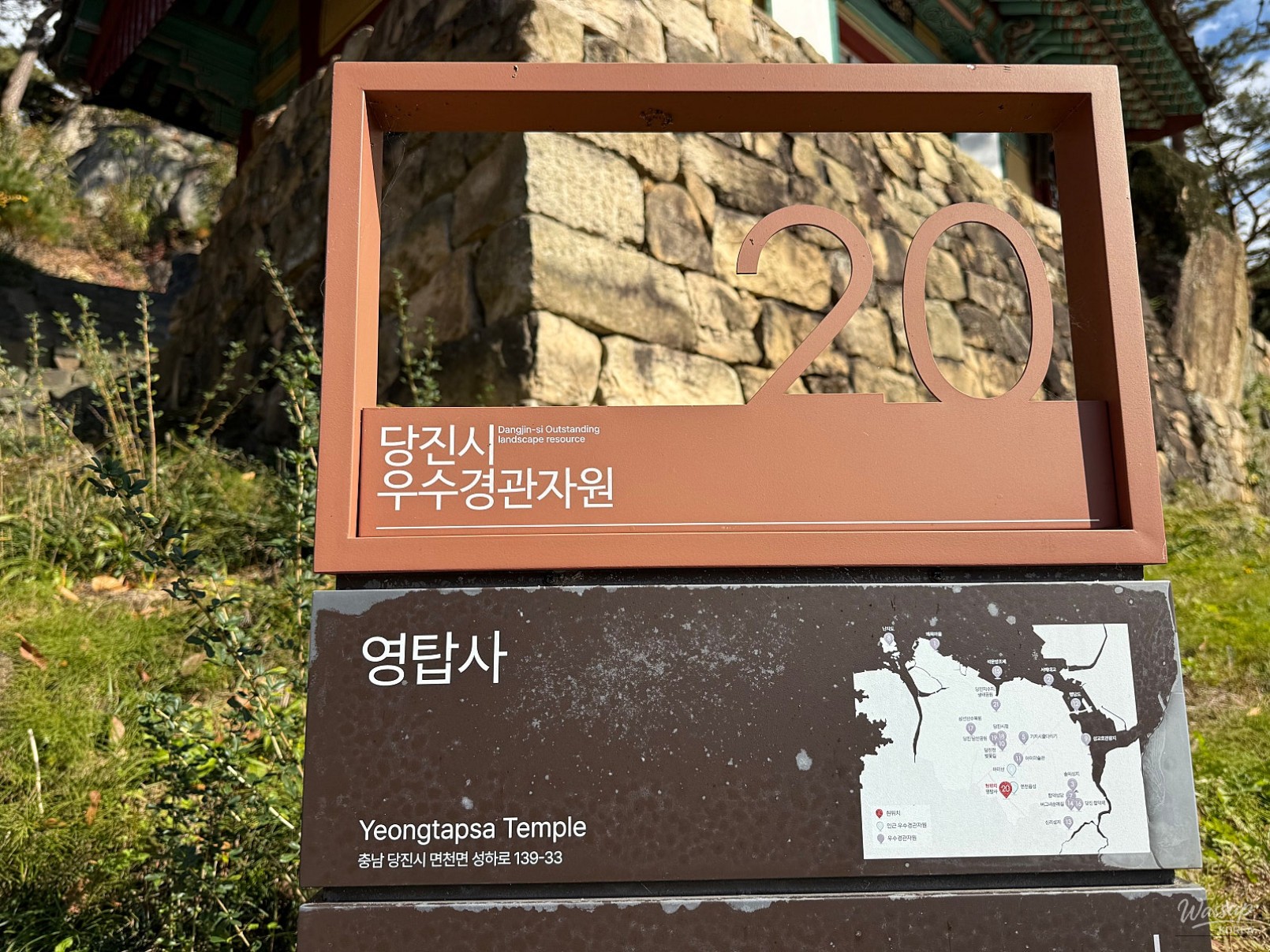
- Yeongtap Temple
- Region
- Chungcheongnam-do
- Address
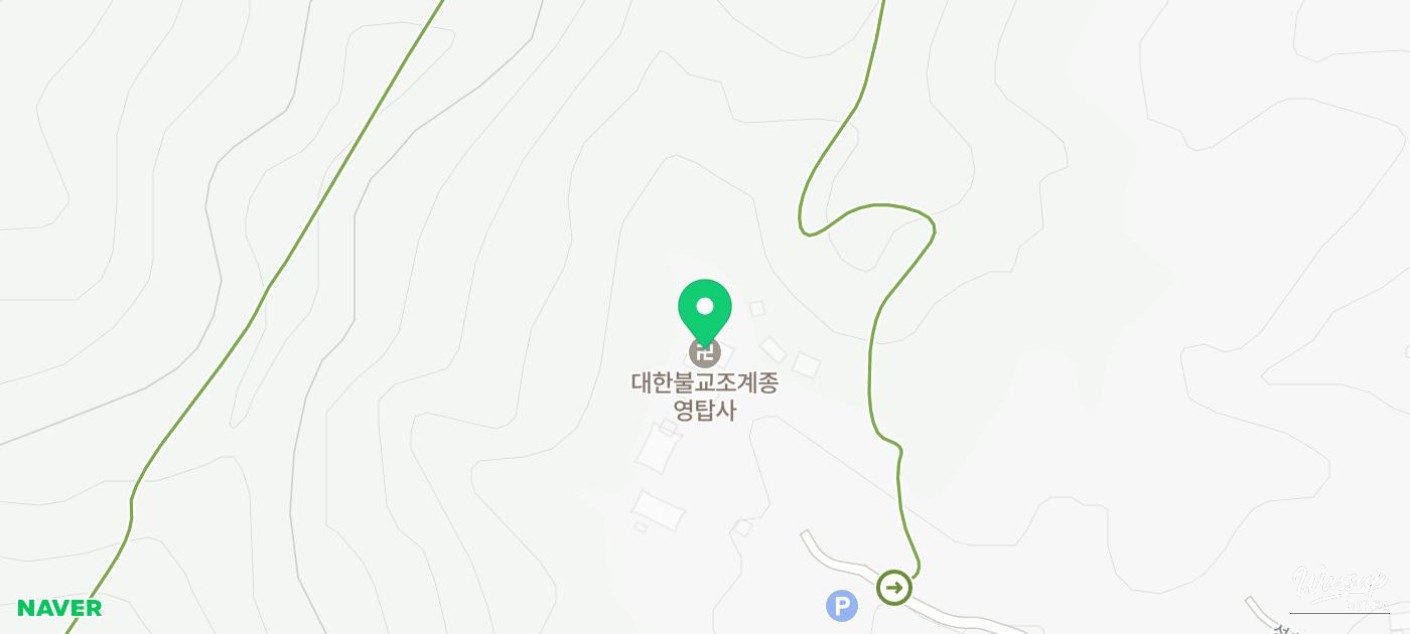
- 충청남도 당진시 면천면 성하로 139-33
- Coordinates
- 36.8107596824469, 126.650436691952
- Original source
- blog.naver.com


Wondering how to enjoy autumn in Dangjin, I visited Yeongtap Temple, a place where a thousand years of history lies dormant. Located in Myeoncheon-myeon, Dangjin, Yeongtap Temple is an ancient temple said to have been founded by State Preceptor Doseon during the late Unified Silla period.
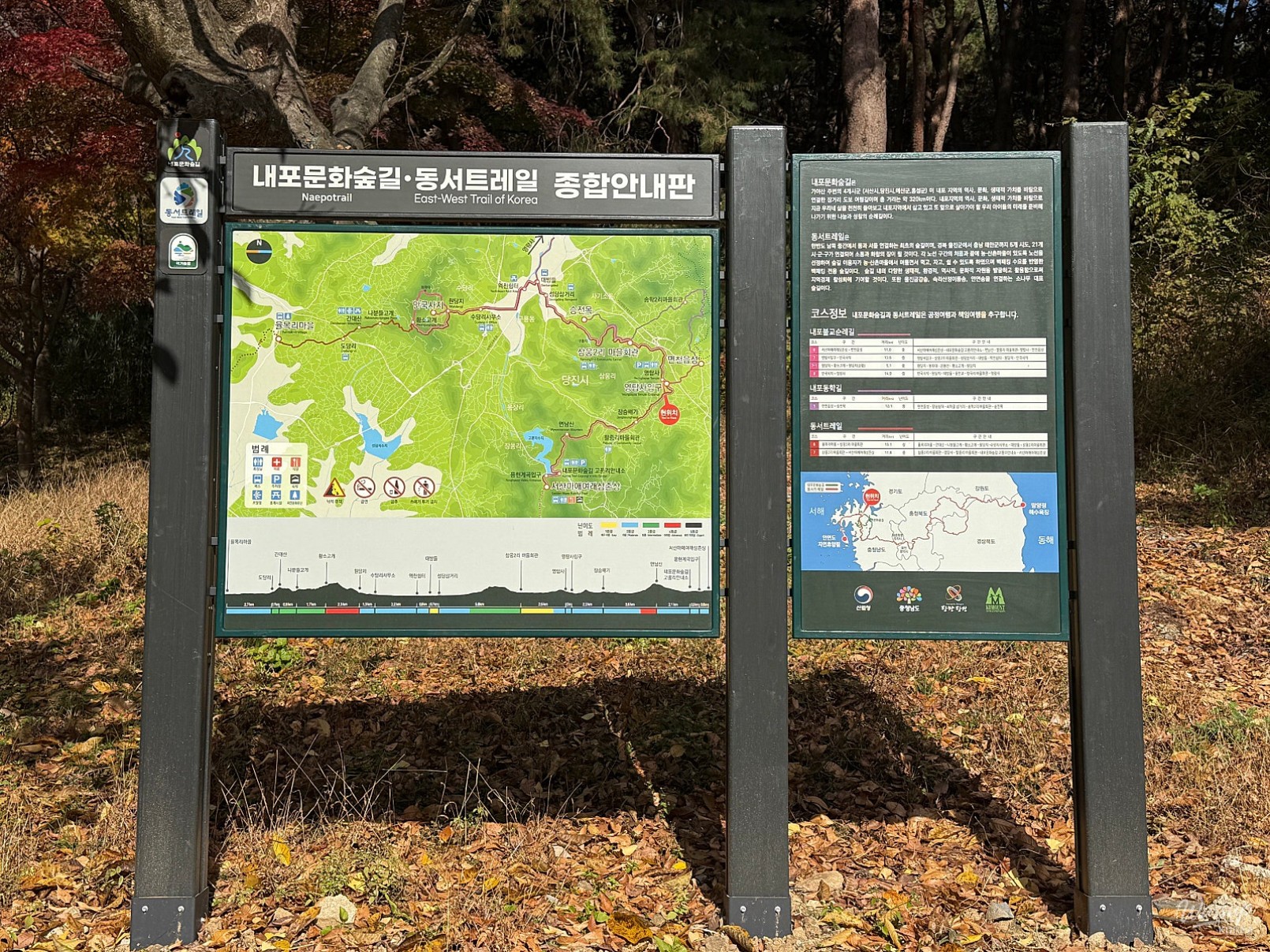
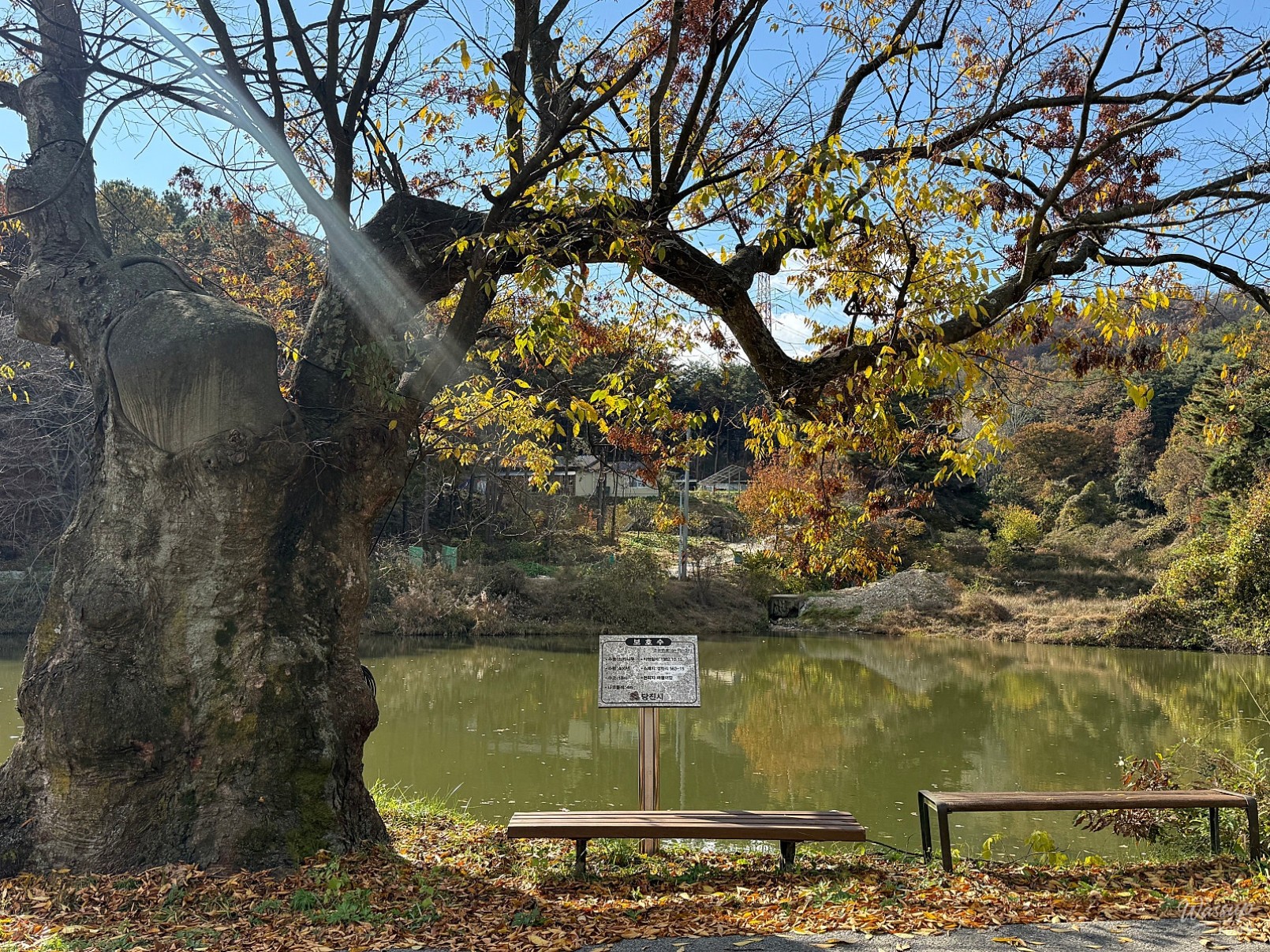
The Naepo Cultural Forest Trail passes by the temple, and an aged tree stands like a gate at the entrance, welcoming visitors. As autumn deepens, the colorful foliage adds to the temple's enchanting scenery.
Yeongtap Temple underwent renovations and reconstructions over several eras after being initially restored by State Preceptor Jinul during the late Goryeo period. The buildings were reorganized in the late 18th and early to late 20th centuries. The whereabouts of the Sinjungdo painting, which had disappeared during the Yaksa-jeon repair work in the 1980s, were recently confirmed, and it has finally returned after a long time.
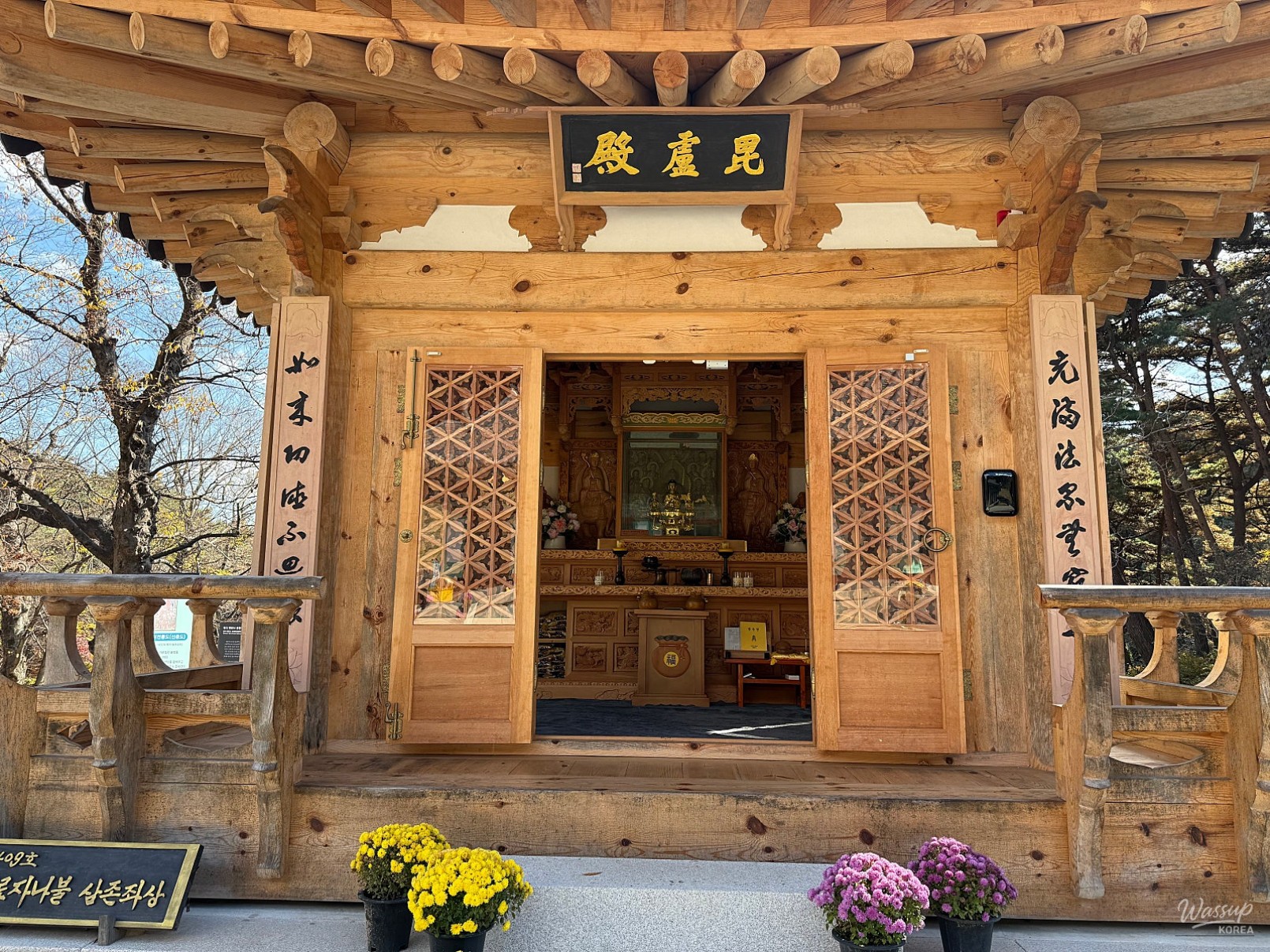
One of the reasons for visiting Yeongtap Temple is that it houses four of Korea's National Heritage items. In particular, the Sinjungdo is a Buddhist painting from the late Joseon period depicting guardian deities centered around Jesokcheon (Indra).
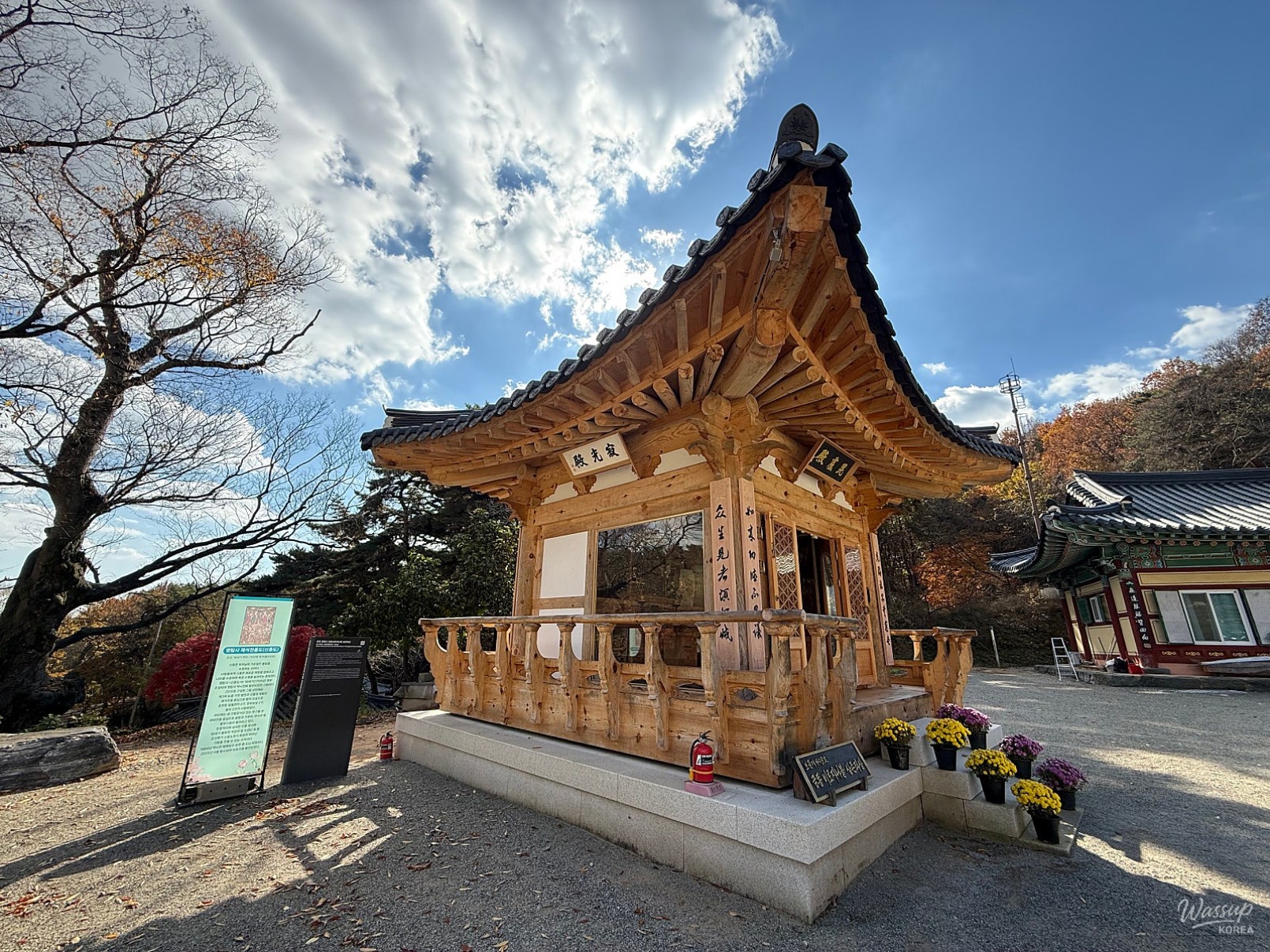
It was once enshrined in the Yaksa-jeon Hall but was lost during the renovation process. After a lengthy investigation and consultation, it returned to Yeongtap Temple after 41 years.
After the restoration process, it was enshrined in the newly built Biro-jeon Hall, where you can see it along with the gilt-bronze Vairocana Buddha Triad, which is designated as a treasure.
Sinjung are considered beings that protect Buddhism, and have traditionally symbolized the prevention of disasters and the prayer for peace.
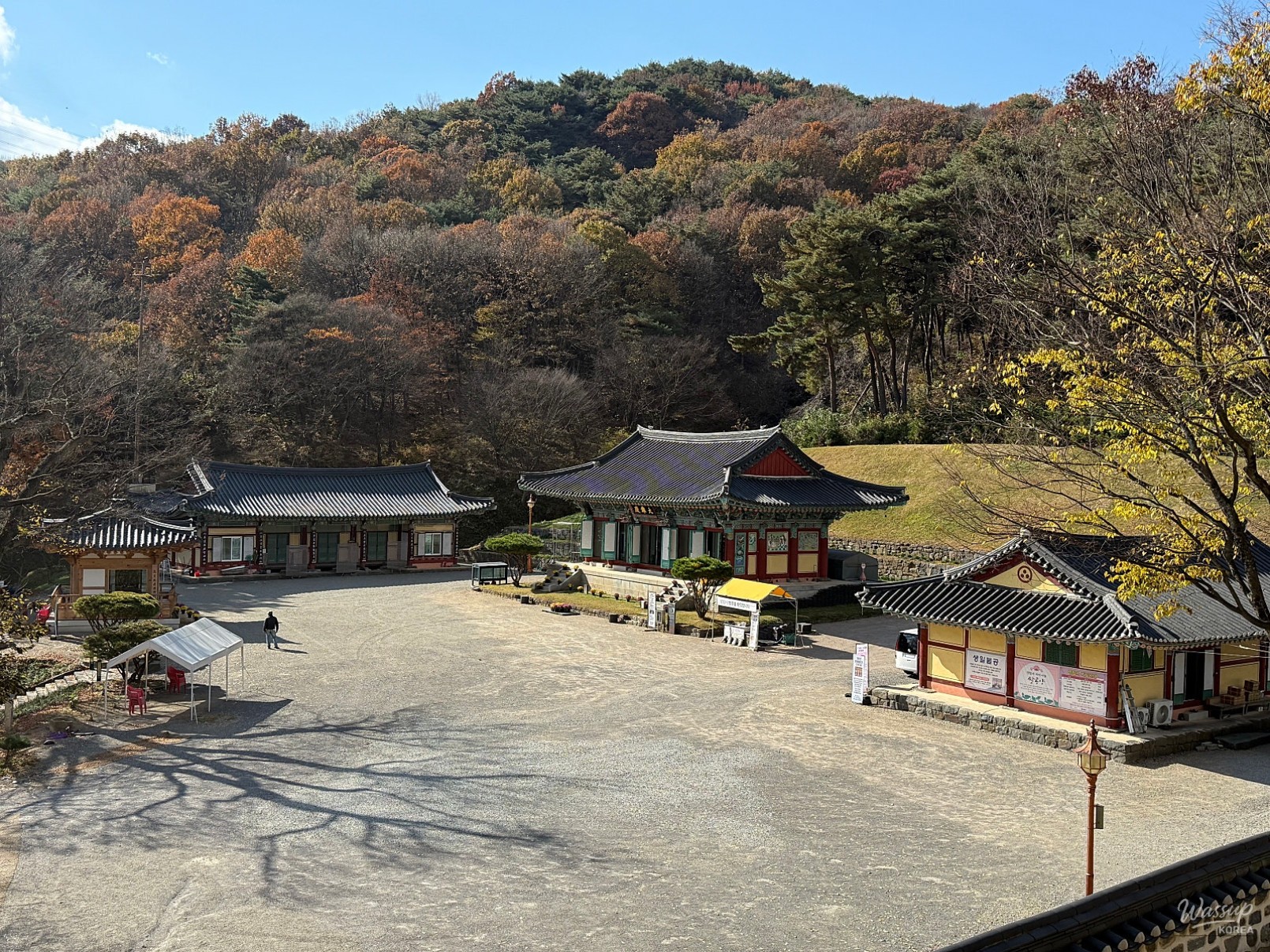
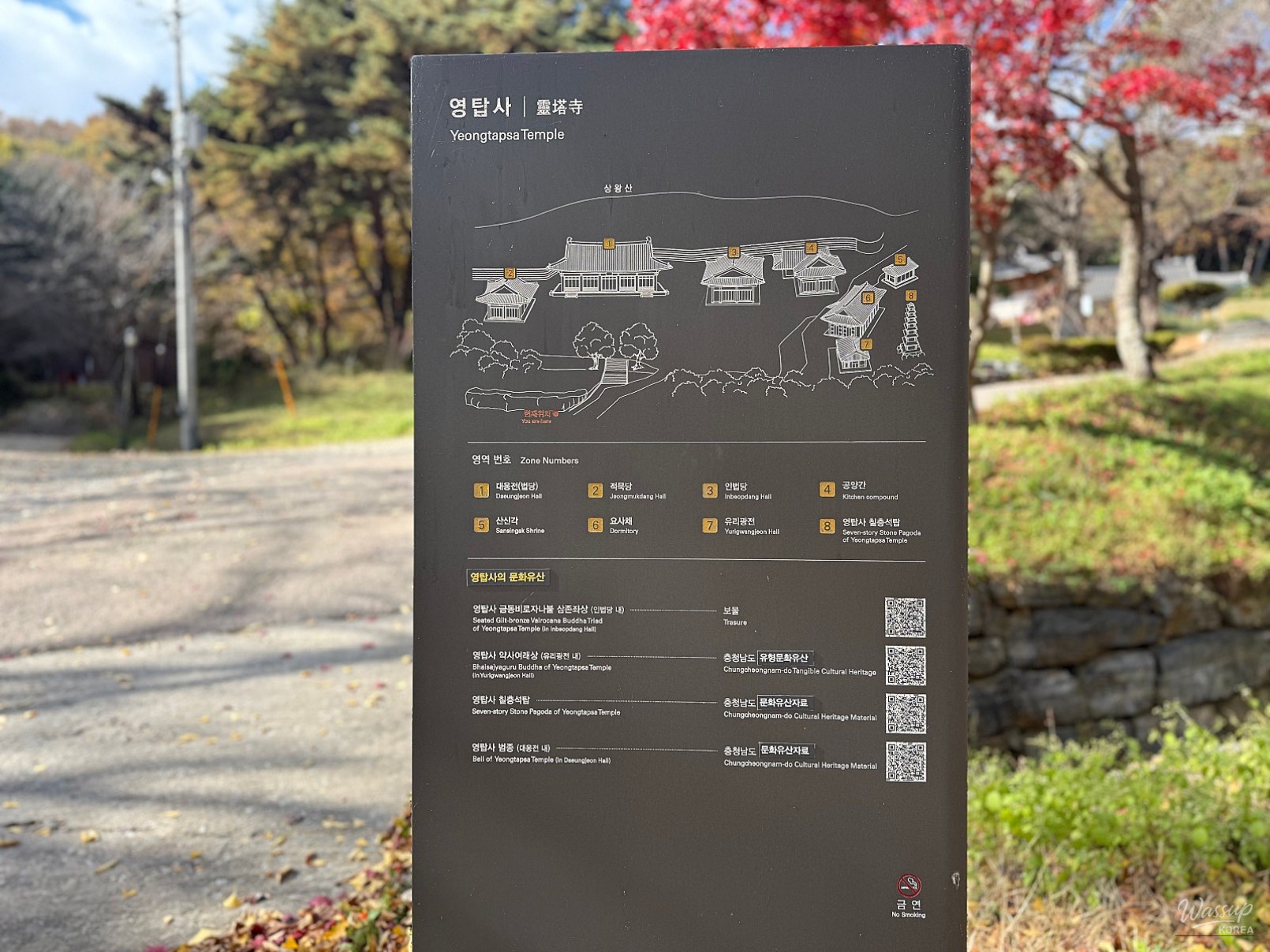
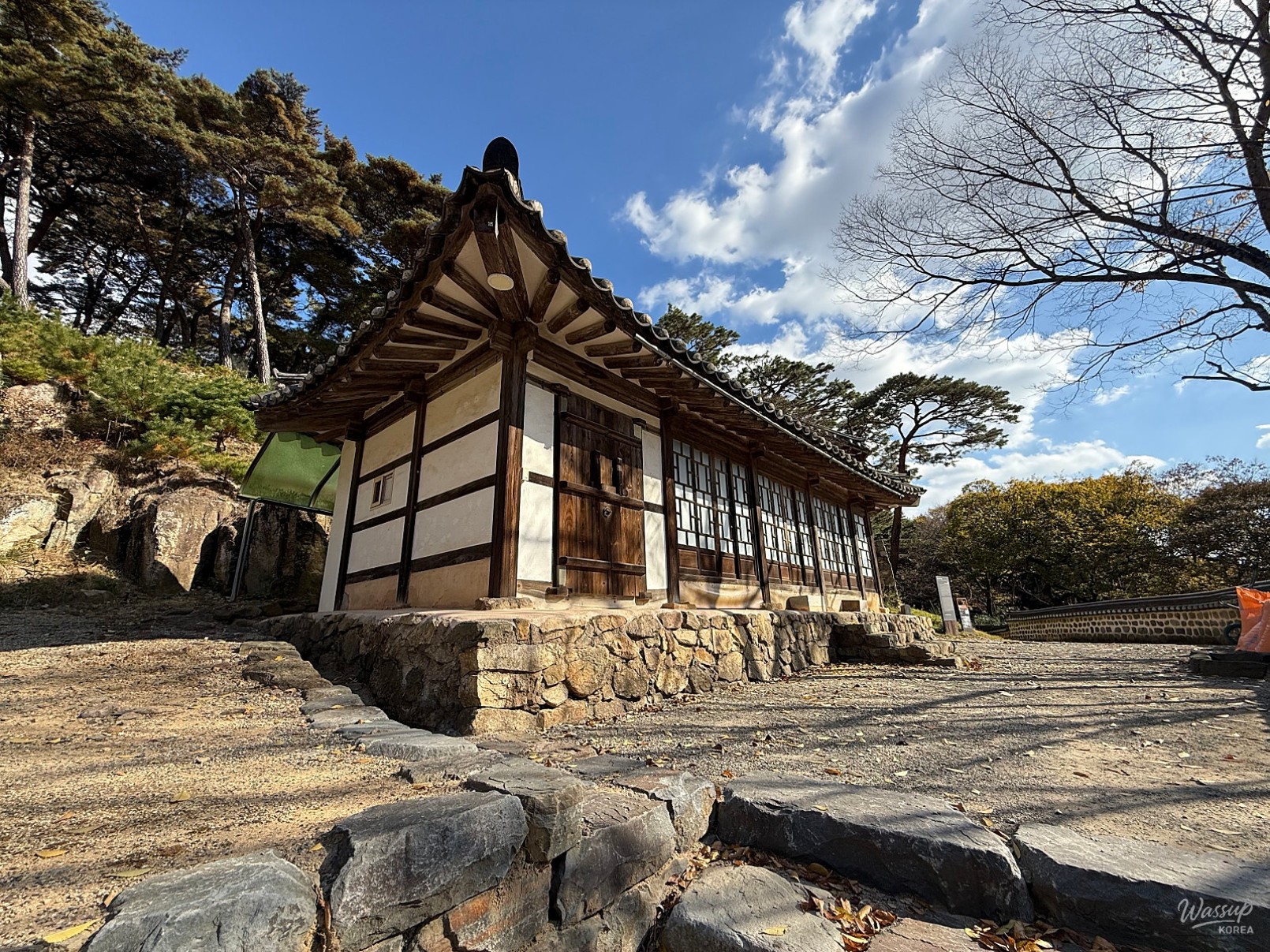
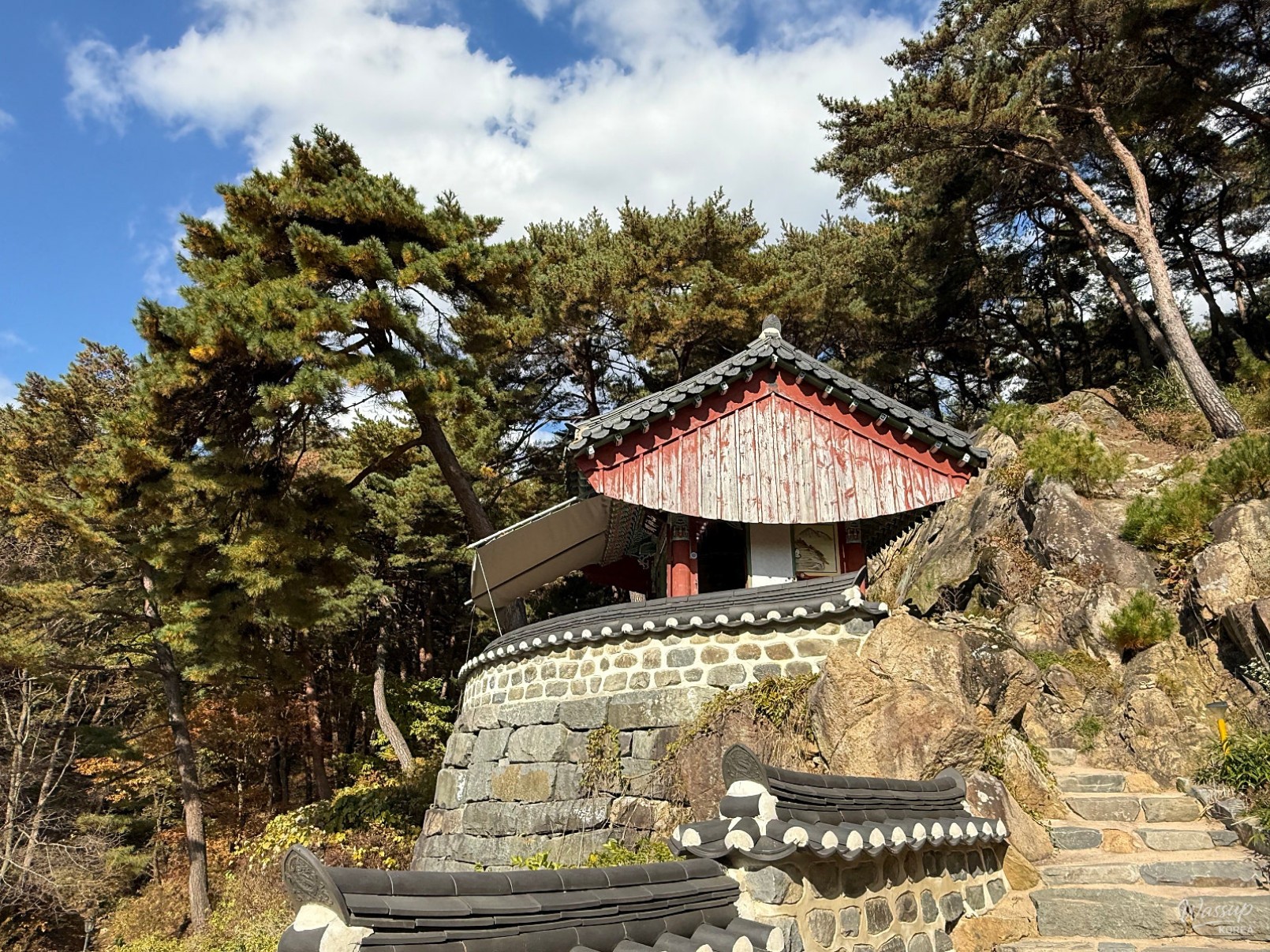
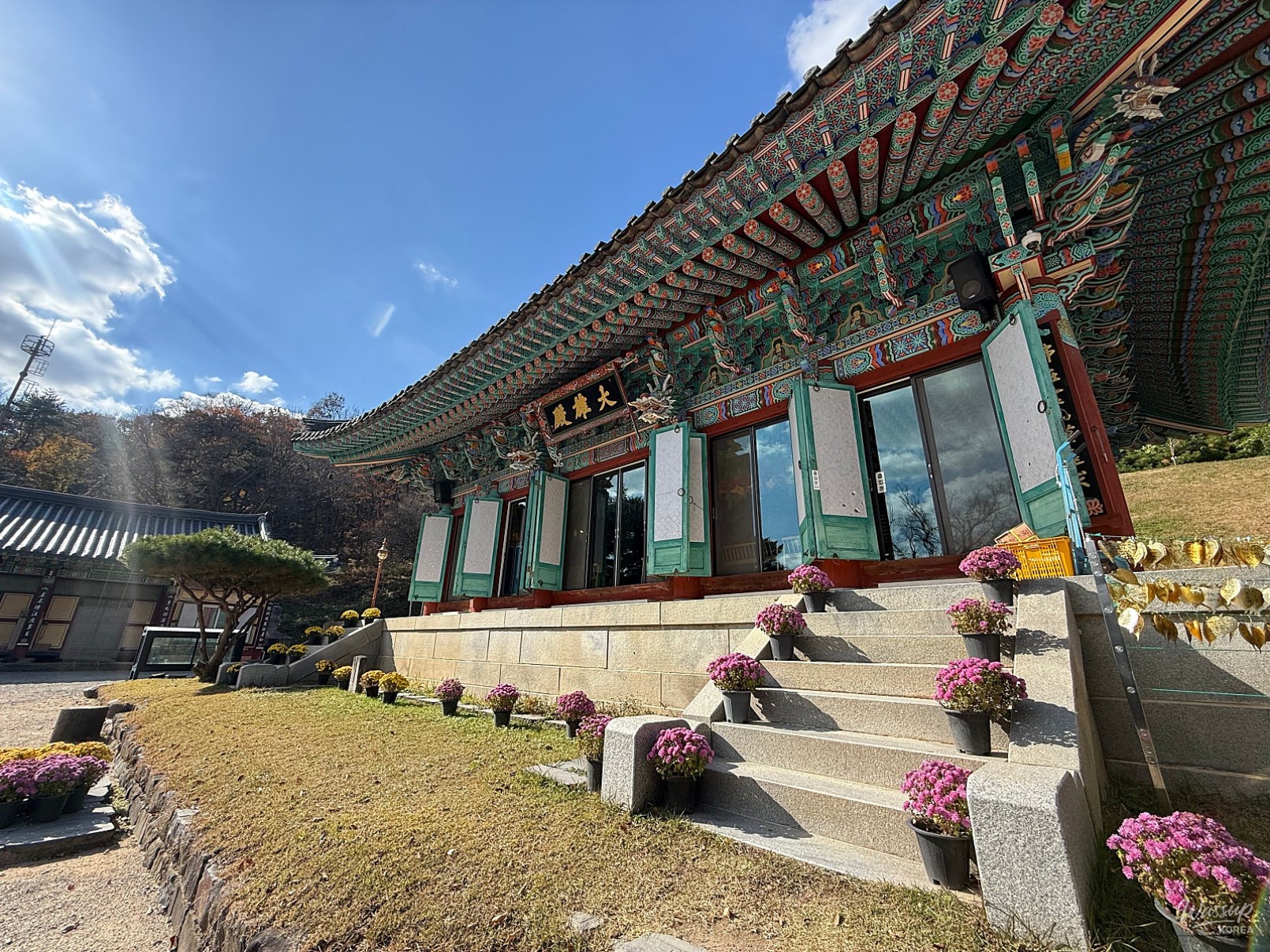
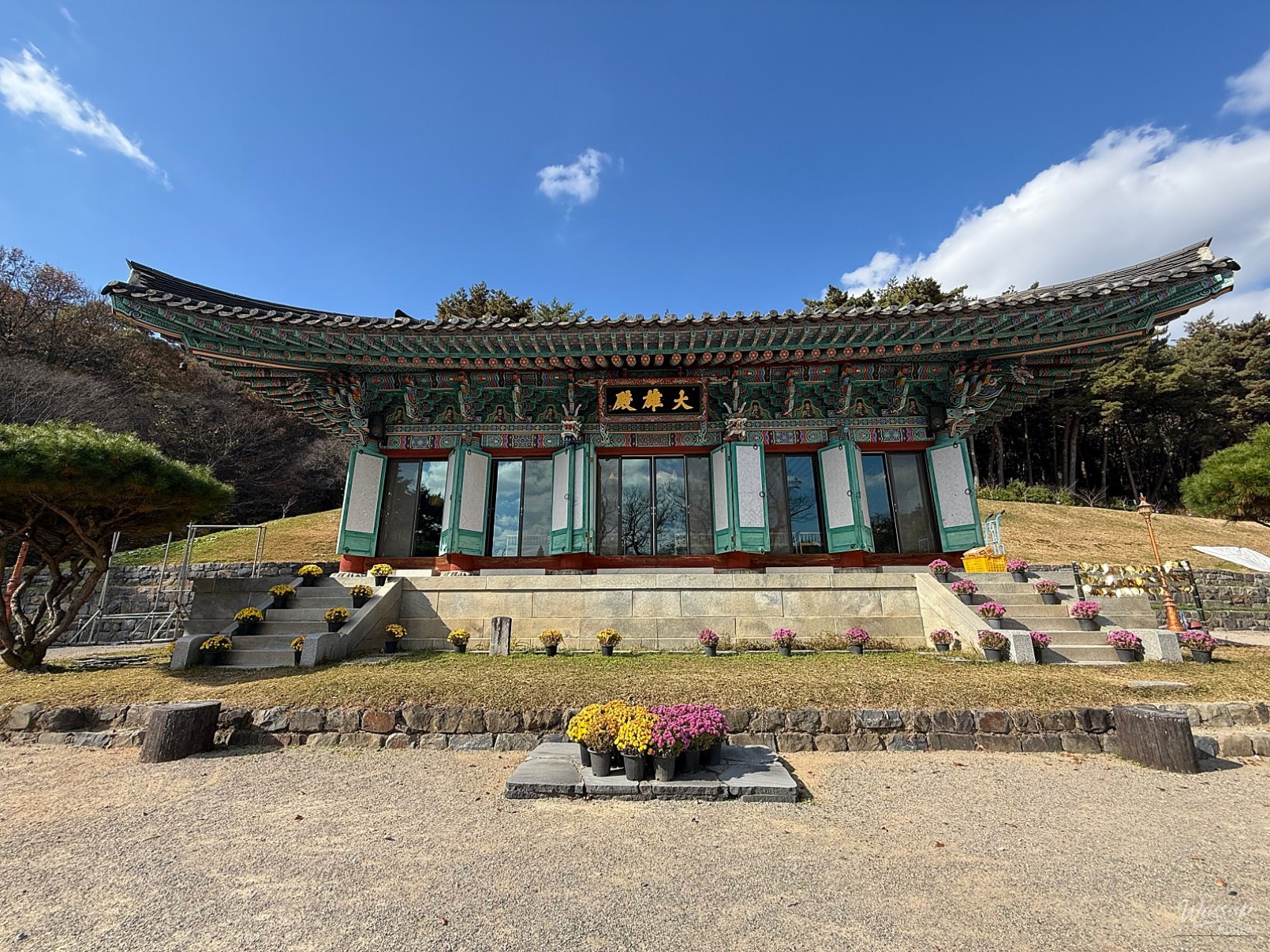
In addition to the Biro-jeon Hall, Yeongtap Temple has several buildings, including the Daeung-jeon Hall, Sanshingak Shrine, Inbeopdang Hall, Jeokmukdang Hall, and Gongyanggan kitchen, nestled along the mountainside. The evergreen pine trees surrounding the back create a screen, giving the impression that the entire temple is in harmony with nature.
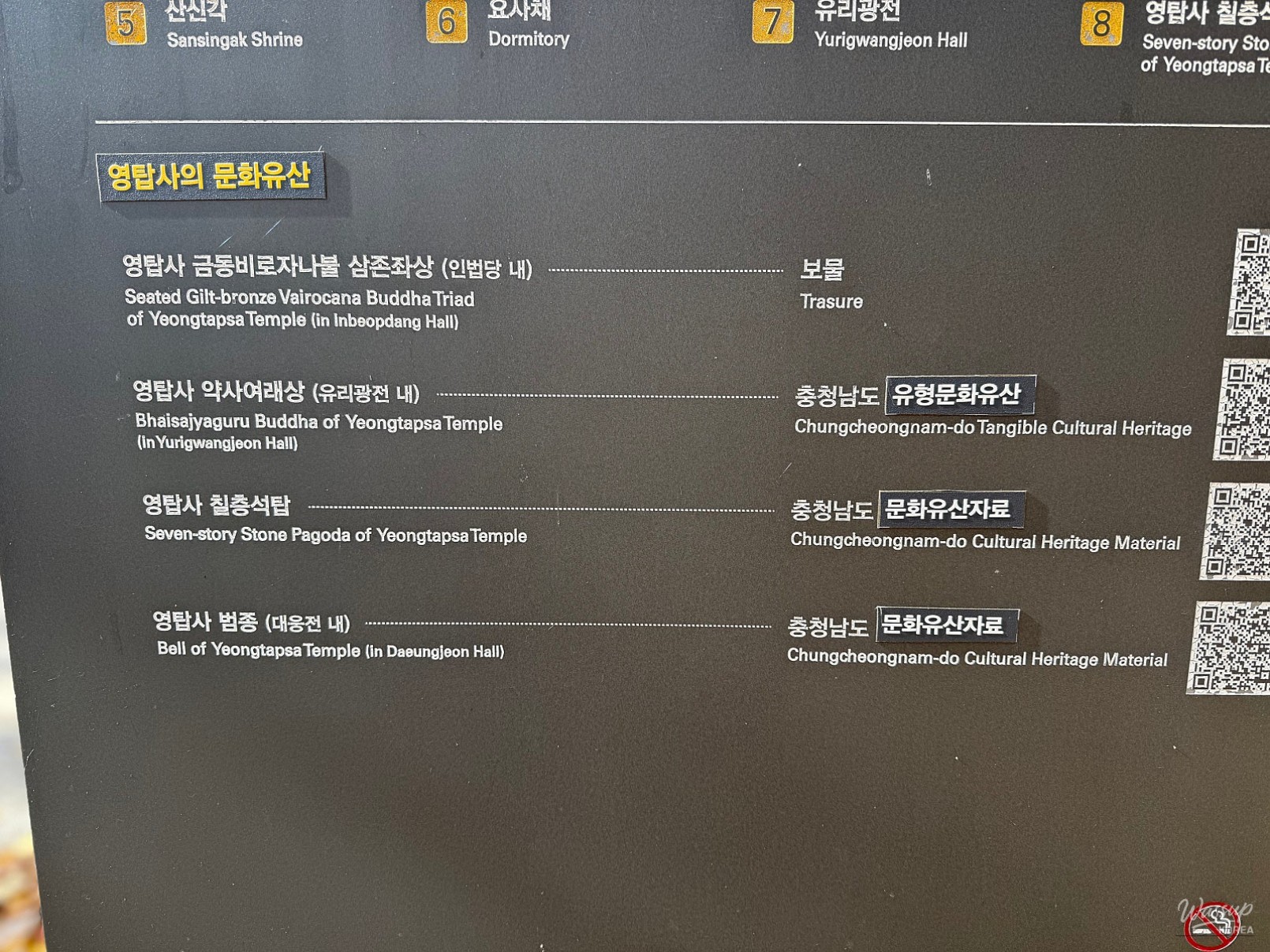
The National Heritage items are located throughout the temple as follows:
Biro-jeon Hall: Gilt-bronze Vairocana Buddha Triad, Sinjungdo Painting
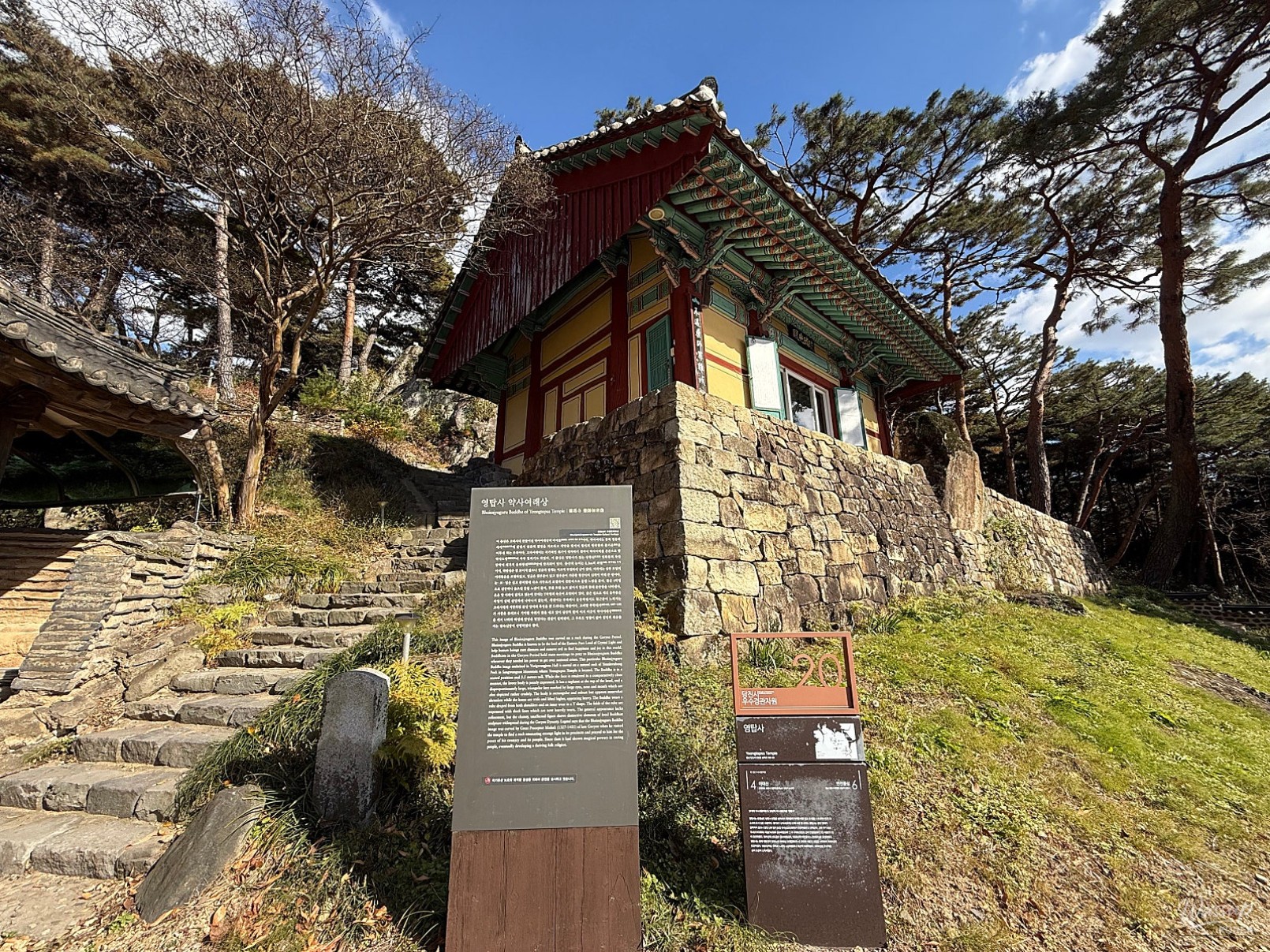
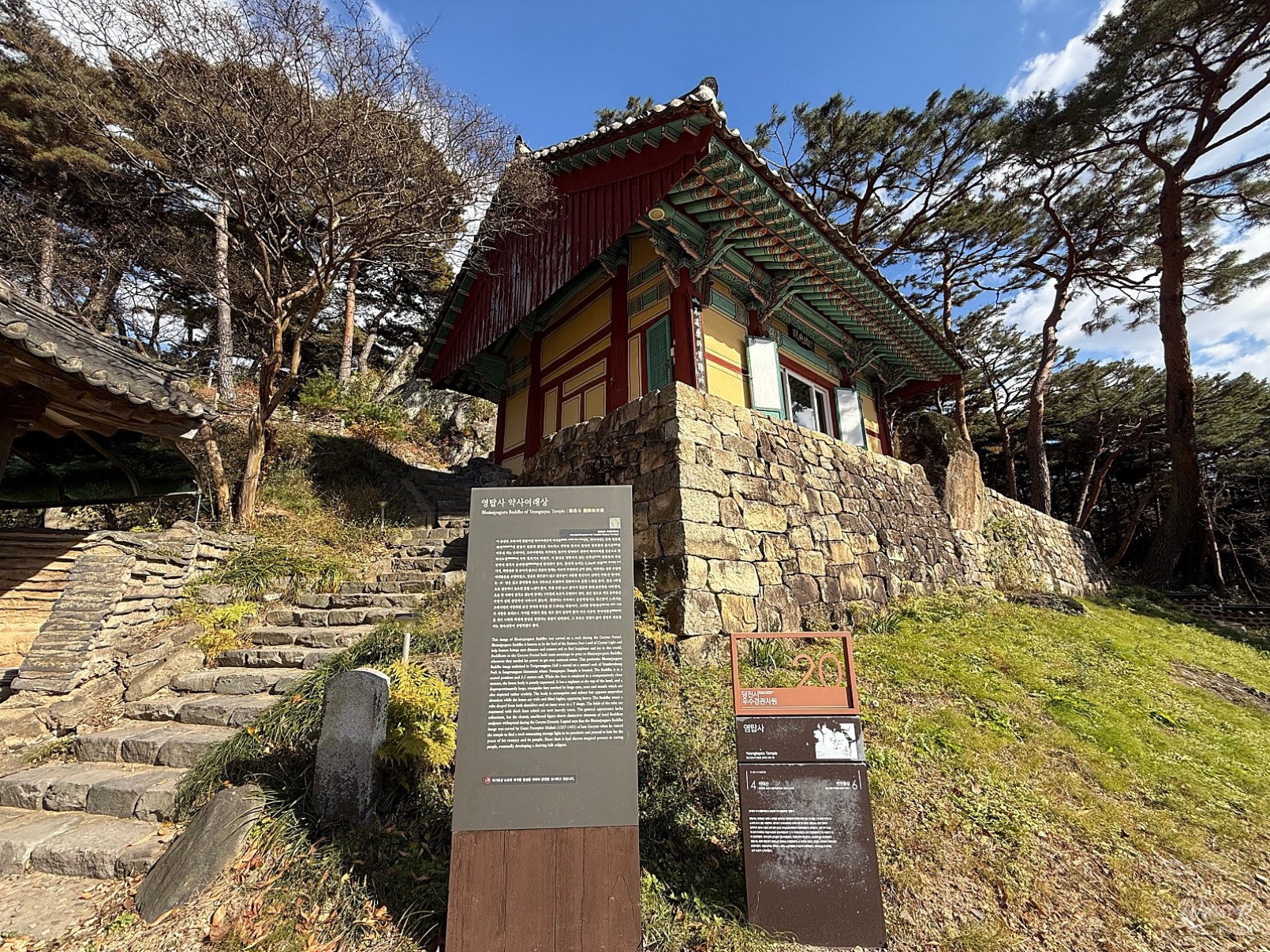
Yurigwang-jeon Hall: Yaksa Yeorae Statue (Bhaisajyaguru)
Inside Daeung-jeon Hall: Bell
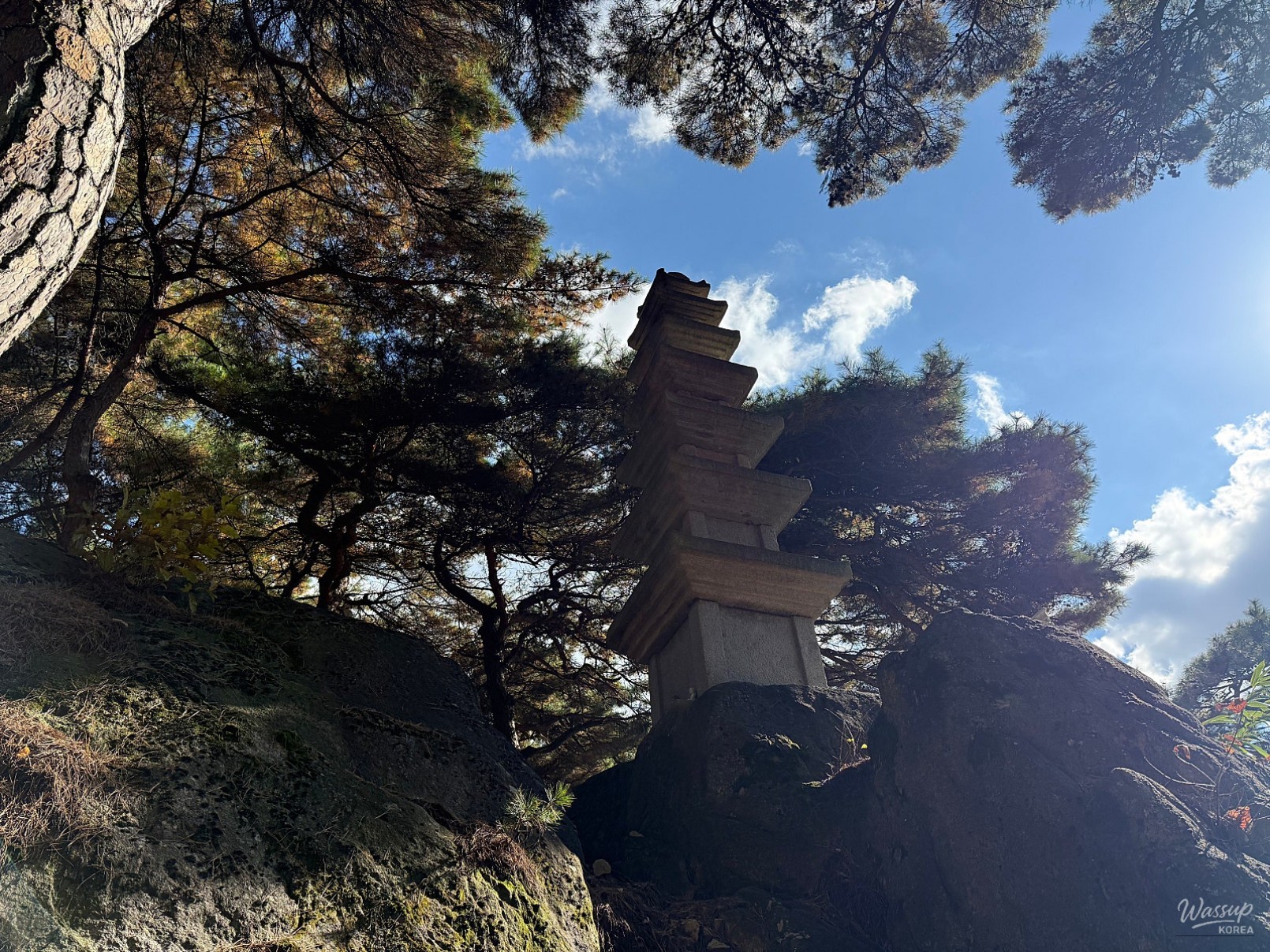
Behind Daeung-jeon Hall (on the rock): Seven-Story Stone Pagoda
The Seven-Story Stone Pagoda is a work from the Goryeo period and features a unique structure with the rock as its foundation. Its height was reduced due to damage during the Japanese colonial period, but it was restored to its original form in 1920. Located at the highest point in the temple, it feels as though it is protecting the entire temple.
Although it was not visible during my visit, the bell in the Daeung-jeon Hall is a metal artifact made in 1760. Although not large, it has great historical significance as it contains the names of the parishioners who donated at the time of its creation.
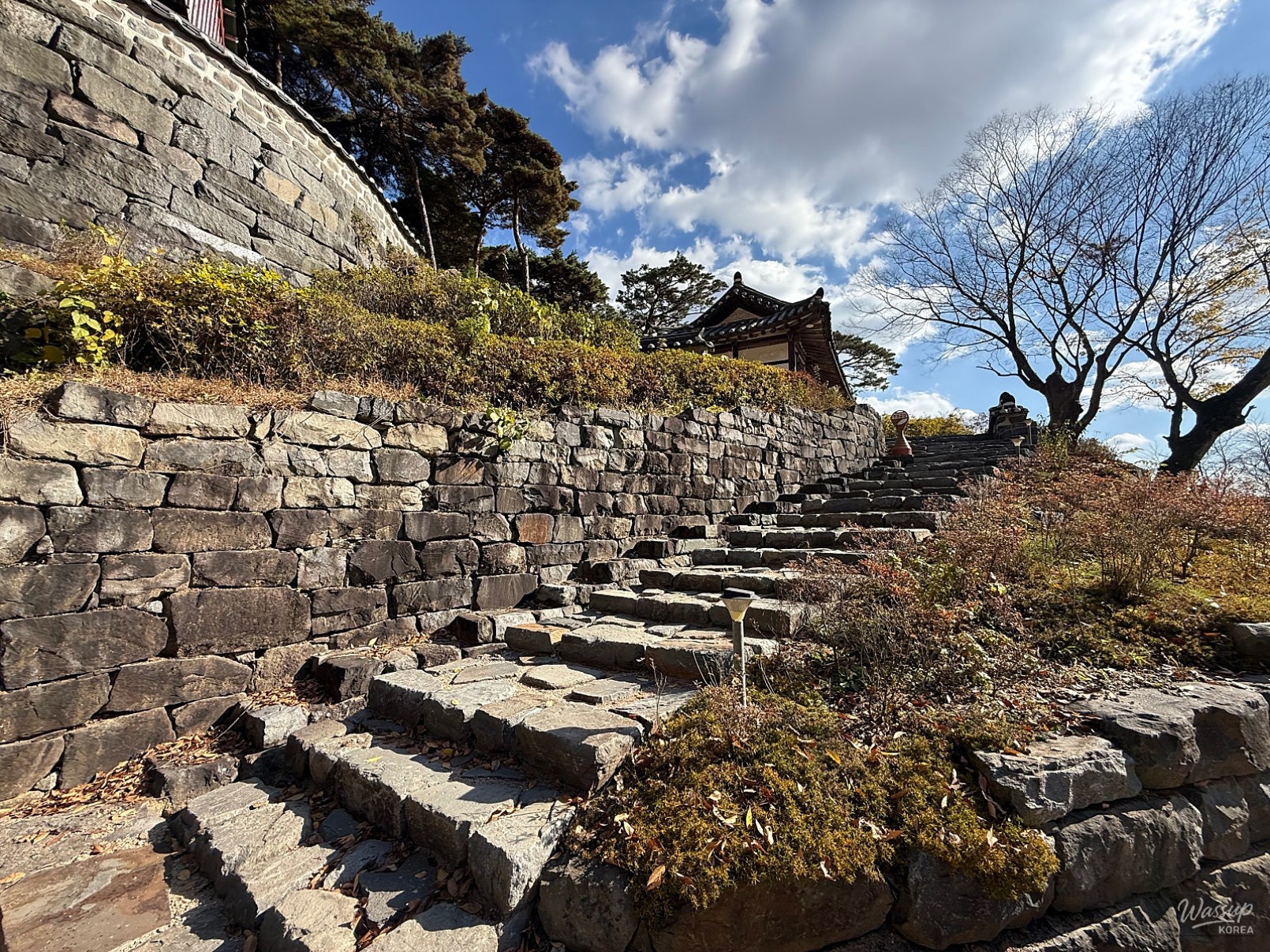
On the path leading to the back of the temple, there is a route to the Sanshingak Shrine, where you can enjoy the scenery in harmony with the Sangwangsan Mountain ridge. The entrance lined with old trees and the surrounding mountains offer a variety of views depending on the season, making it a popular destination throughout the year.
If you visit Yeongtap Temple this autumn, along with the temple's history of nearly a thousand years, you will be able to feel the deepening atmosphere of the season. I hope you will visit Yeongtap Temple this autumn and enjoy the late autumn atmosphere of Dangjin.










Source :https://blog.naver.com/dangjin2030/224090028884
More from Travel


No comments yet.