A Journey to Goesan: Discovering Gongnimsa Temple and its Ancient Zelkova Tree



Gongnimsa Temple, nestled in Goesan-gun, is home to a magnificent millennium-old Zelkova tree adorned with autumn colors. This serene location is highly recommended for a light and refreshing outing to enjoy the beautiful fall scenery.
What tree represents Korea? Pine trees are the most familiar, and oak trees are the most abundant. However, the Zelkova tree is also a familiar sight. While oak and pine trees often form forests, a single Zelkova tree can command a strong presence in villages and fields.
In Goesan, you can find the Zelkova tree forest in Munbang-ri, Mungwang-myeon, and the Zelkova tree in Ogari, Jangyeon, which is designated and preserved as a natural monument. Additionally, the Zelkova tree at Gongnimsa Temple is also beautiful.
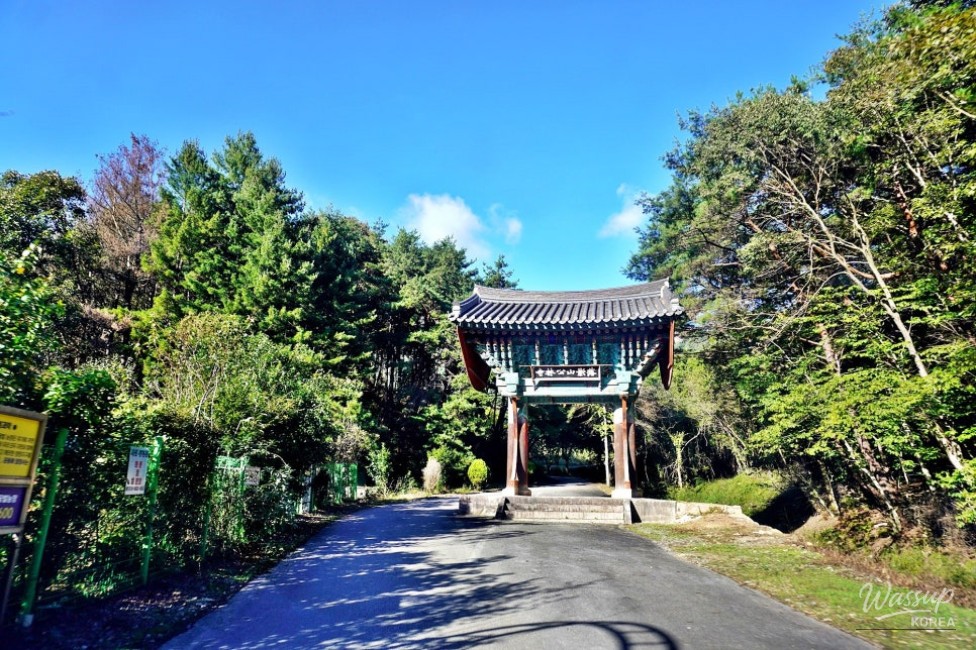
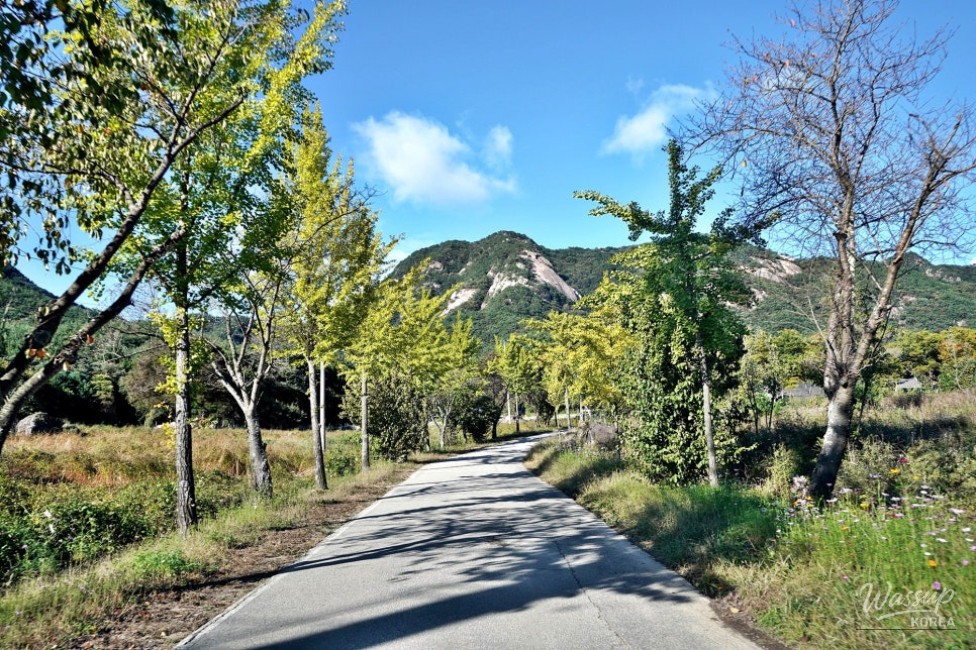
Gongnimsa Temple is an ancient temple located at the foot of Nakyang Mountain in Sadam-ri, Cheongcheon-myeon, Goesan-gun. Passing through the Iljumun Gate and a path of golden ginkgo trees, you will arrive at the parking lot. It is said to have been founded during the reign of King Gyeongmun, the 48th ruler of the Unified Silla Dynasty. Originally, Zen Master Jajeong built a hermitage and lived there, and King Gyeongmun, in memory of his virtue, built a temple and bestowed the name Gongnimsa. Currently, it is a branch temple of Beopjusa Temple of the Jogye Order of Korean Buddhism, but it is said to have been more prosperous than Beopjusa Temple during the mid-Joseon period.
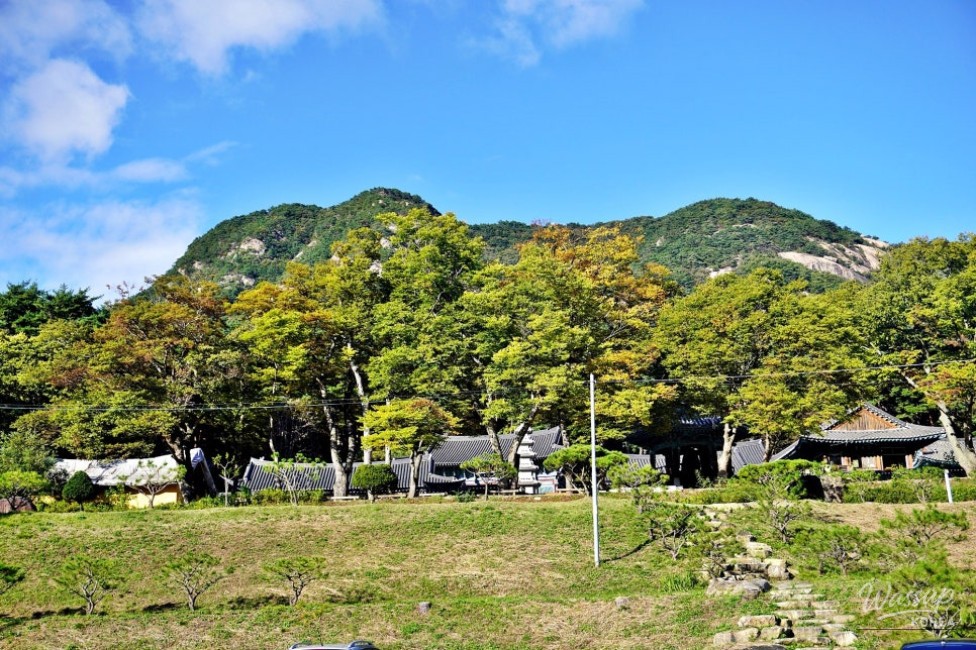
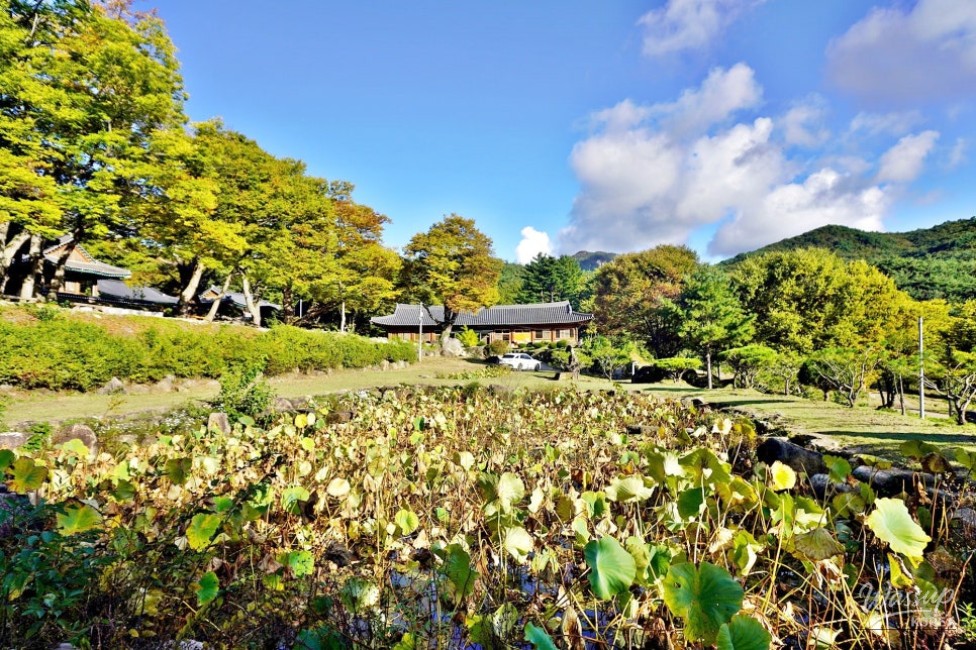
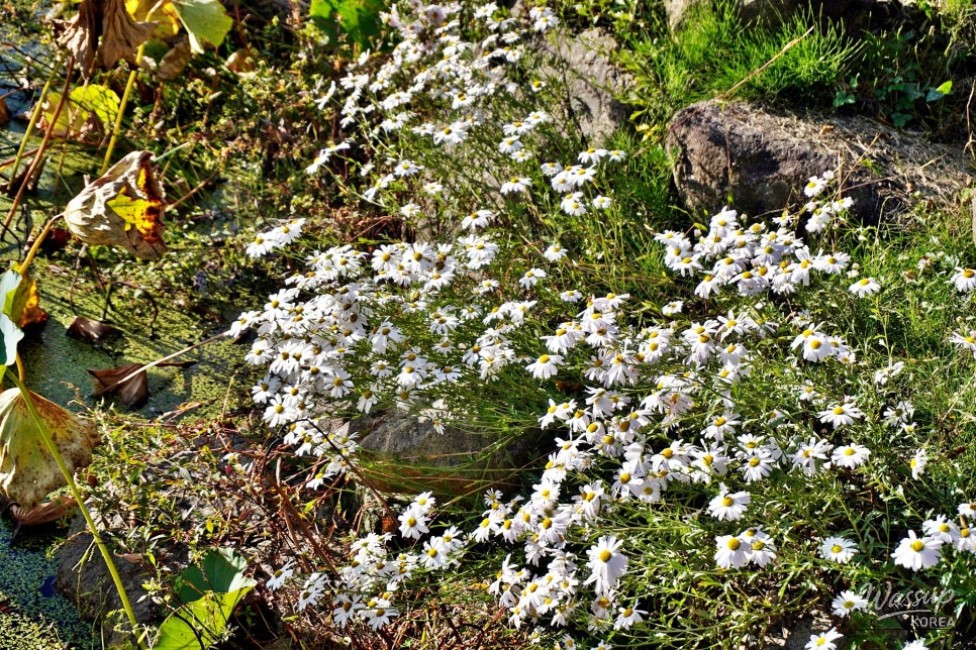
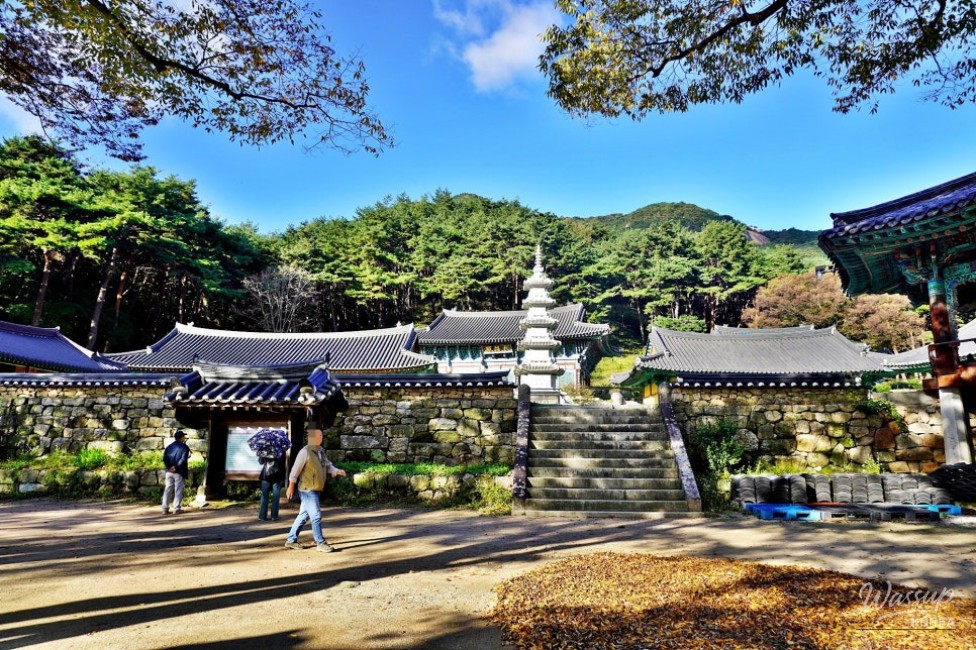
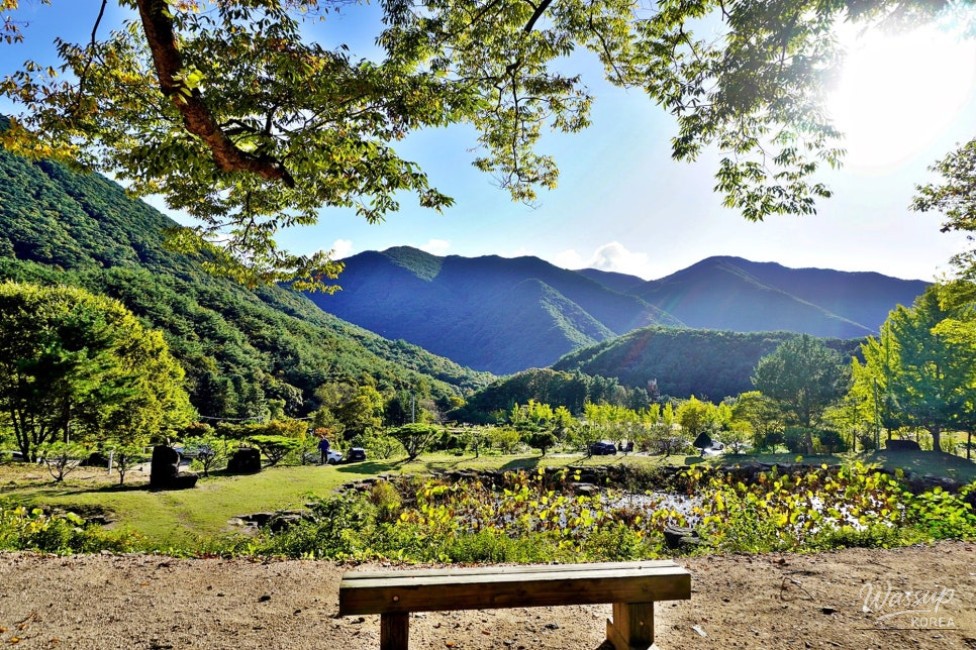
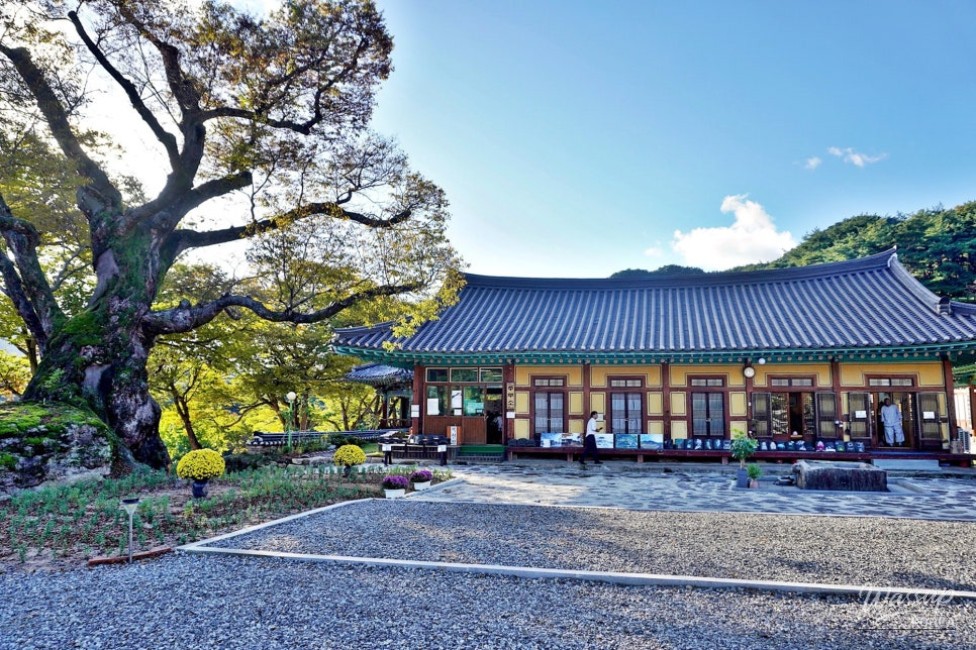
The temple buildings stretch widely along the foothills at the entrance to the Nakyang Mountain hiking trail, with a pond and a vast field below. In mid-October, Korean chrysanthemums bloom throughout, creating a beautiful autumn landscape. The ancient temple is surrounded by many old trees, including the millennium-old Zelkova tree, which speaks to the temple's long history. At this representative temple of Goesan, you can enjoy a long history and outstanding scenery.
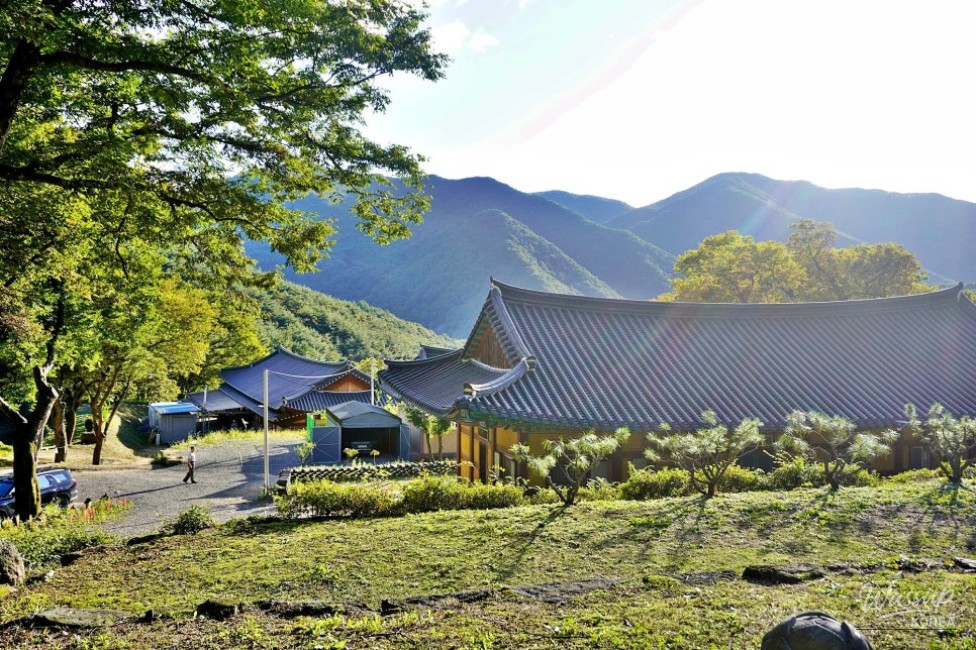
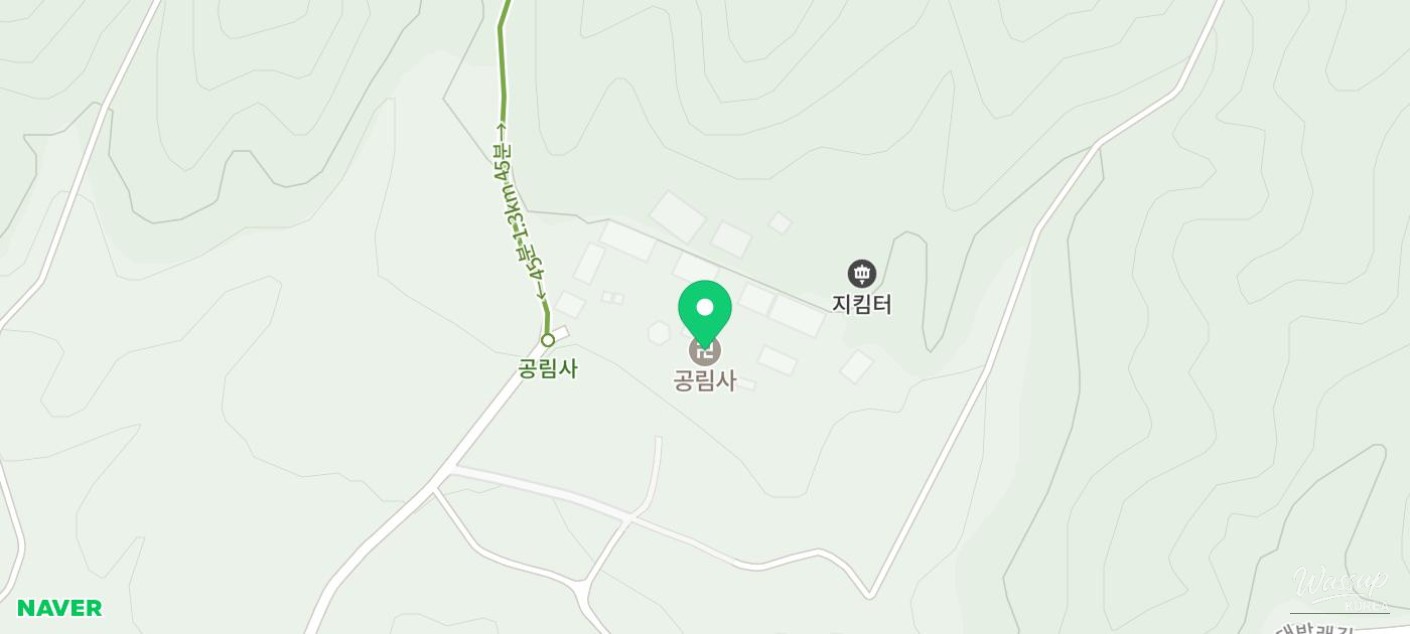
Driving about 1km from Sadam Bridge in Cheongcheon-myeon towards the entrance of Nakyang Mountain, you will find Gongnimsa Temple amidst the beautiful scenery of rolling ridges. Apart from hikers and temple visitors, it is a very quiet temple, away from the village. You can forget your busy mind and daily life for a while and fully enjoy the temple's reverence and the beautiful mountain scenery.
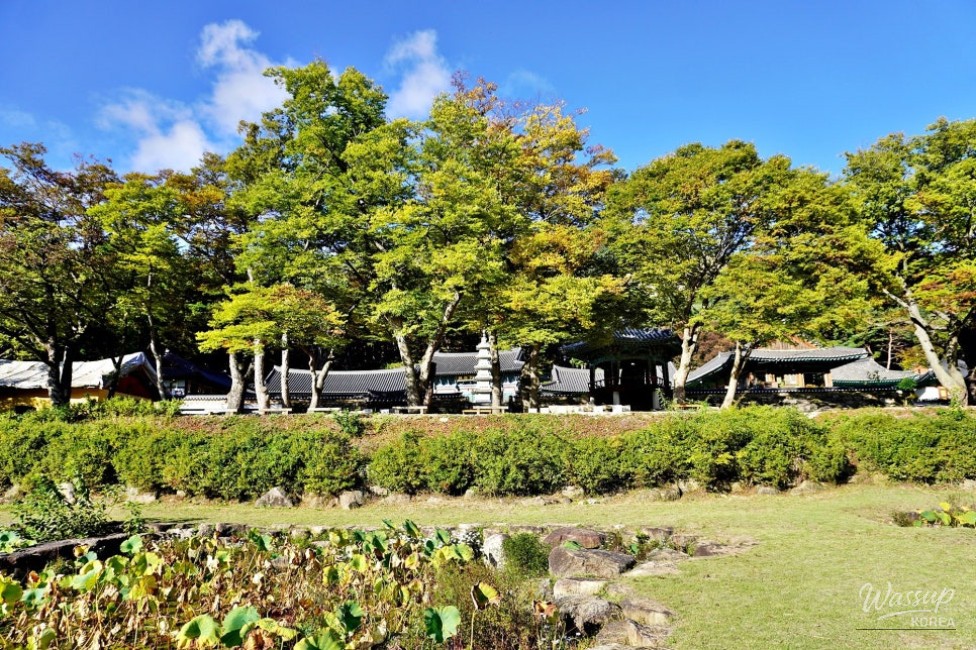
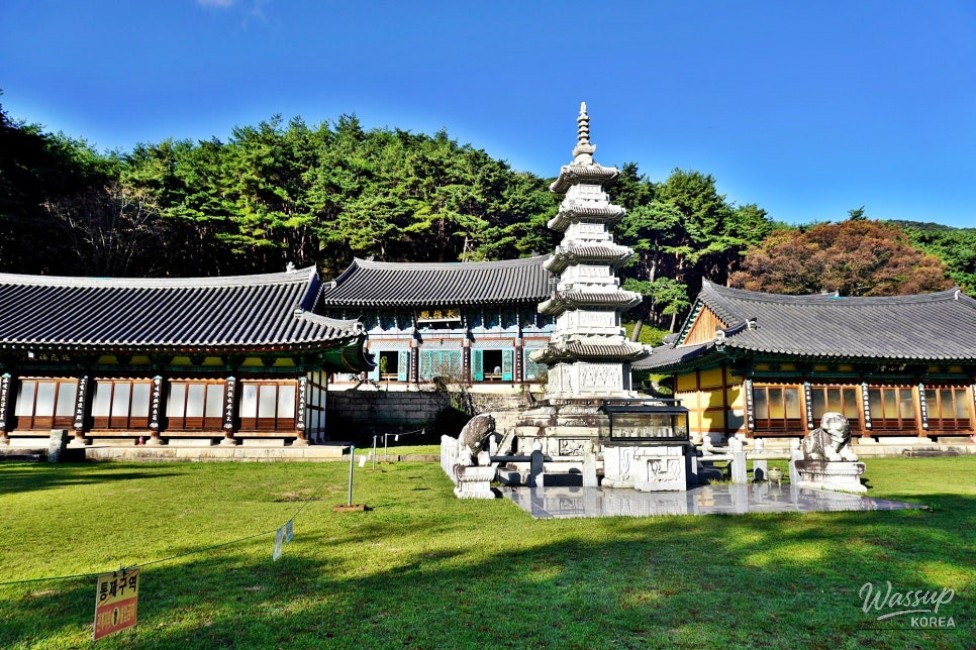
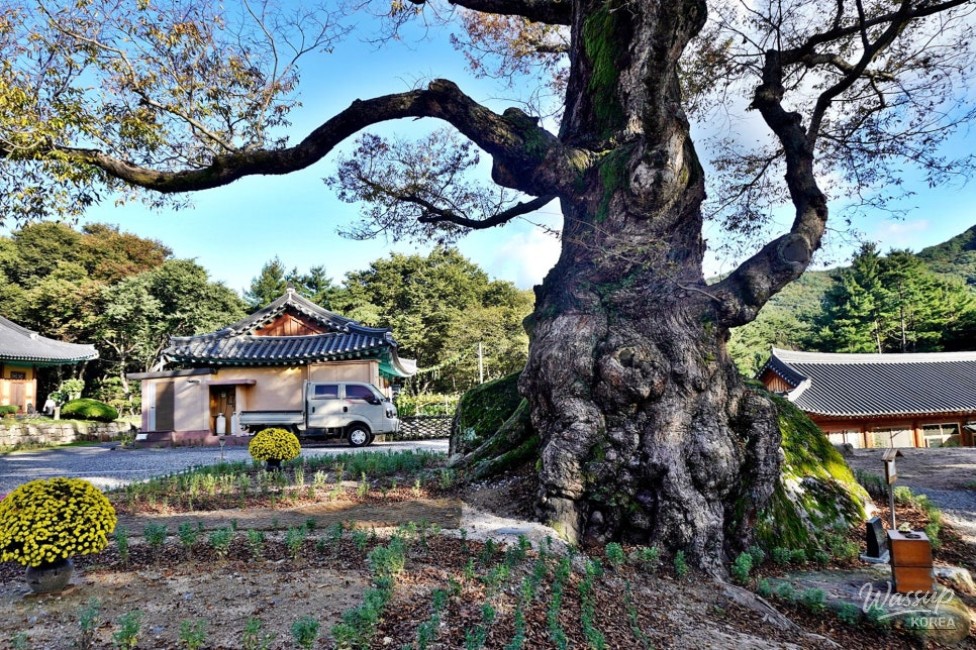
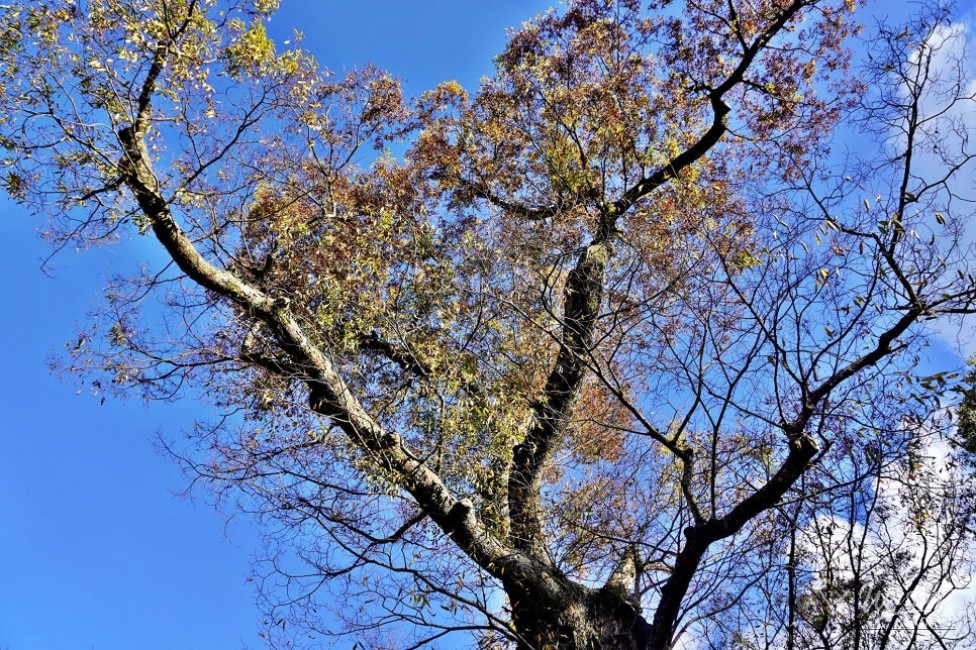
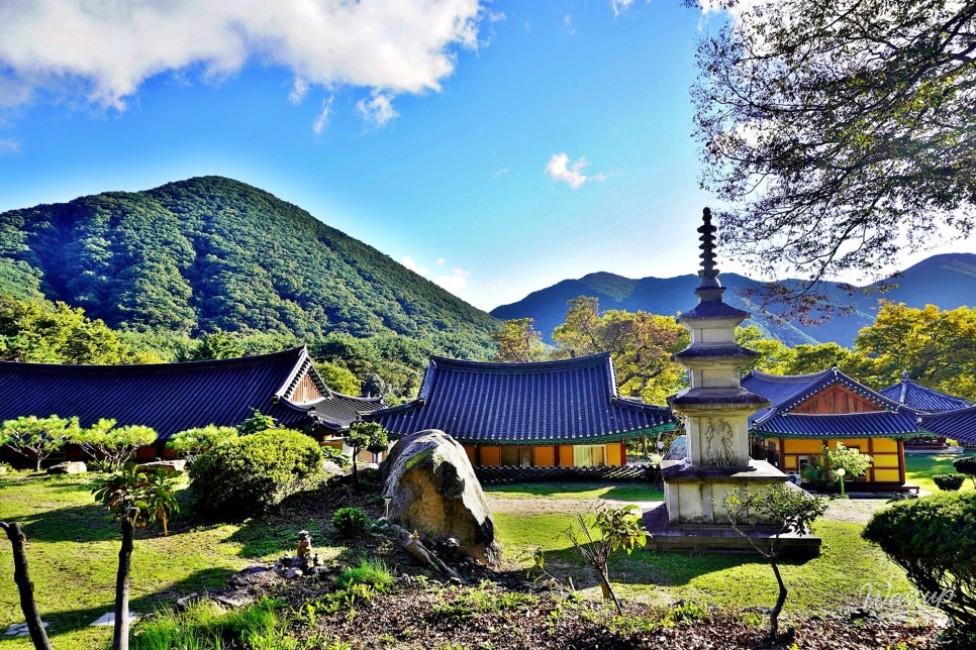
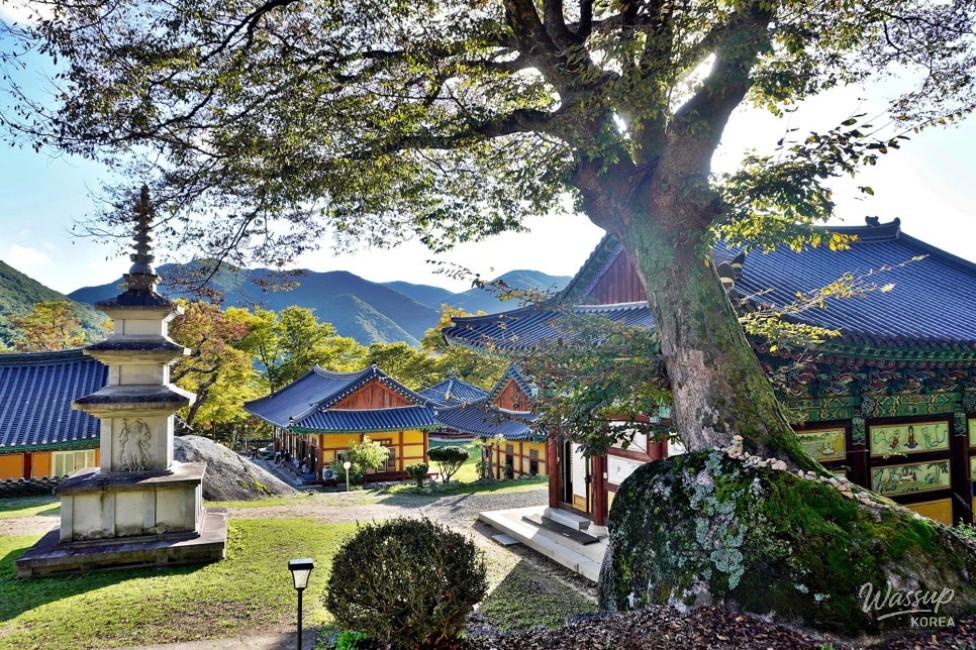
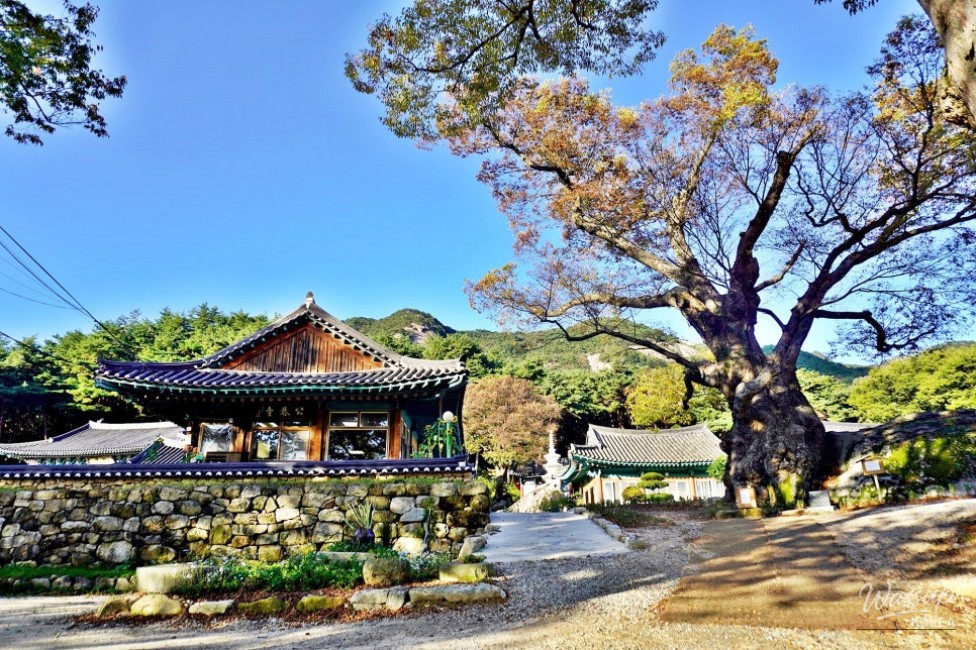
Gongnimsa Temple faces Nakyang Mountain, 684m above sea level, like a folding screen, and is surrounded by the towering Domyeong Mountain to the west. Climbing the stairs adjacent to the pond leads to the front yard with a five-story stone pagoda, and to the right, the millennium-old Zelkova tree serves as a gateway to the temple.
Founded during the Unified Silla Dynasty, the temple has undergone repeated closures and renovations to reach its present state. In 1399, Hamheo Gihwa rebuilt the temple on the site of the abandoned temple, and in 1407, it was designated as a royal family temple, and King Sejo also visited. It was renovated and rebuilt in 1593 and 1720, and during the Korean War, it was completely destroyed because guerrillas frequented the temple. The current appearance was achieved through reconstruction over 20 years starting in 1960.
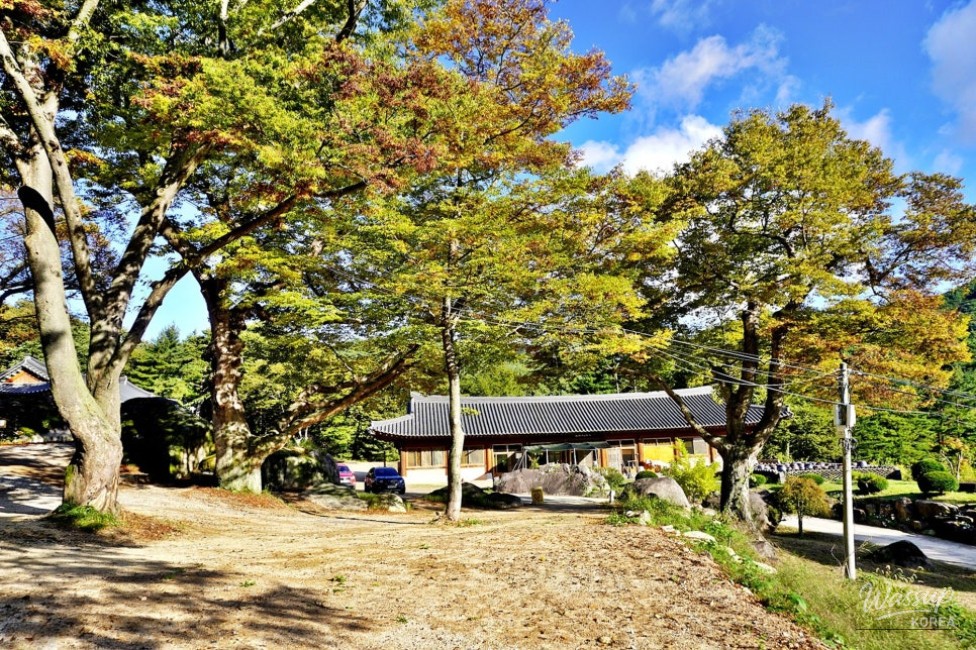
The millennium-old Zelkova tree at the entrance of the temple is beautifully colored.
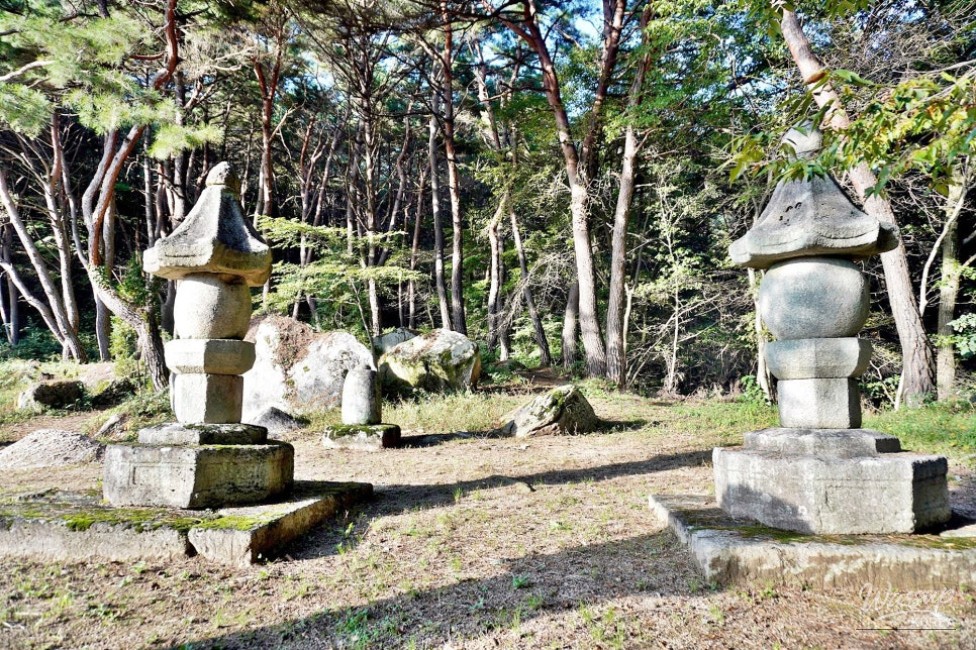
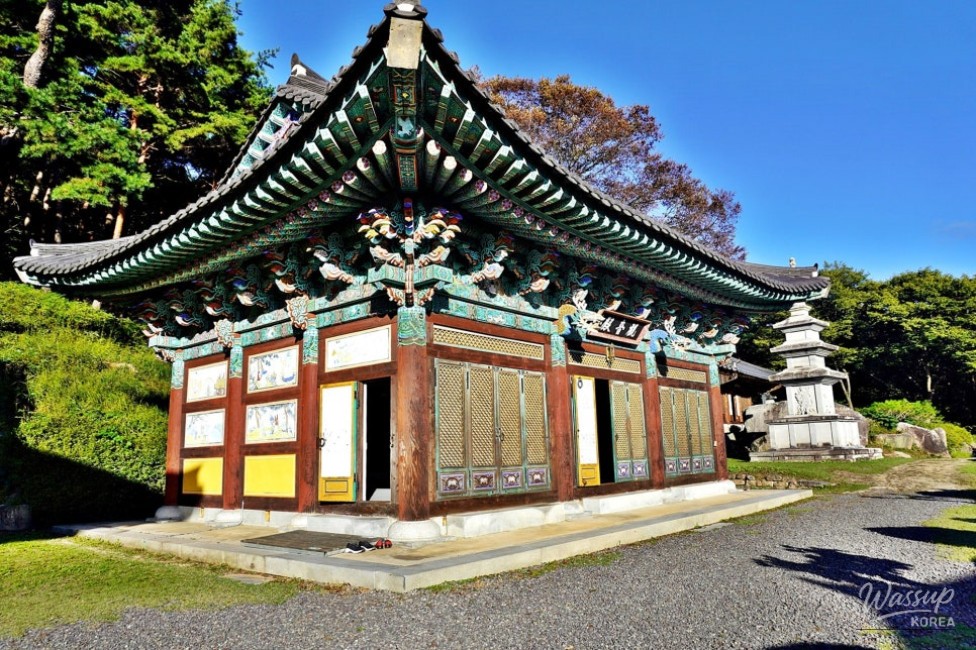
Currently, Gongnimsa Temple has the Iljumun Gate, Daeungjeon Hall, Gwaneumjeon Hall, Samseonggak Shrine, Beomjongnu Pavilion, Seonwon Meditation Hall, and monks' quarters, as well as a bronze bell, stupa, and historical monument. Among them, the Gongnimsa Temple Historical Monument, Gongnimsa Temple Stupa, and Gongnimsa Temple Bronze Bell are designated as Chungcheongbuk-do cultural heritage. The Jeokgwang Pagoda and Seokga Pagoda in the temple courtyard were built in 1993.
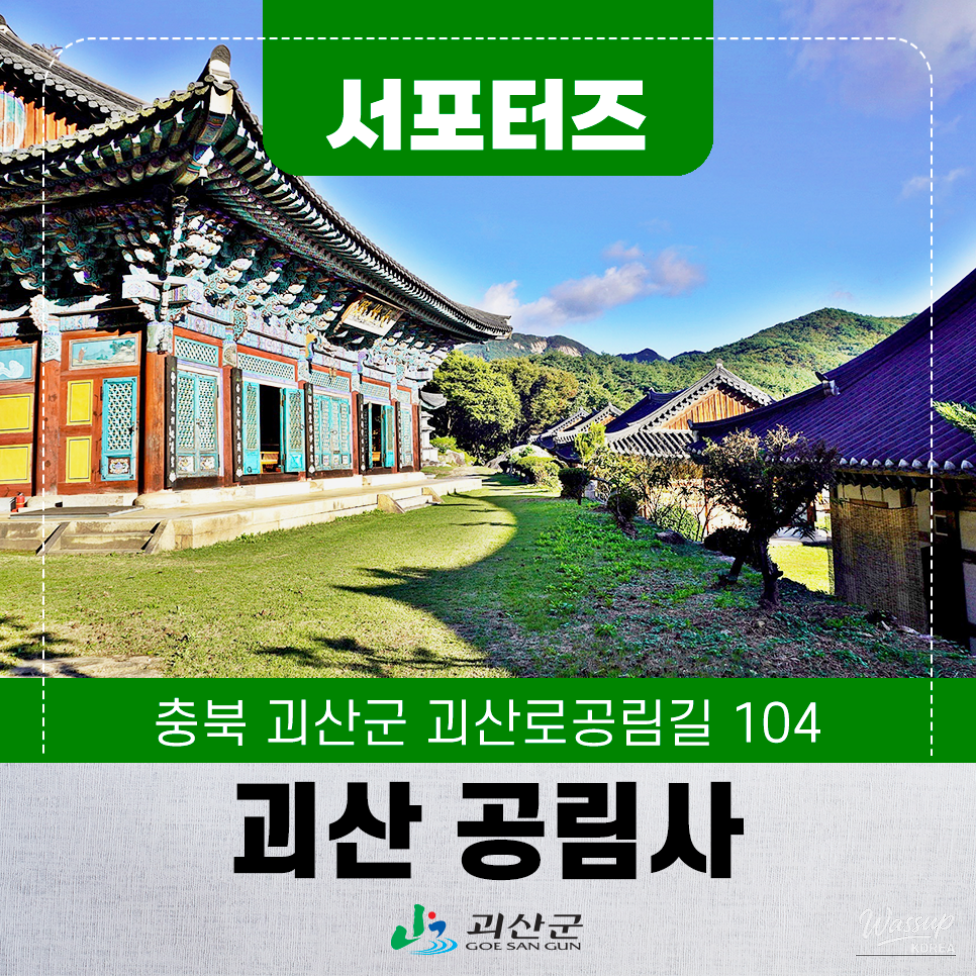
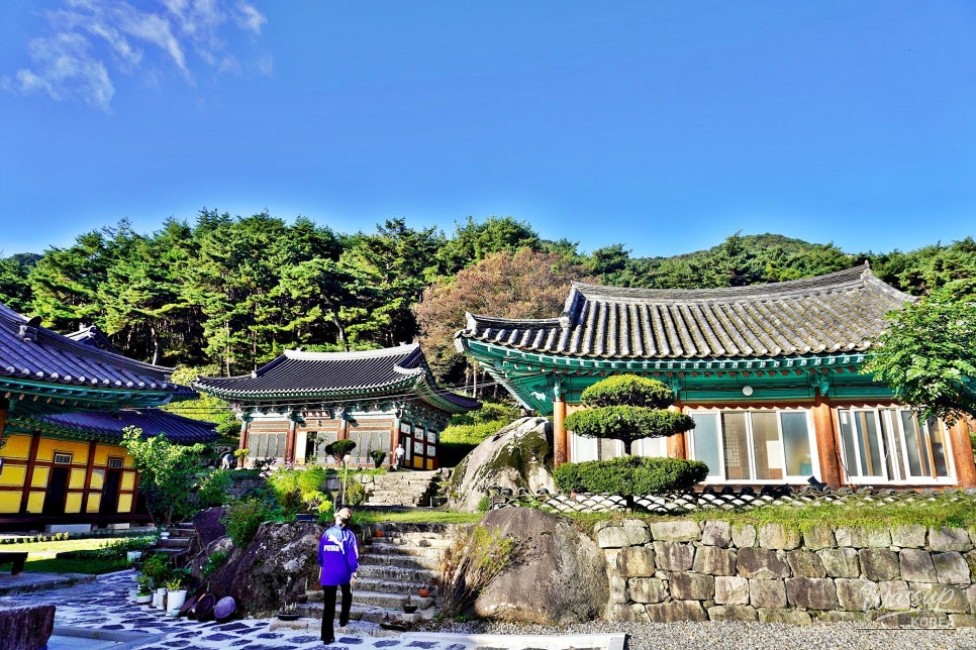
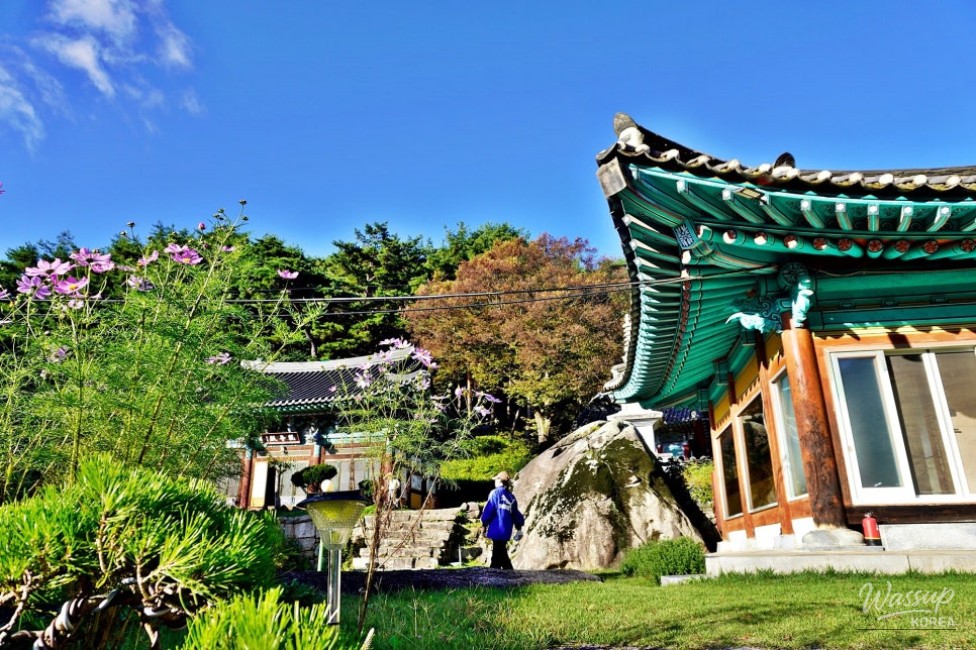
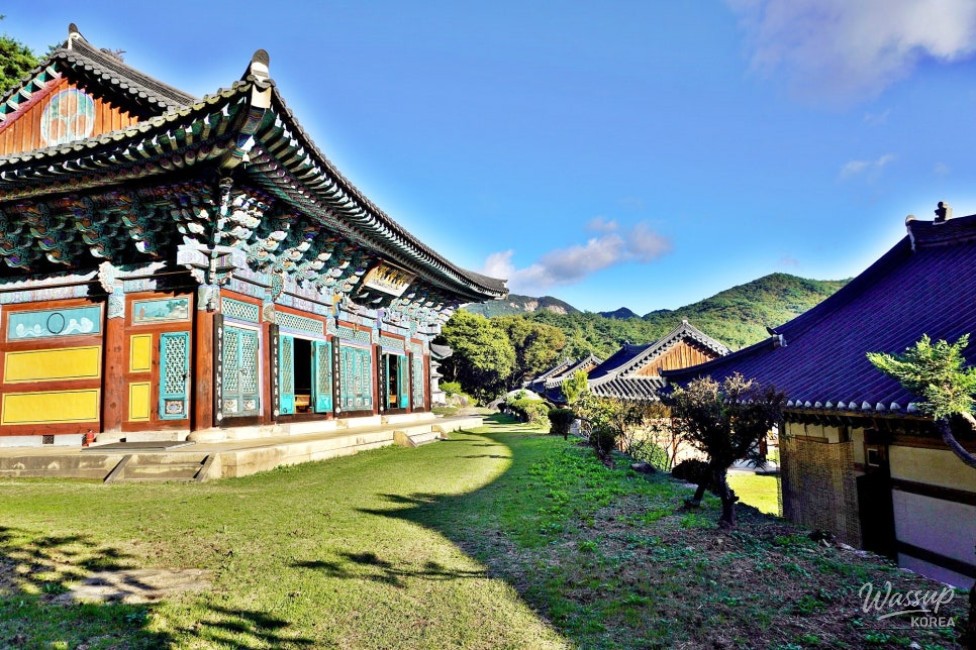
Gongnimsa Temple has a fairly large site at the foot of the mountain, with the monks' quarters, Gwaneumjeon Hall, and Daeungjeon Hall lined up side by side. Under the Nakyang Mountain foothills, which are full of pine trees, Zelkova trees, cosmos, and Korean chrysanthemums create a deep autumn landscape.
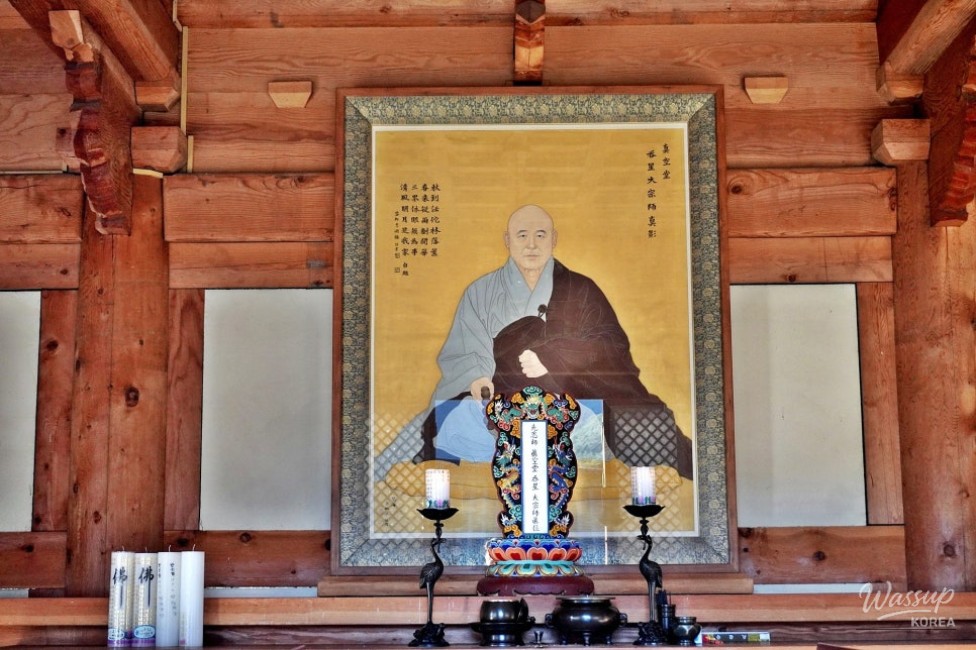
The old Zelkova trees continue around each building, in addition to the two at the entrance, creating an even more serene atmosphere. In the Josadang Shrine of Gongnimsa Temple, a portrait of Monk Tanseong, who made great contributions to the reconstruction of Gongnimsa Temple, is enshrined, and next to it is the Gongnimsa Temple Stupa. It is an octagonal circular stupa with similar size and shape. It is preserved in almost perfect condition and is estimated to be from the period when the octagonal circular stupa of the Goryeo period transitioned to the stone bell shape of the Joseon period. It is a Chungcheongbuk-do cultural asset.
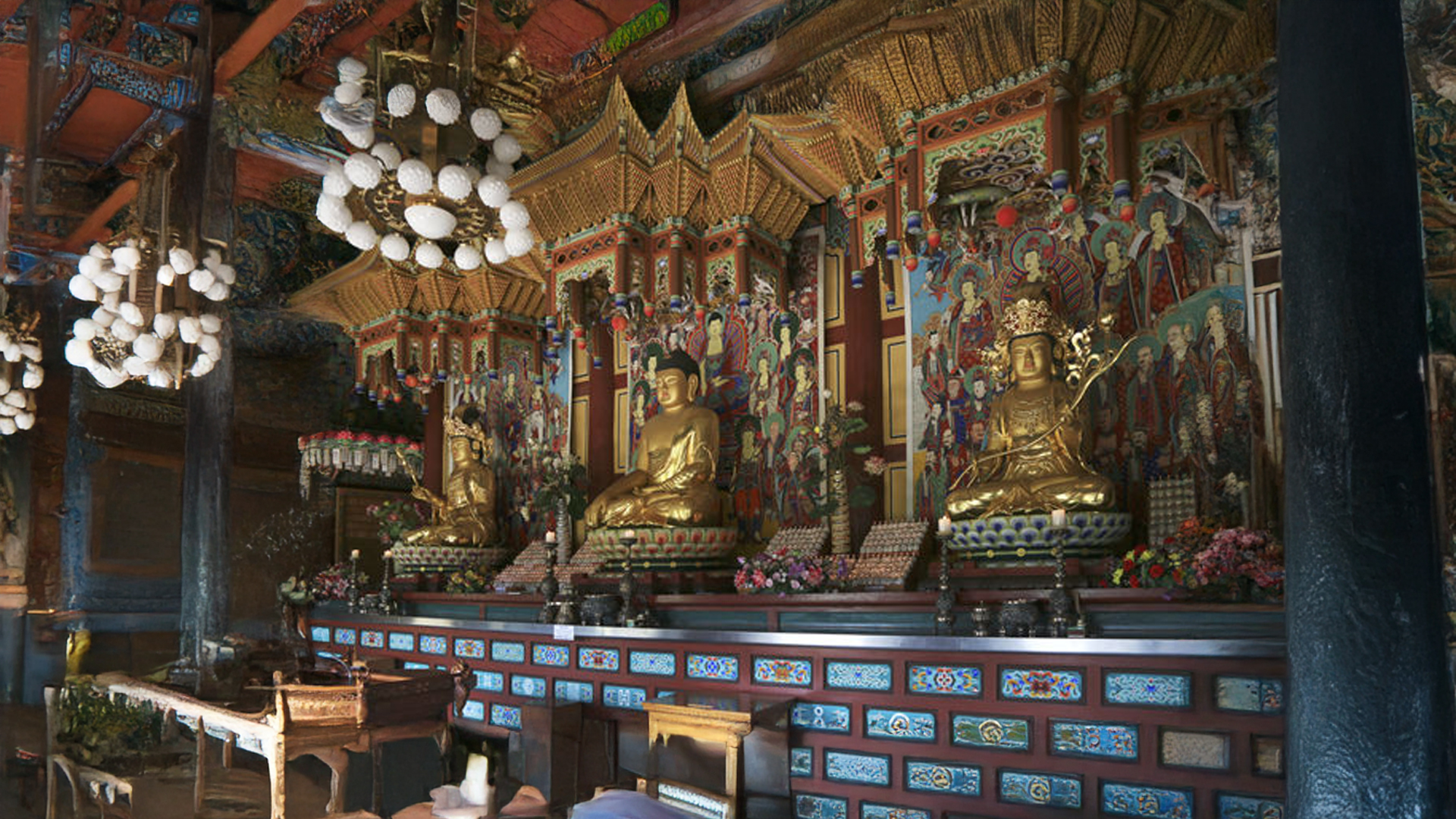
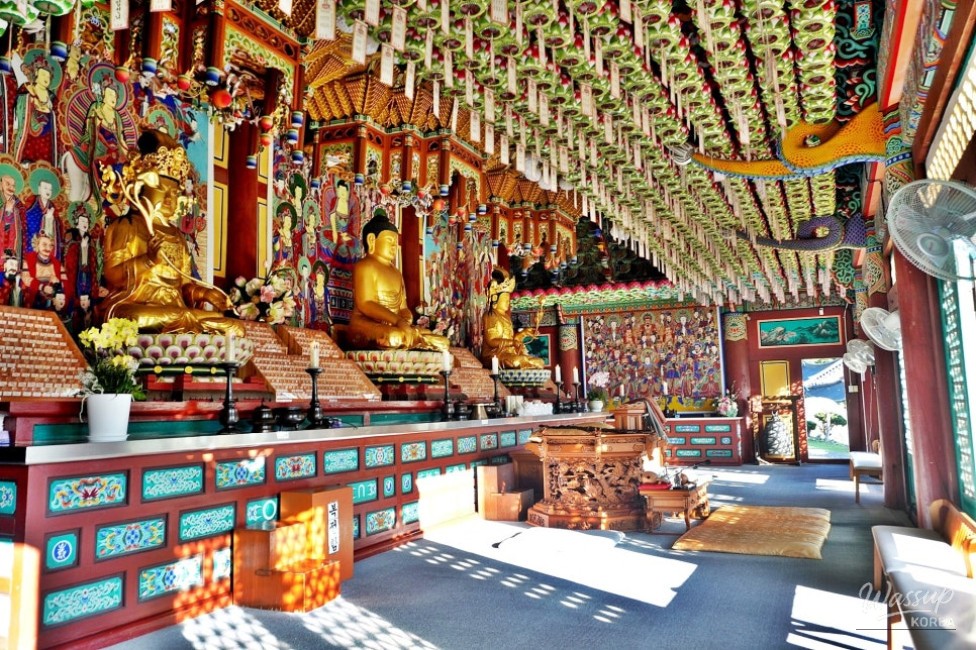
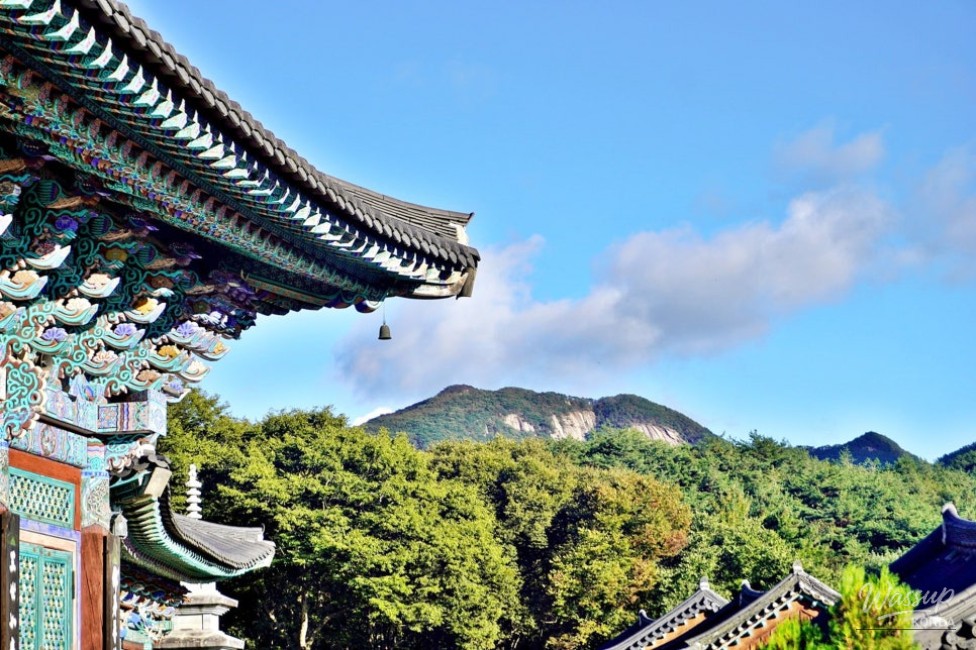
Gongnimsa Temple has beautiful ridges connecting to Nakyang Mountain, Domyeong Mountain, and Cheongcheon-myeon Namsan. The scenery harmonizes wonderfully with the surrounding mountains, making a temple outing even more enjoyable. The Gwaneumjeon Hall, with its three-kan front and three-kan side paljak roof, and the Daeungjeon Hall, with its five-kan front and three-kan side, exude the dignity of an ancient temple. Inside the Daeungjeon Hall, Shakyamuni Triad Buddhas are enshrined.
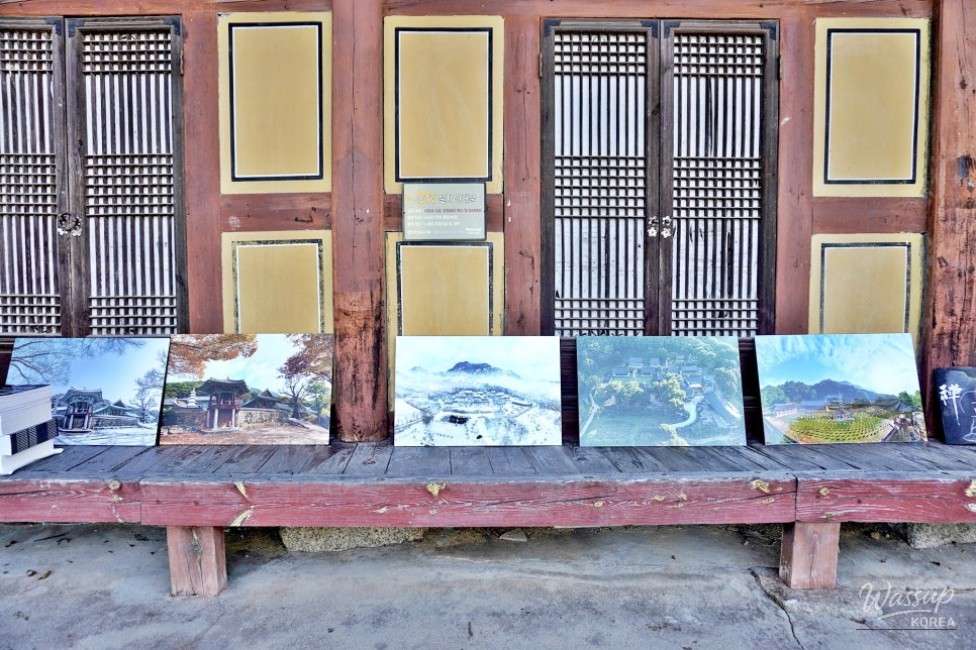
From the temple, the peaks of the surrounding mountains feel close enough to touch. However, the actual hike to the summit along the hiking trail that starts on the side of the temple is a 2-hour one-way trip. A small photo exhibition featuring Gongnimsa Temple is also held on the veranda of the monks' quarters where the temple office is located. Sitting on the veranda, you can take a more leisurely time to contemplate the surrounding mountains.
Gongnimsa Temple at the foot of Nakyang Mountain is an ancient temple nestled in the beautiful nature of Goesan. Although the temple buildings were recently rebuilt, its history dates back to the Unified Silla Dynasty, and you can encounter a total of three cultural heritages. The scenery of the Nakyang Mountain and Domyeong Mountain ranges surrounding the temple is beautiful, and the temple itself is also beautiful. It was a great place to enjoy the deepening autumn atmosphere.
[Directions]
Goesan Gongnimsa Temple: 104, Goesan-ro Gongnim-gil, Cheongcheon-myeon, Goesan-gun

Source :https://blog.naver.com/goesan-gun/224074483721
No comments yet.