A Historical Walk Through Hongseong


The historical town of Hongseong was formerly known as Hongju.
During the Joseon Dynasty, Hongju served as the administrative center for various districts in Chungcheong Province.
It was a significant area that handled both administrative and judicial functions.
Moreover, it played a crucial military role, adding to its historical importance.
Even today, remnants of old Hongju can be found throughout Hongseong.
This includes landmarks such as Hongju Amun, Anhoedang, and Yeohajeong, all of which are located near the Hongseong County Office.
The current county office stands on the site of the former government building, giving a sense of continuity through time.
The first site we visited was Hongju Amun.
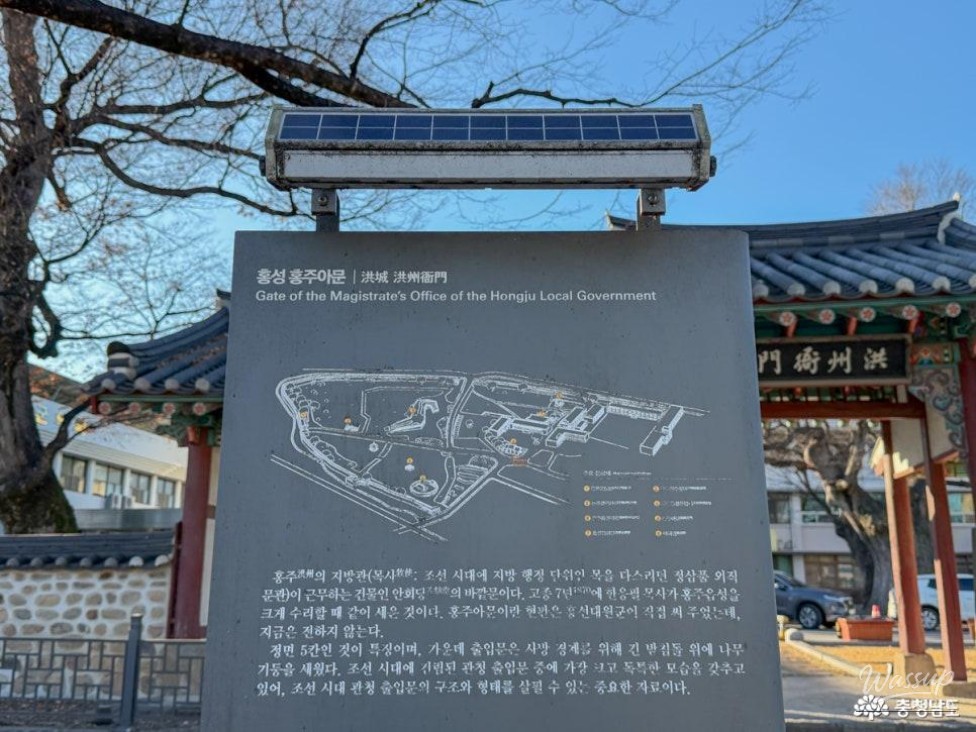
Information boards about Hongju Amun were well-organized and informative.
Hongju Amun served as the outer gate for the Anhoedang, where local officials worked.
It is a space that conveys both the dignity and symbolism of the administrative office.
The plaque of Hongju Amun is said to have been written by Heungseon Daewongun himself, though it is unfortunately no longer present.
The building features a distinctive five-bay structure, exuding a neat yet grand impression.
Initially, the entrance to the government building felt unusually large.
It turns out that it is one of the largest and most unique government entrances from the Joseon period.
This remarkable structure is considered an important resource for studying government entrance designs from that era.
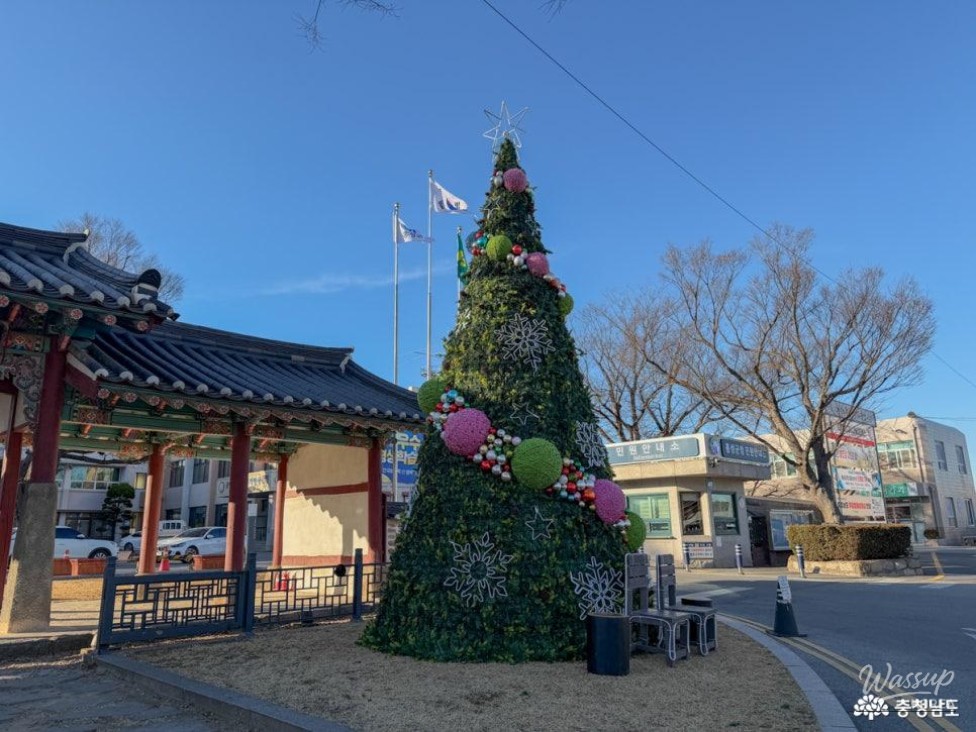
Today, Hongju Amun is still used as the entrance to the Hongseong County Office.
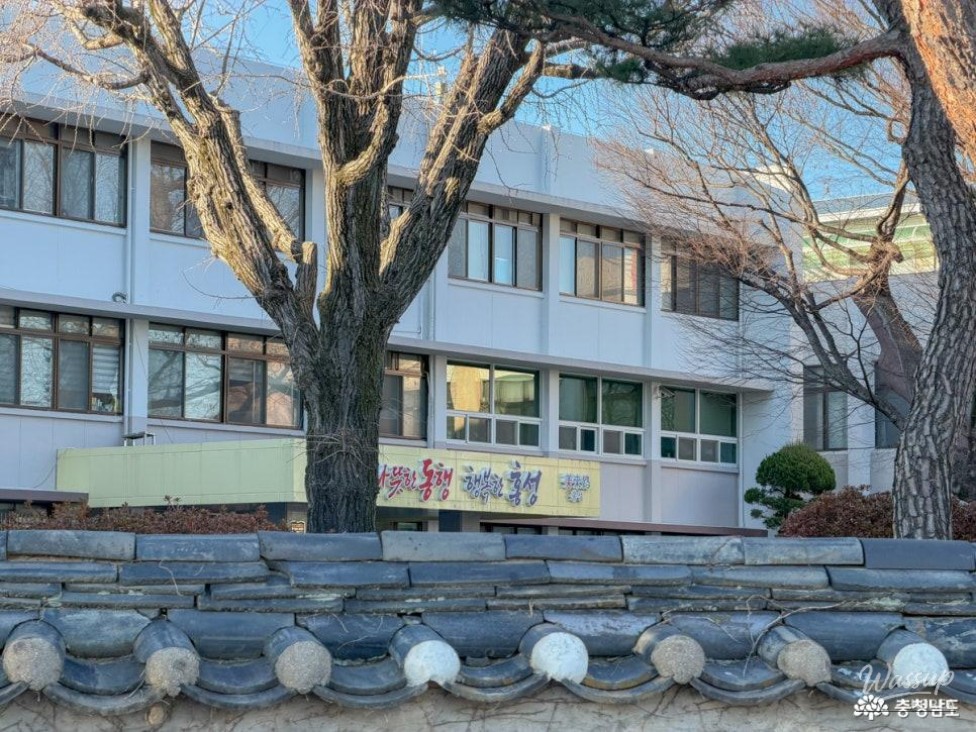
Upon passing through the gate, the modern county office building comes into view, showcasing a harmonious blend of traditional and contemporary architecture.
The coexistence of past and present in this scene was truly striking.
Moving inside the Hongseong County Office, we found another historical building, Anhoedang.
From a distance, it appeared quite substantial.
Anhoedang served as the office for local officials during the Joseon Dynasty.
This wooden tile-roofed building comprises 22 bays and felt even larger up close.
It was originally constructed in the 4th year of King Sukjong's reign and later renovated significantly during King Gojong's reign.
The name Anhoedang is derived from the Analects, meaning to treat the elderly with respect and to engage with others in faith.
It also emphasizes the importance of treating subordinates with love.
The philosophy embedded in the name of this government building is quite impressive.
In winter, the surrounding trees appear bare, allowing for a clearer view of Anhoedang.
This seasonal contrast enhances the building's beauty, creating a serene and leisurely atmosphere.
Walking a bit further behind Anhoedang, we discovered the Yeohajeong pavilion.
This charming structure is situated above a small pond in the backyard of Anhoedang.
It provides a tranquil space perfect for quiet reflection.
Constructed in 1896 by Governor Lee Seung-woo, it replaced the former Cheongsujeong pavilion.
Historically, local officials would work at the government office and then come here to relax, an interesting separation of work and leisure.
Yeohajeong features a hexagonal structure supported by six wooden pillars, with two couplets hanging from each pillar.
Though small in size, it harmonizes beautifully with the pond, creating a picturesque scene.
Next to Yeohajeong, there are signs about the Hongju Martyrs' Pilgrimage Path.
This area was once the site of the Dongheon, where the local magistrate's office was located during the Joseon Dynasty.
It is a place where the meanings of administration, history, and faith converge.
During the Catholic persecution, events unfolded in front of the magistrate's office, where prominent Catholic believers faced interrogation and punishment.
This site carries a painful history, embodying the deep faith of the martyrs.
Walking around the Hongseong County Office, we explored Hongju Amun, Anhoedang, and Yeohajeong in succession.
Each building holds stories from the past, making the space feel vibrant with history.
As a result, the current Hongseong County Office felt even more special.



Source :https://blog.naver.com/sinmunman/224112381276
No comments yet.