The Tranquil Winter at Geumgangam Temple



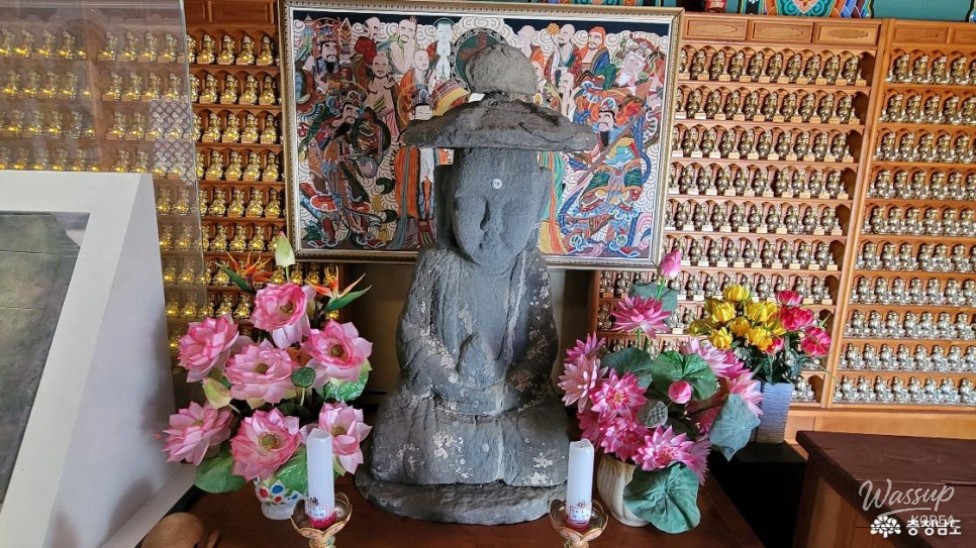
▲ The stone Maitreya Buddha of Geumgangam Temple in Boryeong, Chungcheongnam-do.
In this season where the sun rises late and sets early, Geumgangam stands alone on the slopes of Yanggaksan, resembling the last house in the world. The once cool breeze has been replaced by a chilling silence, and the lush branches now cast empty shadows.
The Buddha in the main hall is shrouded in lingering darkness, growing lonelier, while the spring water in the yard has frozen, preventing it from reflecting its own face.
As winter deepens on Yanggaksan, the temple folds inward, retreating further as human footsteps become scarce. The red paint and black tiles dim their brightness, wearing expressions that have even given up on the anticipation of someone's arrival.
In this season with almost no visitors, the temple wholly embraces the silence of winter as its prayer. Today, the cold air quietly blankets the roof, and when loneliness deepens to the point of no longer hurting, the heart also sinks into contemplation, much like the winter of this mountain temple.
Geumgangam is a traditional temple belonging to the Jogye Order of Korean Buddhism, located at 1139-102, Boryeongho-ro, Misang-myeon, Boryeong-si, Chungcheongnam-do. Nestled on the eastern slopes of Yanggaksan (412m), the temple is surrounded by pristine nature, making it a renowned site, often described as a perfect location for meditation.
Founded in 634 AD (3rd year of Silla's Queen Seondeok), it underwent reconstruction during the Goryeo period but was reportedly destroyed by fire in the early Joseon period, though exact details remain unverified. However, a record from 1412 (12th year of King Taejong) found in the Maitreya Hall suggests this as its founding date. The inscription, carved on a blue stone plate, remains partially damaged, containing only 241 characters across 16 lines.
According to this record, Geumgangam was built to pray for the rebirth of Queen Gwon, the wife of King Taejong. Her father, Gwon Hong, and her daughter, Princess Lee, supported the temple's construction, demonstrating the royal family's deep affection for Buddhism. Similar content was recorded in a construction document from the era of King Yeongjo during the restoration of the Maitreya Hall.
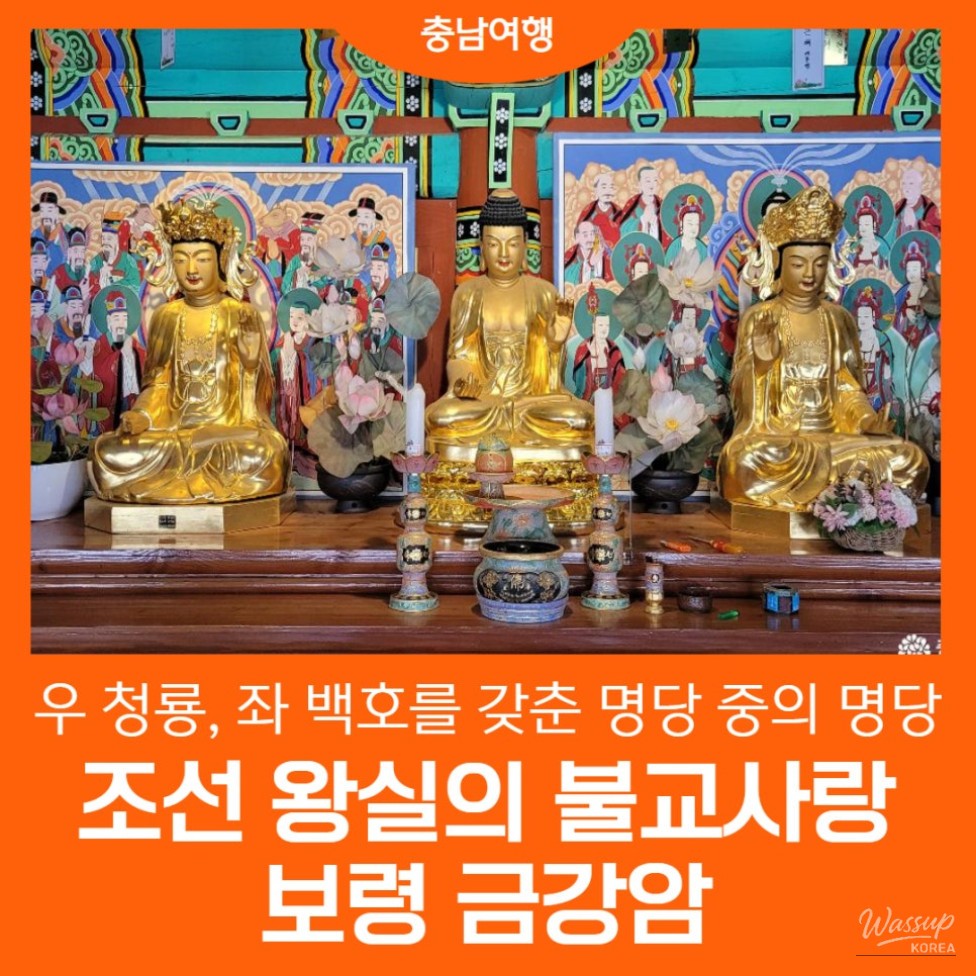
The temple's layout centers around the Maitreya Hall, comprising the Mountain Spirit Shrine, Maitreya Hall, and residential quarters. The main hall features a traditional eight-sided roof and houses statues of Amitabha Buddha, Avalokiteshvara, and Mahasthamaprapta, all crafted during the Japanese colonial period.
On the right side of the Maitreya Hall, a seated stone statue, 180 cm tall with a base of 43.5 cm, is enshrined. This statue is characterized by its gentle smile and notably large ears, adorned with a six-sided stone hat, presumed added after its creation. The left hand is positioned downward, while the right hand holds a lotus blossom.
The Mountain Spirit Shrine, with one room on each side, houses the deity of the mountain. Geumgangam is known among locals as a remote place, where “deer and mountain rabbits tread together,” but the nearby Boryeong Lake has recently made it more accessible for pilgrims.
▲ Images of Geumgangam Temple.

Source :https://blog.naver.com/sinmunman/224162090285
No comments yet.