How AI Marketing Education Is Changing the Future for Local Farmers



Producing high-quality agricultural products alone is no longer enough. In today’s market, the ability to clearly communicate value to consumers is what ultimately determines farmers’ income.
To address this challenge, the Dangjin Agricultural Technology Center hosted a hands-on training program focused on agricultural marketing using generative AI, helping farmers adapt to the digital transformation era.
This three-day program emphasized practical application, enabling farmers to build brand stories, create promotional content, and strengthen direct sales using AI tools.
Why Agricultural Marketing Matters More Than Ever
Even the best agricultural products struggle to generate income if their value is not properly conveyed to consumers.
Many farmers have spent their entire lives focused on production, with little exposure to marketing or branding.
This gap has become more visible as consumer behavior shifts toward storytelling, trust, and direct communication with producers.
Generative AI Training for Farmers in Dangjin
The Dangjin Agricultural Technology Center, led by Director Kim Seok-gwang, organized a training session titled Agricultural Marketing Using Generative Artificial Intelligence.
The program was conducted by Yoon Sun, representative of the Rural Convergence Value Research Institute.
The goal was clear: move beyond theory and equip farmers with skills they can immediately apply to real sales.
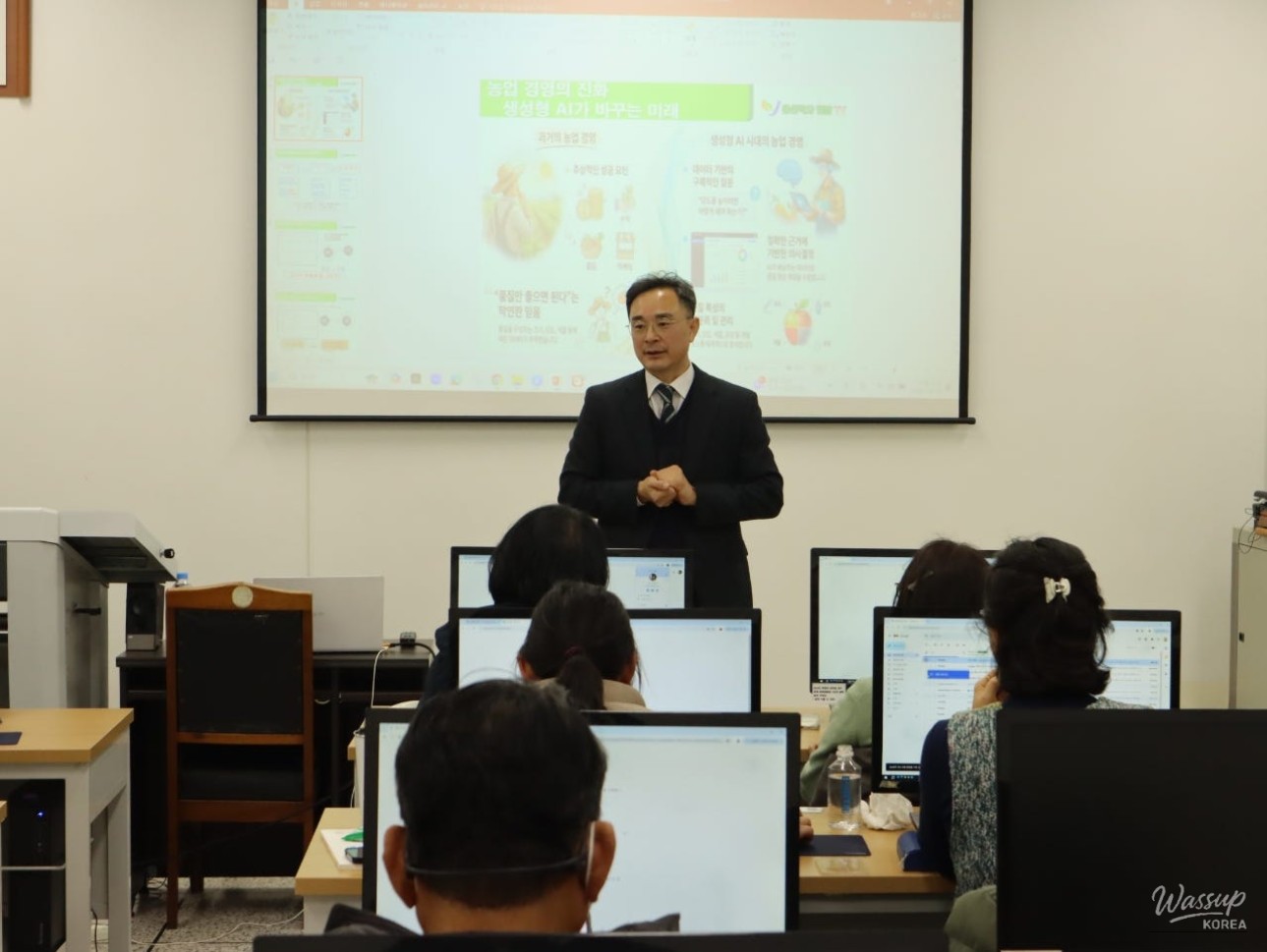
Day 1: Understanding AI and Building Marketing Strategy
The first session focused on lowering the psychological barrier toward AI.
Farmers compared generative AI tools such as ChatGPT, Gemini, and Perplexity, learning which ones could be directly applied to agricultural marketing.
They practiced prompt engineering and developed farm-specific brand stories through SWOT analysis and 4P strategy design.
Day 2: Creating Visual, Audio, and Video Content
The second session emphasized content creation that resonates with modern consumers.
Participants produced promotional images using tools like Nanobanana and ImageFX, and even created farm brand songs with Suno AI.
Simple video production was practiced using Vrew by inserting scripts, making video marketing approachable even for beginners.
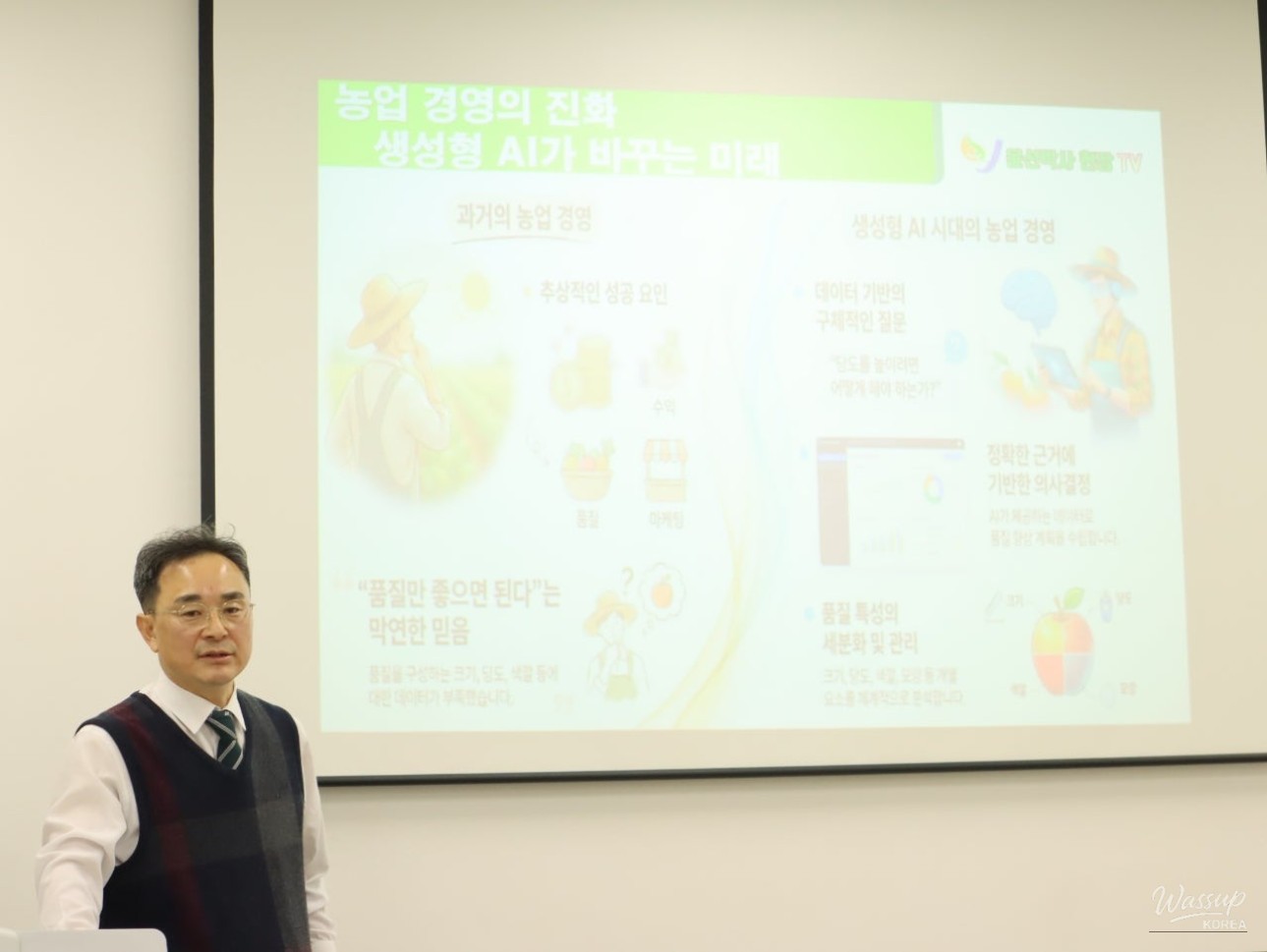
Day 3: Automating Marketing and Sharing Results
The final session focused on optimization and sustainability.
Farmers built simple AI assistants to automate parts of their marketing workflow.
They also learned how to convert text into audio and video formats for direct uploads to social media platforms.
Voices from the Training Field
One participant shared that AI had always felt distant, but this training made it practical and approachable.
Creating promotional images, songs, and videos helped transform vague marketing ideas into concrete action plans.
Another participant appreciated that the program focused on real-world application rather than simply introducing new technology.
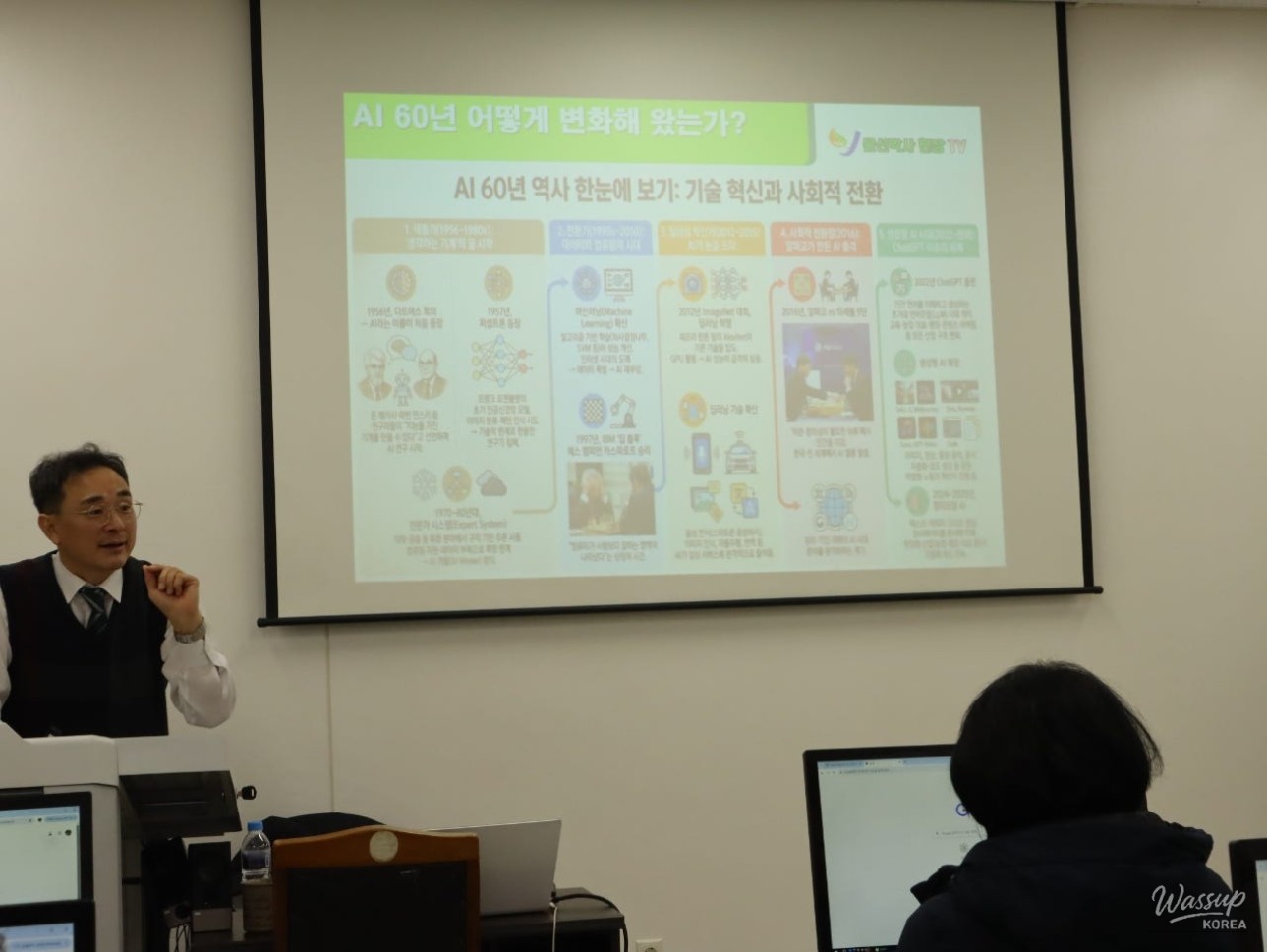
AI Marketing and the Future of Direct Farm Sales
Consumer trends are rapidly shifting toward freshness, local food, and trust-based purchasing.
Especially among younger generations, storytelling and transparency have become decisive buying factors.
Direct sales allow farmers to reduce distribution costs, strengthen trust, and communicate directly with consumers.
Building Sustainable Agriculture Through Digital Skills
Using AI in agricultural marketing is no longer optional but a core capability for sustainable farming.
As the saying goes, even a pearl must be strung to shine.
By applying generative AI to branding and sales, farmers can turn their hard work into stable income and long-term growth.
No comments yet.