Pork Jowl Kimchi Stew: A Delicious and Easy Recipe


If you ask which part of pork is the most delicious, you'll probably shout 'Samgyeopsal (pork belly)'!
But if you think about it a little more, Hangjeongsal (pork jowl) is also delicious, and so is Galmaegisal (pork skirt meat)...
Then you start to wonder, which one is the most delicious?
Anyway, regardless, today it's all about Hangjeongsal cuisine! ^^
Hangjeongsal is the 'neck meat' of the pig.
(It's the same part of the neck as when you say 'to be grabbed by the neck' in a book ^^)
I heard that not a lot of it comes from one pig,
But although the taste and texture are good,
It seems to be a part that you can't eat as much of at once as Samgyeopsal or Moksal (pork shoulder).
Hangjeongsal is often eaten grilled, but it's also good cooked as Suyuk (boiled pork) or in a stew.
The only downside is that it's a bit fatty. It's probably as fatty, if not fattier, than Samgyeopsal.
Kimchi stew or Kimchi Jjim (braised kimchi) made with fatty Hangjeongsal is delicious.
You have no idea how delicious it is when the fat from the Hangjeongsal soaks into the Kimchi. It might sound greasy, but no no!
Well, a day for eating Hangjeongsal Kimchi stew might mean putting aside thoughts of dieting and health for a while.
But it's delicious, and it's not like I eat it every day, so it's okay.
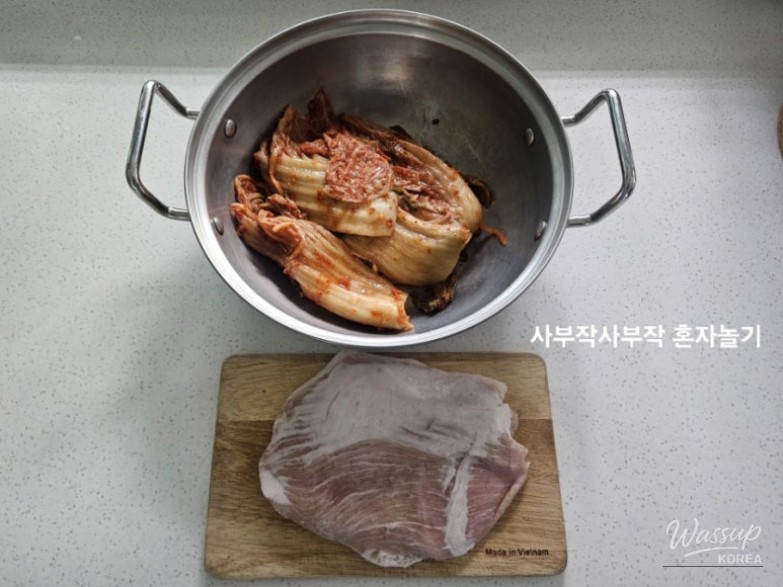
For Hangjeongsal Kimchi Jjim, you need a side of delicious, well-fermented Kimchi.
Prepare the outer leaves of the Kimchi, which have a wide leaf area, so you can roll the Hangjeongsal in them.
(Actually, the outer leaves are a bit tough to eat raw, right? But when they're cooked thoroughly, they become soft and chewy, which is so good.)
And a chunk of Hangjeongsal.
Because it's imported Hangjeongsal, there's not much to trim or do.
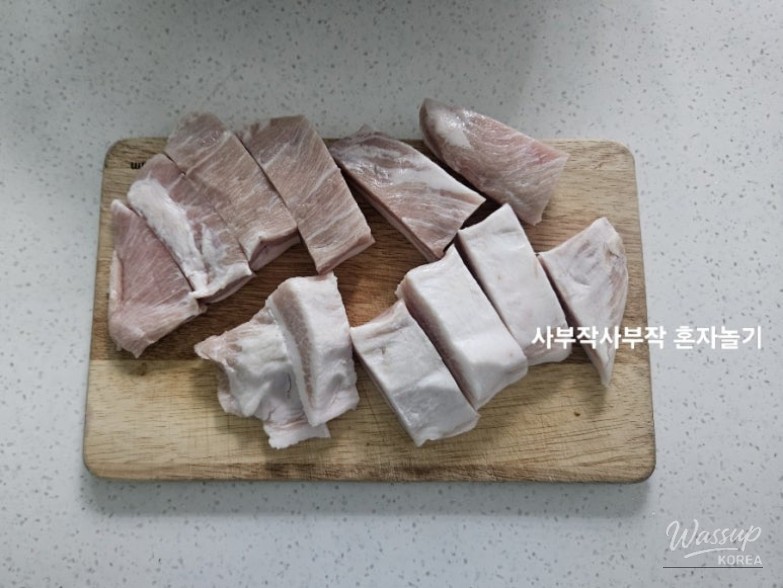
Just wipe it gently with a paper towel and use it.
Cut the Hangjeongsal into appropriate sizes.
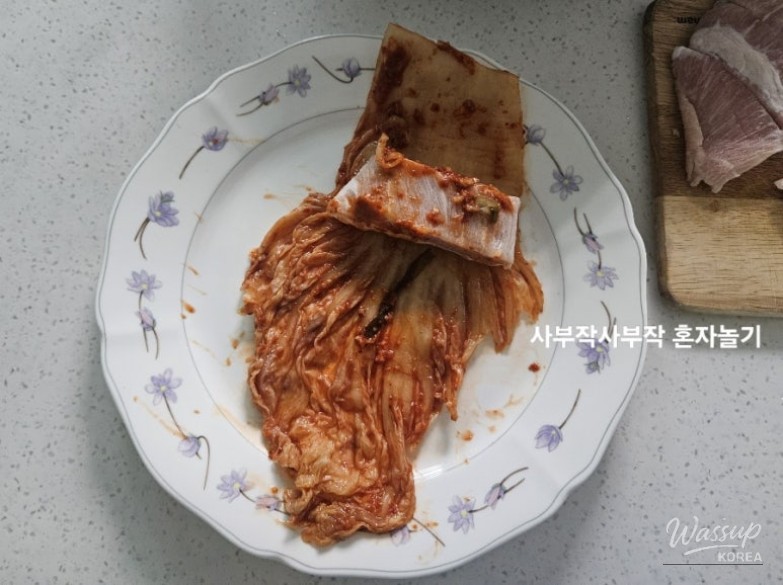
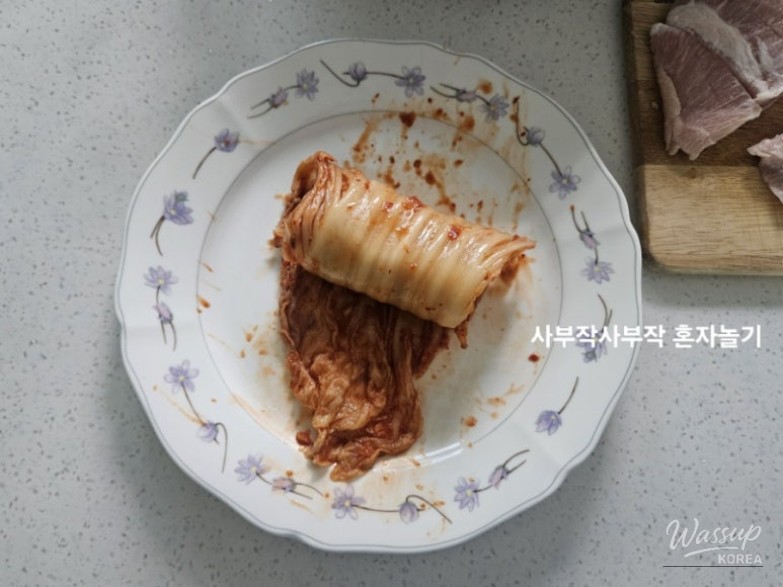
Place it on the stem part of the Kimchi.
Roll it up. That's it!
Gently wrap it with the wide leaf to prevent it from falling apart.
(There's no need to fix it with a bamboo skewer. It won't fall apart while it's simmering. But when you eat it, haha)
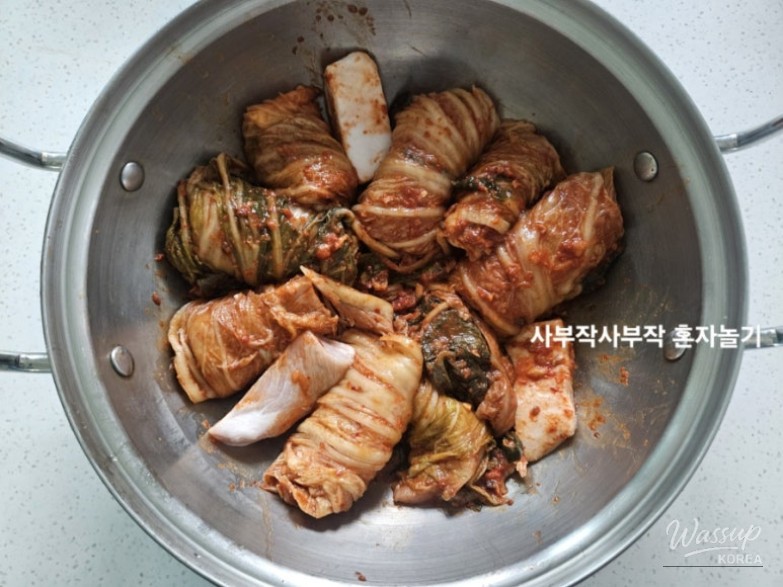
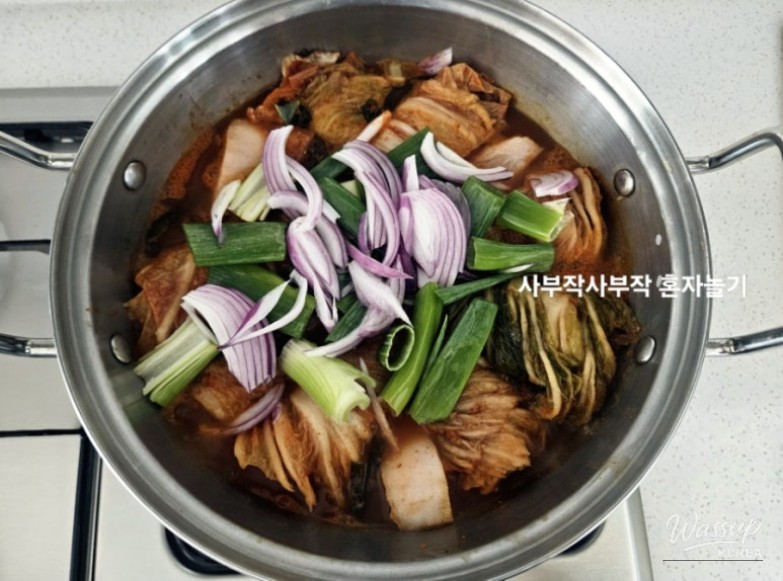
Place the Kimchi-wrapped Hangjeongsal around the edge of a pot.
Add the pieces of Hangjeongsal that didn't get a Kimchi 'coat'.
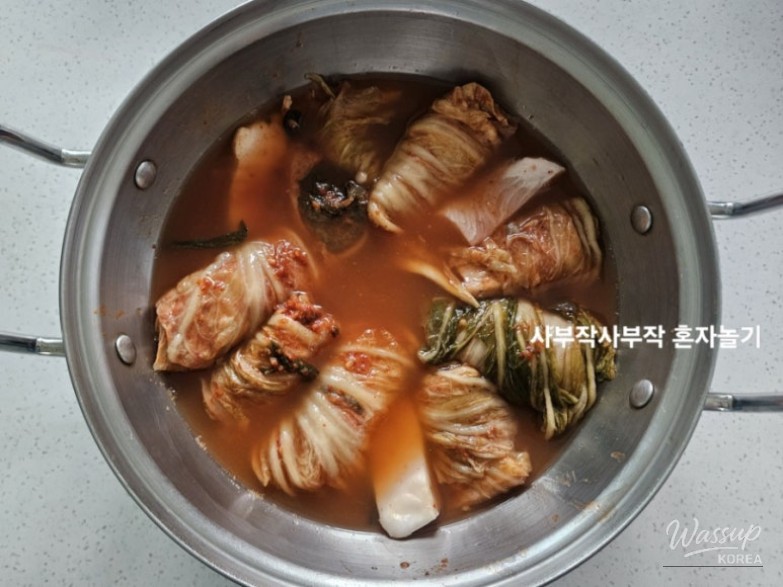
Pour in just enough plain water to cover it and boil.
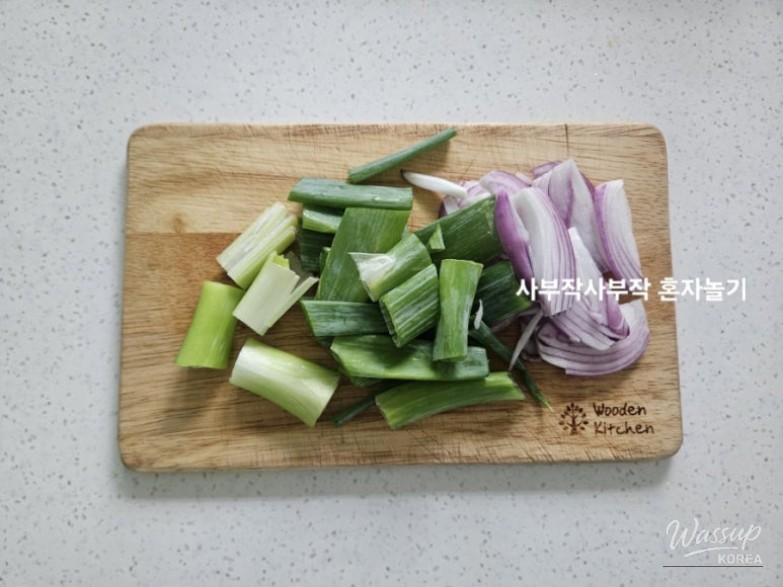
Add chopped green onions, onions, and minced garlic, and simmer thoroughly.
Until even the Kimchi stems become soft ^^
The Kimchi juice isn't adding enough flavor so the seasoning is bland.
In this case, season it with Gukganjang (Korean soy sauce for soup), salt, fish sauce, and oyster sauce, or anything else you can use to season it.
I think it tastes best when I season it with fish sauce and oyster sauce.
And if the water evaporates while it's simmering, add a little more water.
To make the broth richer, try adding Gochujang (Korean chili paste) and fine Gochugaru (Korean chili powder).
To add savory flavor, adding half a spoonful of sugar is good.
Pepper is optional, but you can sprinkle it on top at the end.
On days when I don't feel like eating rice, but I want to eat Hangjeongsal Kimchi Jjim.
I seasoned it lightly so I could eat it without rice.
Actually, Kimchi Jjim tastes better with rice, but I just don't like the taste of rice these days ㅠㅠ
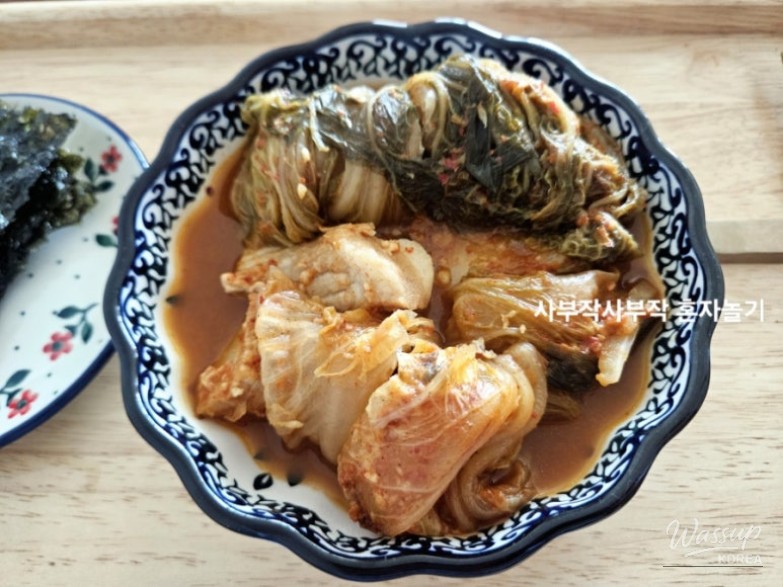
Even though it's Kimchi Jjim made with Hangjeongsal, I thought it would be greasy.
But it seems to have less fat than Samgyeopsal.
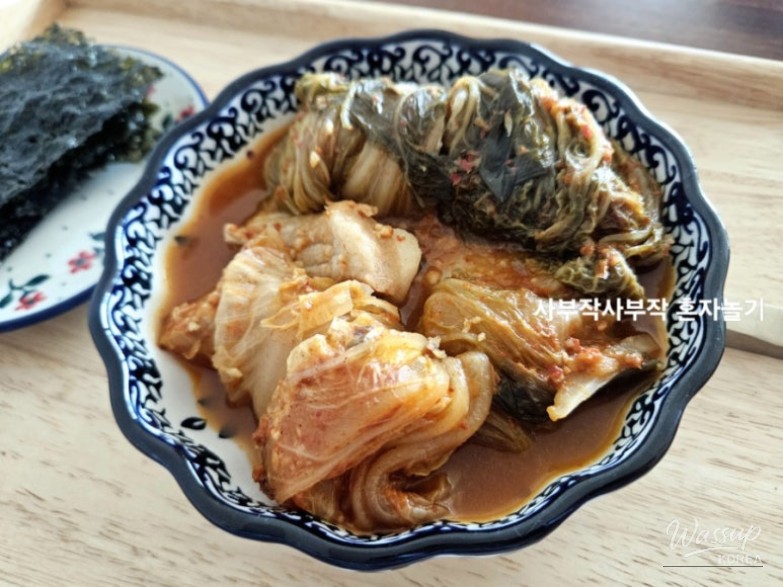
I thought there would be oil floating on top of the broth, but surprisingly it's clear.
If you plate it nicely, it's good for inviting guests.
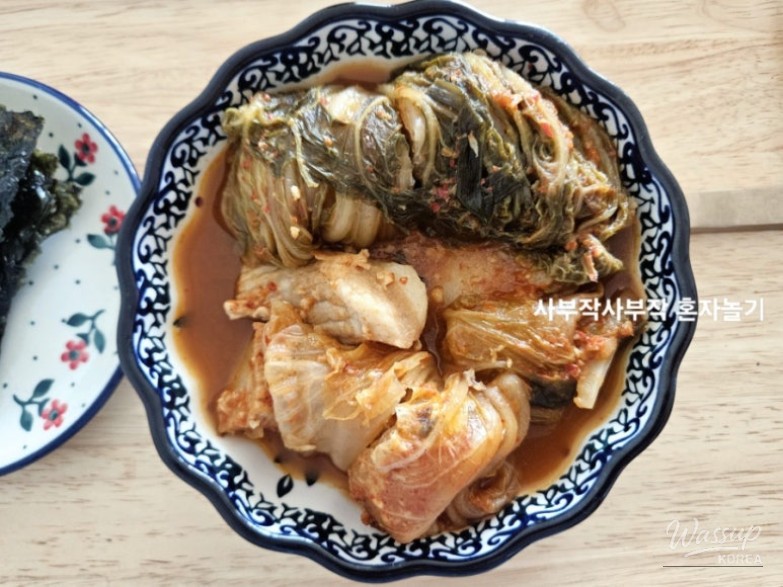
Delicious Hangjeongsal Kimchi Jjim, done! ^^


No comments yet.