Korean Radish Salad (Musaengchae) Recipe
- Original source
- blog.naver.com


Keywords:
Musaengchae (Korean Radish Salad) Recipe
Ryu Su-yeong's Musaengchae Recipe
How to Make Musaengchae
Ryu Su-yeong's Radish Salad Recipe
Golden Recipe for Musaengchae
Hello, everyone!
It's MJ's quick recipe.
Radishes are in season, making them incredibly delicious right now.
While slicing the radish, I tried a piece raw,
and it had a wonderful natural sweetness.
For those who haven't made kimchi yet,
you might need a golden recipe for radish kimchi, right?
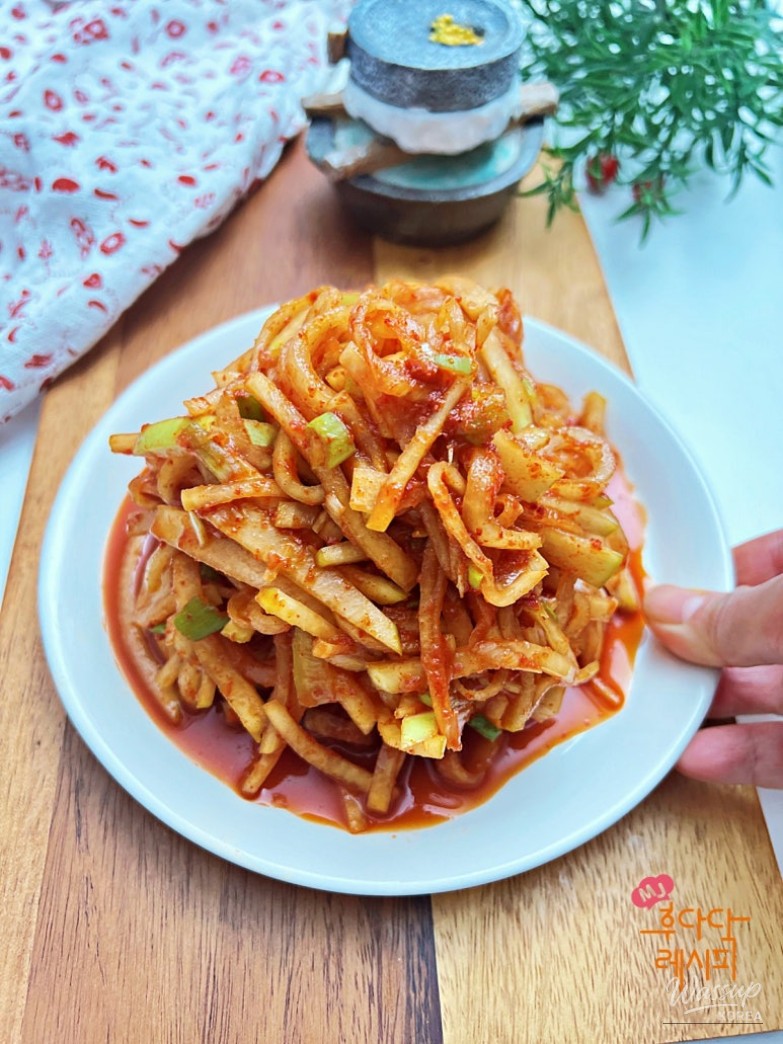
Using Ryu Su-yeong's Musaengchae recipe,
mix it all together and store it in the refrigerator.
It will be a comforting side dish.
Even after some time, the flavor doesn't fade,
and it's a great recipe to eat as a substitute for kimchi,
so it's okay to make a large batch of
Ryu Su-yeong's Musaengchae.
The key point of this recipe
is the order of adding the seasonings. Start with sugar
to remove the radish's bitterness, then add the other seasonings
and mix to finish.
This recipe doesn't use minced garlic, only plenty of green onions,
resulting in a refreshing and clean flavor
that is truly exceptional.
You might wonder, is it really delicious with just green onions?
I was skeptical at first,
but the more time passes,
the cleaner and more refreshing it tastes,
making it even more delicious.
Shall we make it?
Ingredients and Instructions
Musaengchae (Radish Salad) Recipe
Ingredients:
1 tablespoon = rice spoon
1 teaspoon = tea spoon
500g radish
20cm green onion (about 1 stalk)
4 tablespoons sugar
5 tablespoons red pepper powder
2 tablespoons soy sauce
1 tablespoon fish sauce
3-4 tablespoons vinegar
1. Preparing the Radish: Slicing
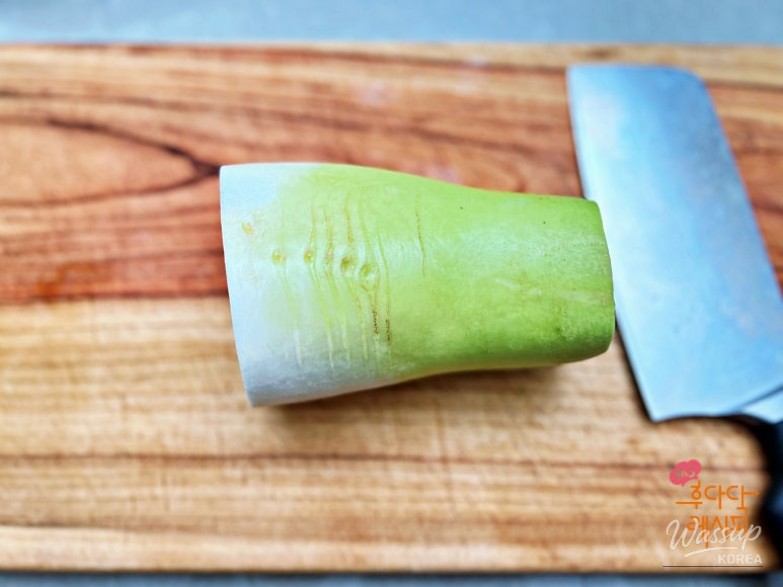
Prepare about 500g of radish.
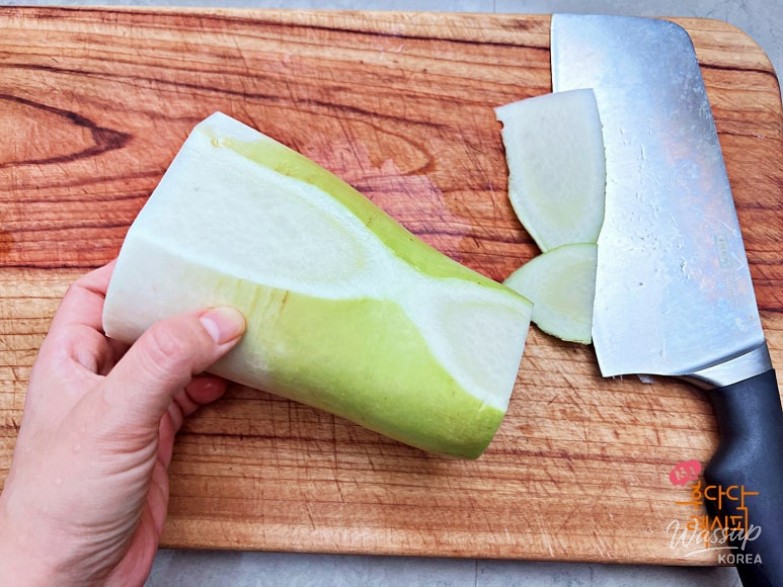
A typical radish weighs about 1-1.2kg, so use half of it. Clean the radish skin with a scrub and use it with the peel on. Using the peel adds a crunchy texture that becomes more pronounced over time, making it even more delicious.
When slicing the radish, cut off the bottom to prevent it from rolling.
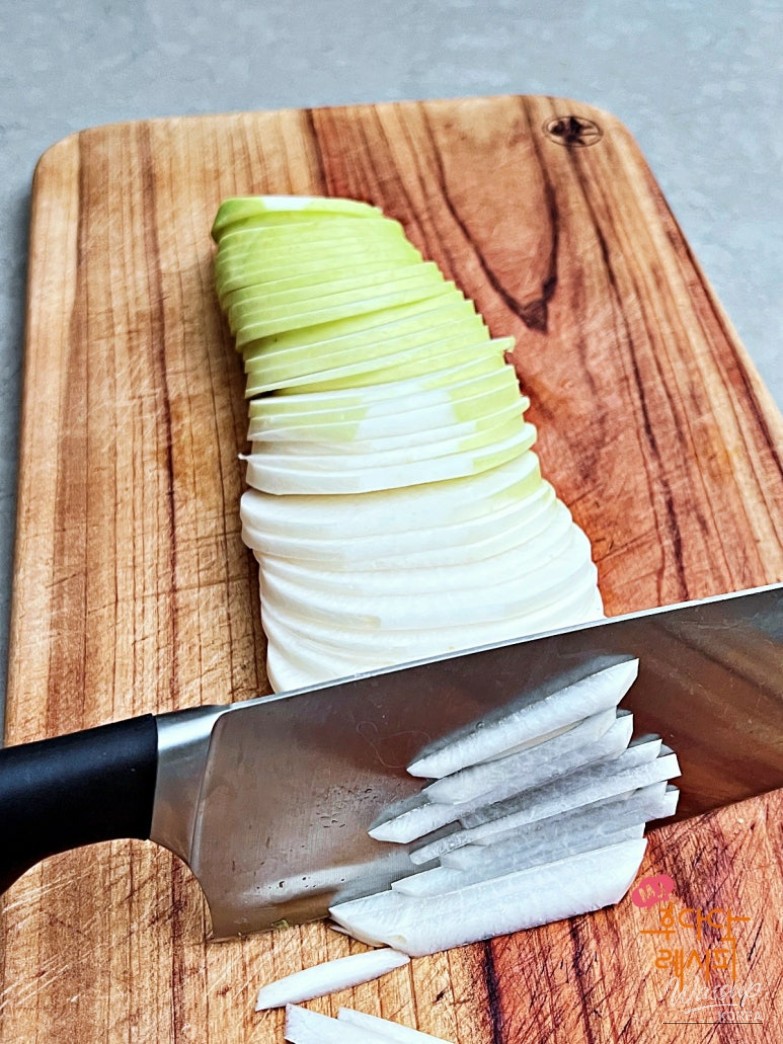
Place the radish firmly on the cutting board and slice it into uniform thickness.
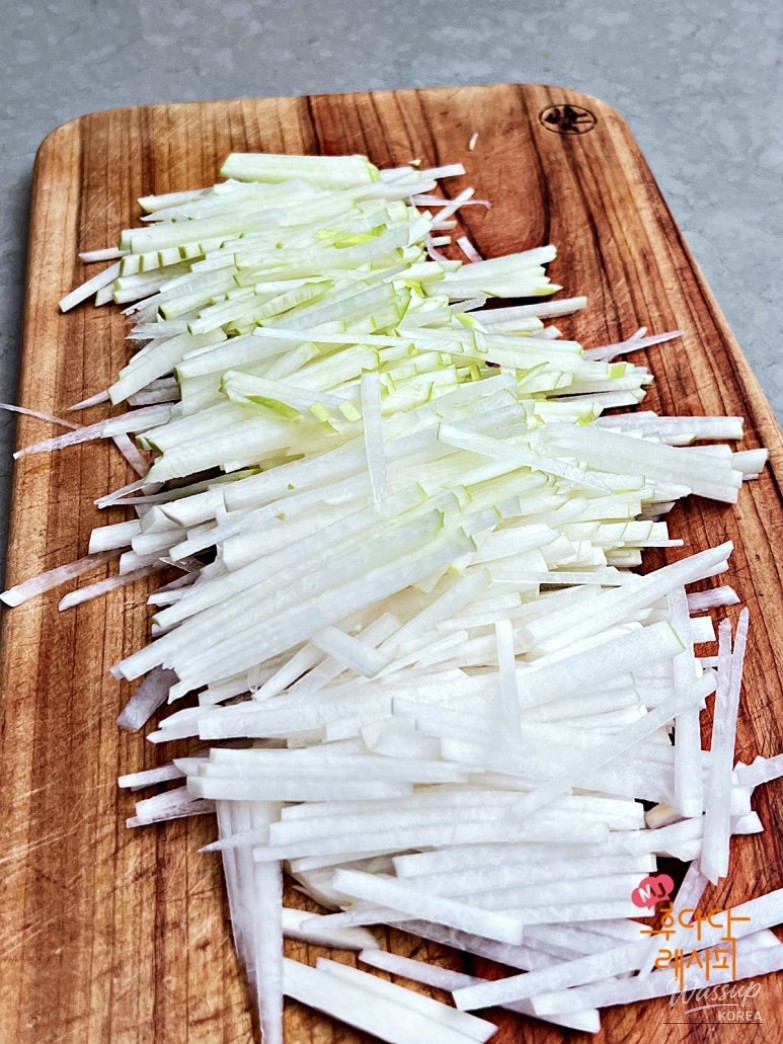
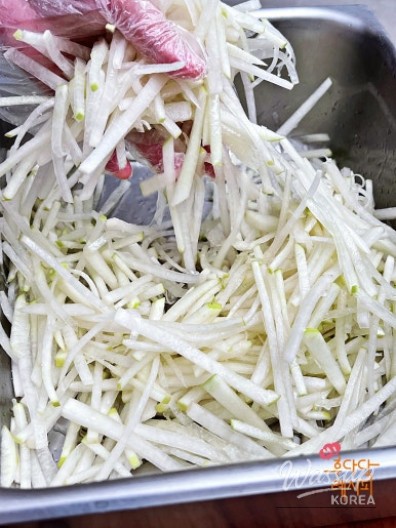
Now, slice it into 0.2cm thick strips.
Of course, you can use a mandoline, but slicing it with a knife makes the crunchy texture last longer.
2. Preparing the Green Onion
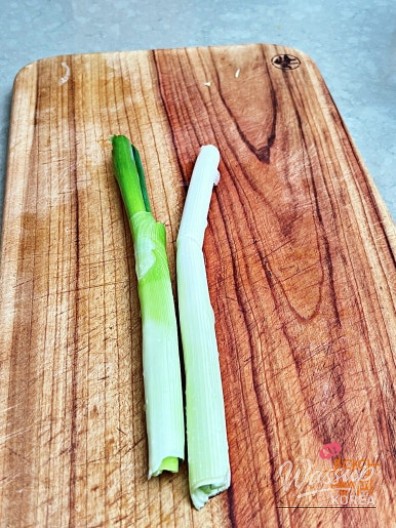
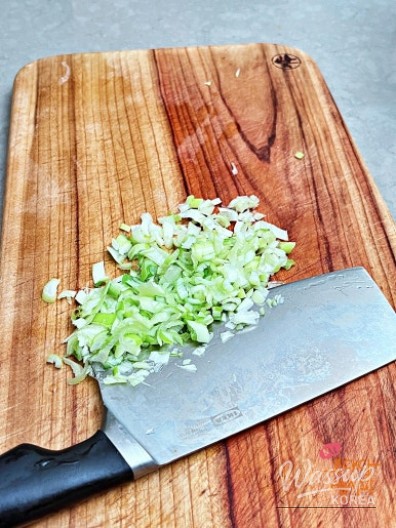
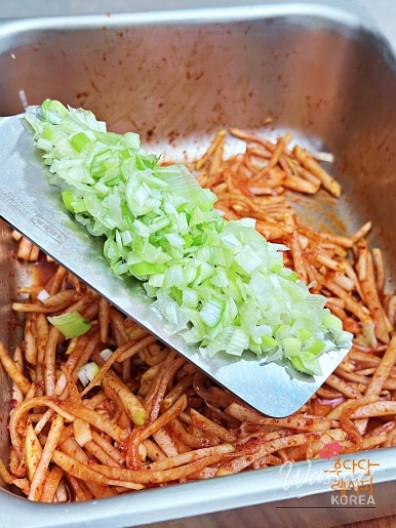
Prepare about 20cm of green onion, mainly the white part. I used the green part as well. You can mince the green onion, but it's also good to slice it thinly and mix it in.
3. Seasoning in Order
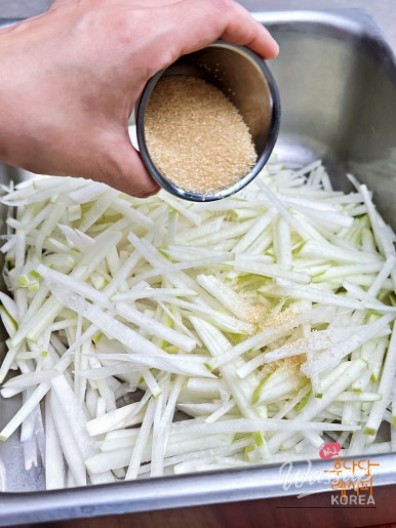
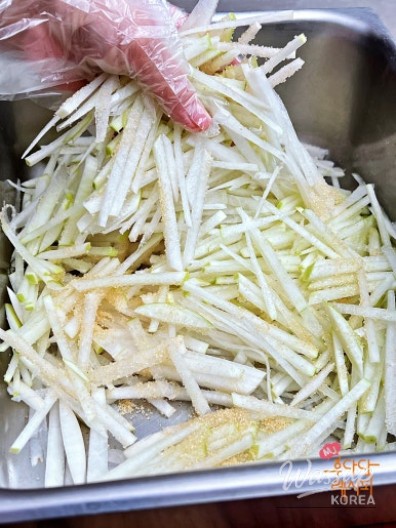
Place the sliced radish in a bowl, add 4 tablespoons of sugar, and mix. Sugar doesn't dissolve easily, so it's added first. It also helps to make the radish crispier. If you substitute with allulose, the radish texture will be less crunchy.
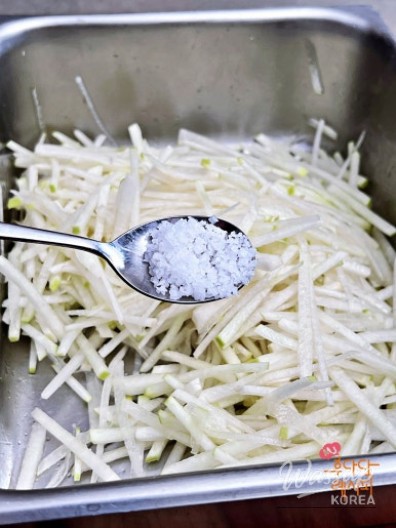
Originally, the recipe didn't include coarse salt, but since I'm making it as a kimchi substitute to store in the refrigerator, I added a small amount of coarse salt and mixed it in.
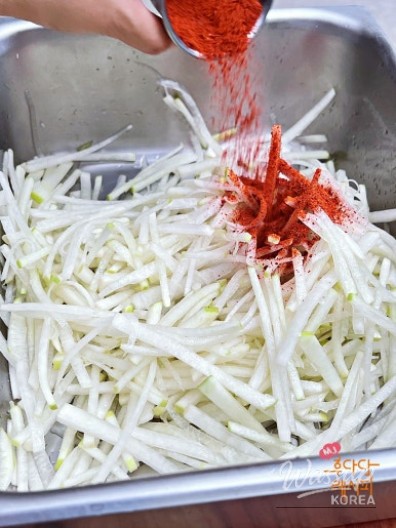
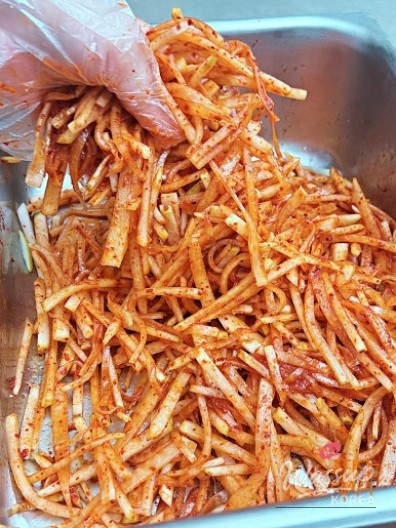
Next, add 5 tablespoons of red pepper powder generously and mix. For Musaengchae, medium to coarse red pepper powder is suitable. If the red pepper powder is too fine, it can taste powdery. Mixing the red pepper powder first helps to absorb moisture and allows the color to develop evenly and beautifully.
Add 2 tablespoons of soy sauce and 1 tablespoon of fish sauce.
Soy sauce is used for dishes that are not heated. The original recipe calls for a 2:1 ratio of soy sauce to fish sauce, but if you want a kimchi-like flavor, you can add more fish sauce.
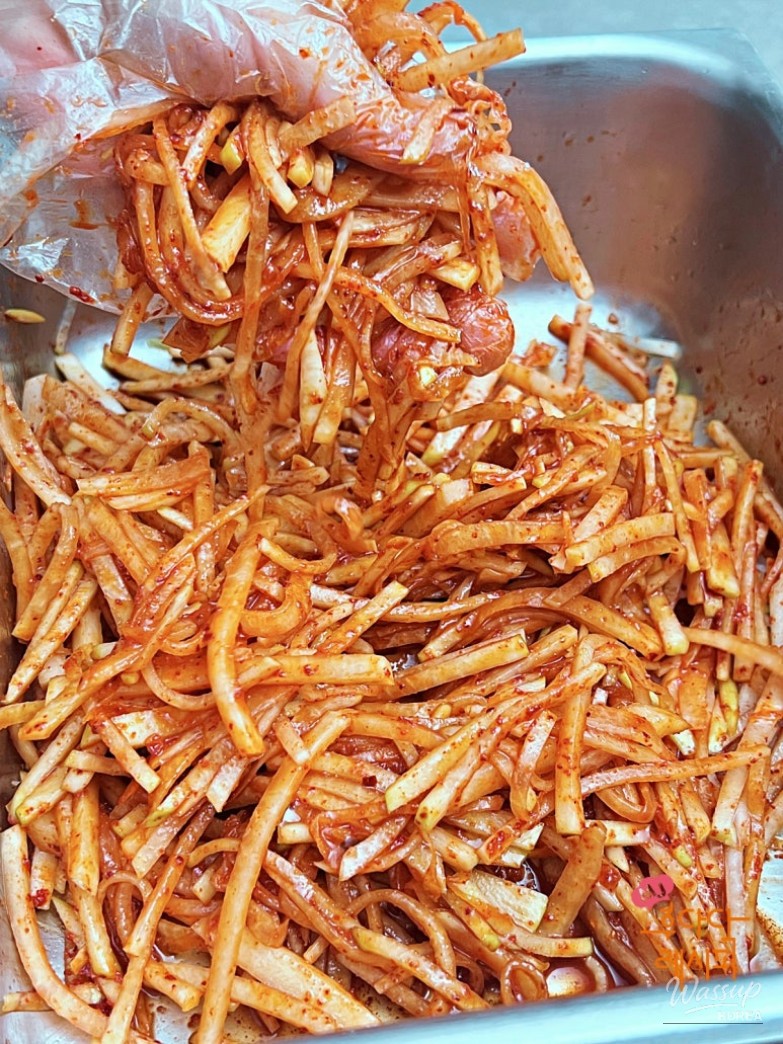
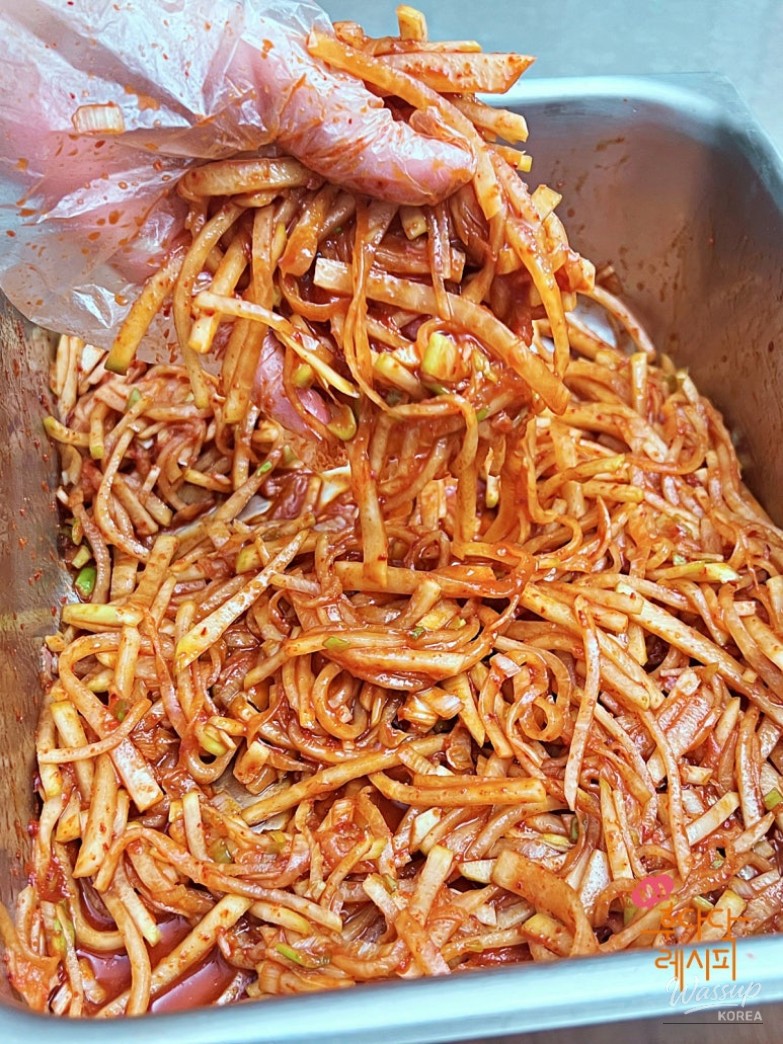
Mix well with the seasoning.
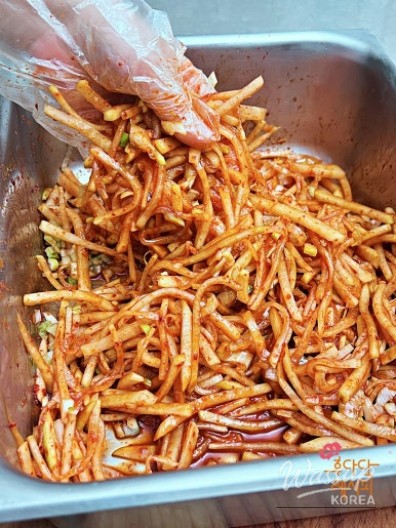
Add the sliced green onions and mix well with the seasoning.
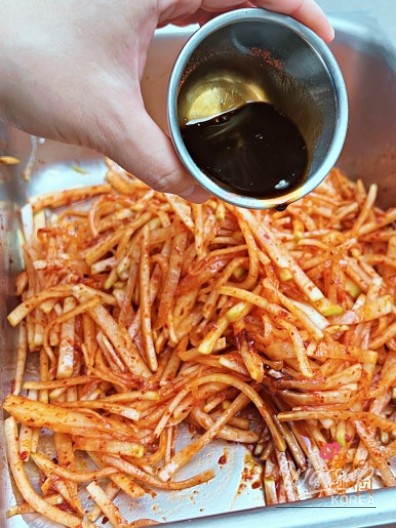
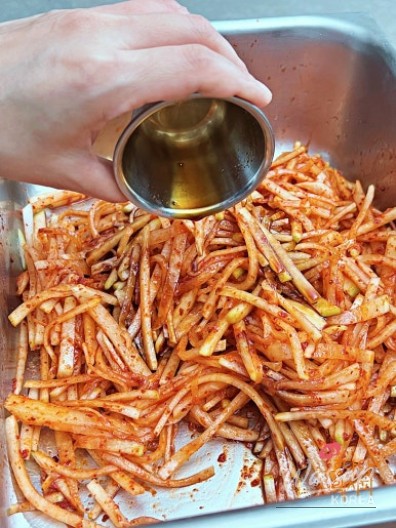
Finally, add 3-4 tablespoons of vinegar to taste to enhance the sour flavor.
The key point of the Musaengchae golden recipe is the order of seasoning:
Sugar - Red Pepper Powder - Soy Sauce & Fish Sauce - Vinegar.
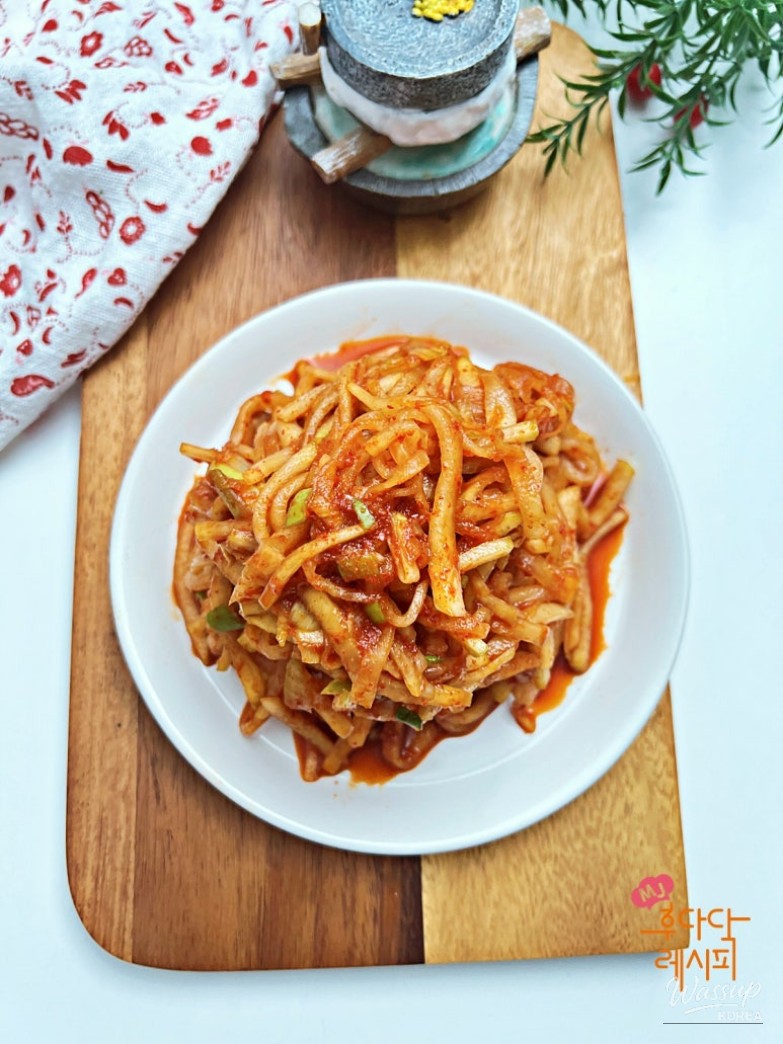
3. Completion
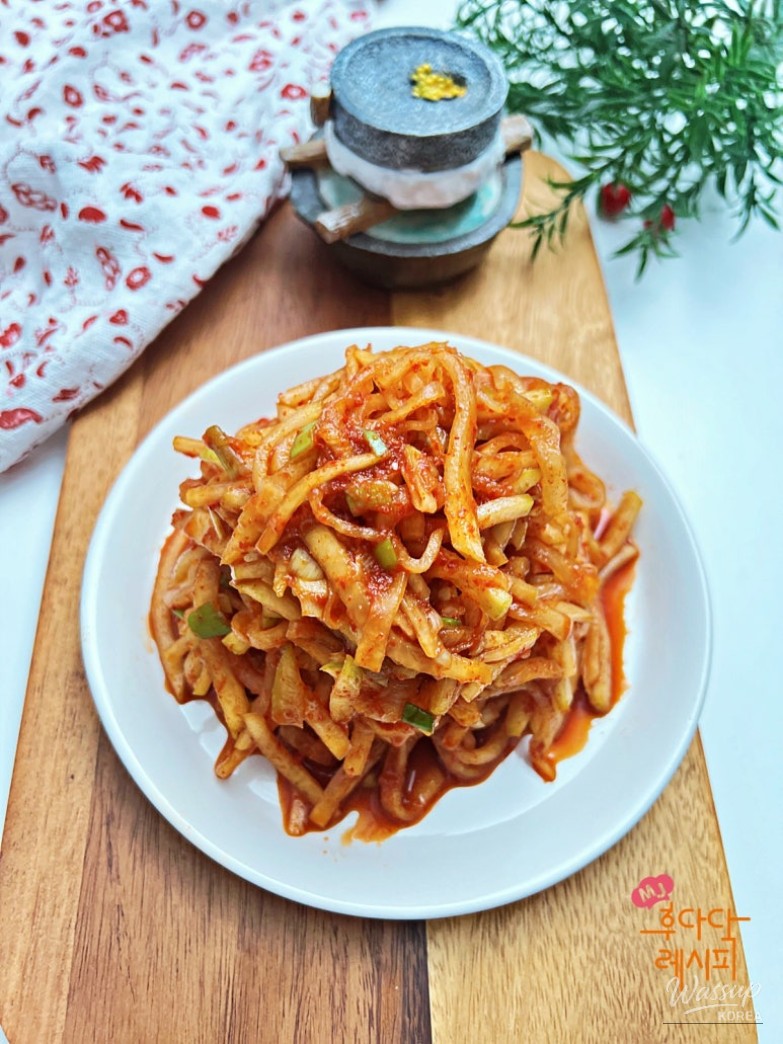
In fact, the flavor is better when the seasonings have had time to penetrate the radish.
The flavors blend harmoniously.
So, instead of putting it in a container right after mixing,
it's better to let it sit for a while,
taste it,
add more seasoning to your liking,
adjust the final seasoning,
and then store it in a container.
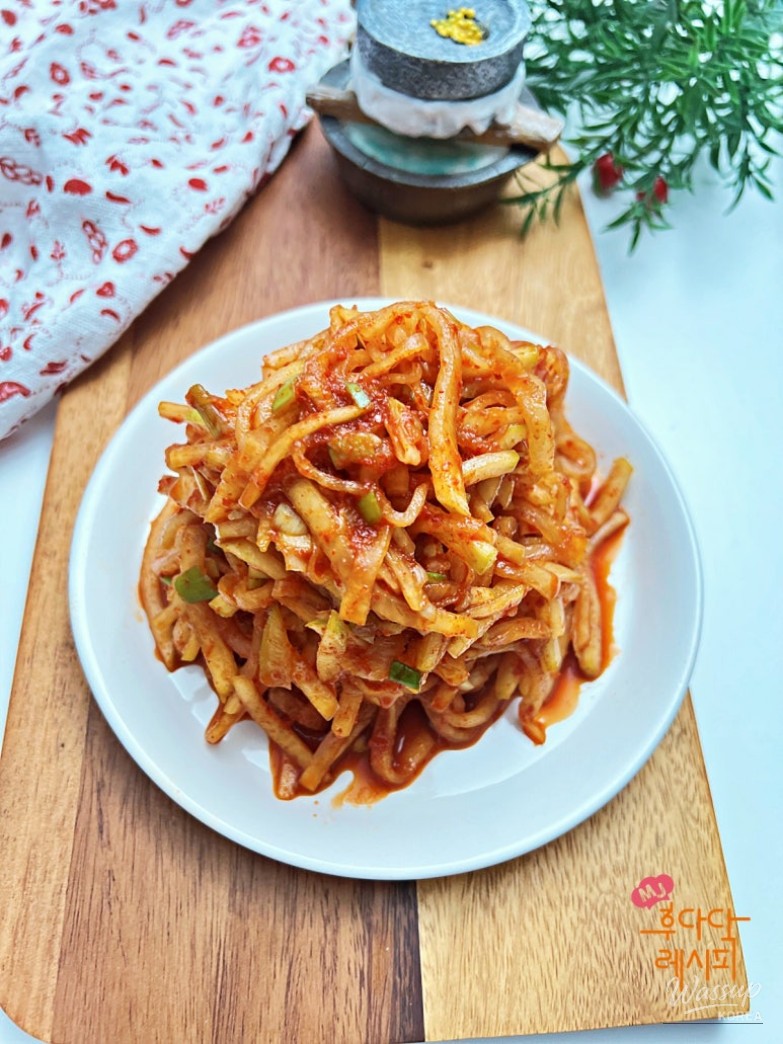
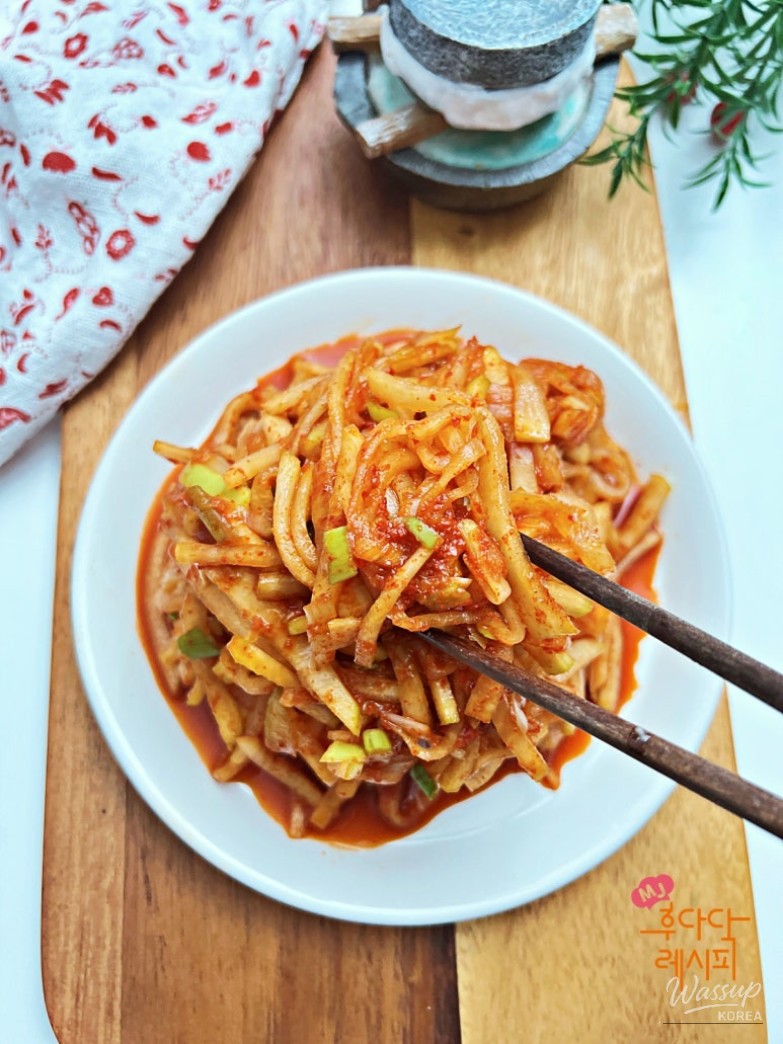
Adding the radish peel
adds a crunchy and delicious texture
making this radish kimchi even more delicious.
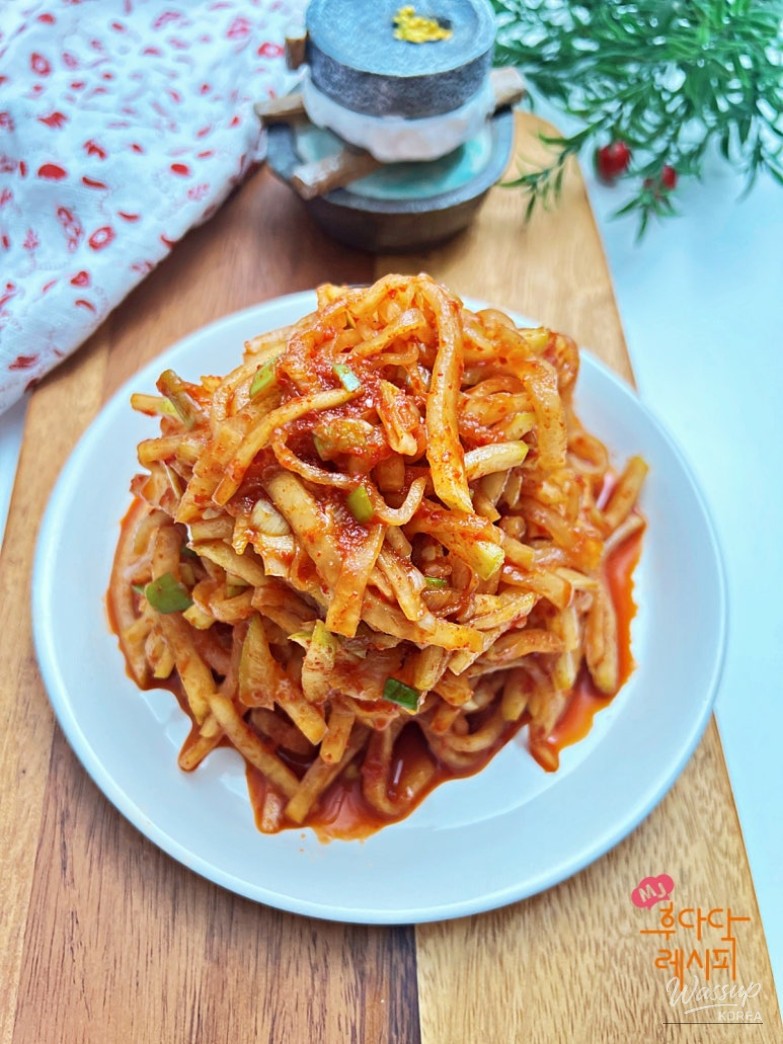
It's great as a side dish,
but it goes especially well with bibimbap.
Add a fried egg and gochujang (red pepper paste)
and mix it all together for a heavenly taste!
It can also be used as a topping for bibim guksu (spicy mixed noodles).
Enjoy making it and have a happy Friday!
MJ's Quick Recipe Tips:
Slice the radish into uniform thickness.
Prepare plenty of green onions without garlic.
Season in the order of sugar - red pepper powder - soy sauce & fish sauce - vinegar.
Mix and store in the refrigerator.
You can enjoy it whenever you want.


Source :https://blog.naver.com/mj_hudadak/224075661591
More from Recipe



No comments yet.