How to Make Tender Korean Boiled Pork (Suyuk) with Pork Shoulder and Pork Belly


How to boil pork belly for Suyuk, How to boil pork for tender Suyuk, How to boil pork shoulder for Suyuk, Korean boiled pork, Boiled pork, Pork shoulder Suyuk
By. Eunsolheesupmom
These days, it feels like my family has been enjoying Suyuk quite often.
I think it's because I made a large batch of pickled vegetables (Chae Jangajji) when making Kimchi and stored it in the kimchi refrigerator. The taste is still great, so every weekend, they ask me to boil pork to eat with it.
Even I, who don't particularly enjoy boiled meat, have been enjoying this dish. I think it's because the radish kimchi is so delicious.
Among the pork cuts, everyone prefers the one with the skin on, so I chose that. My husband and I prefer the savory and lean pork shoulder, while my son likes the Samgyeopsal (pork belly) with layers of fat, which is tender and savory. So, I prepared both and made Suyuk.
It's definitely good to taste both cuts and immediately realize the advantages of each.
Ingredients:
* Measurement = Rice spoon (1 = 10ml)
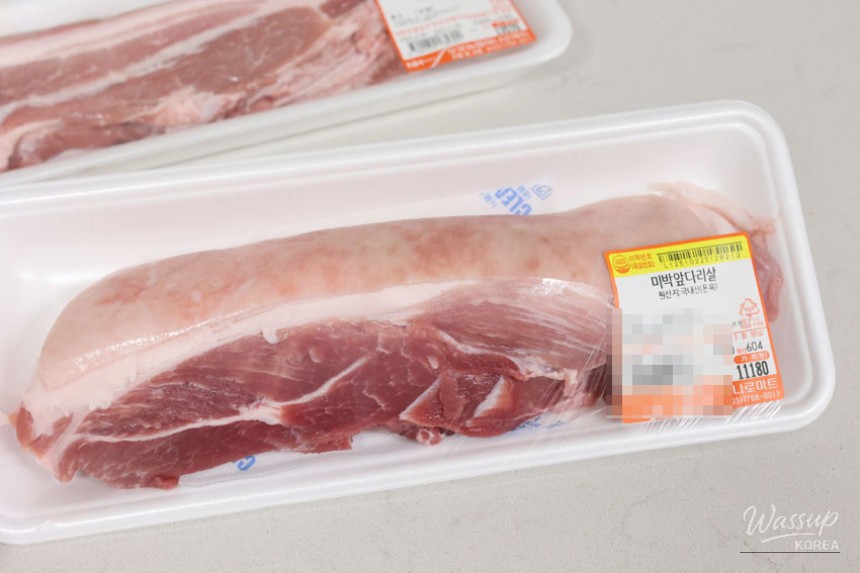
604g Pork Shoulder
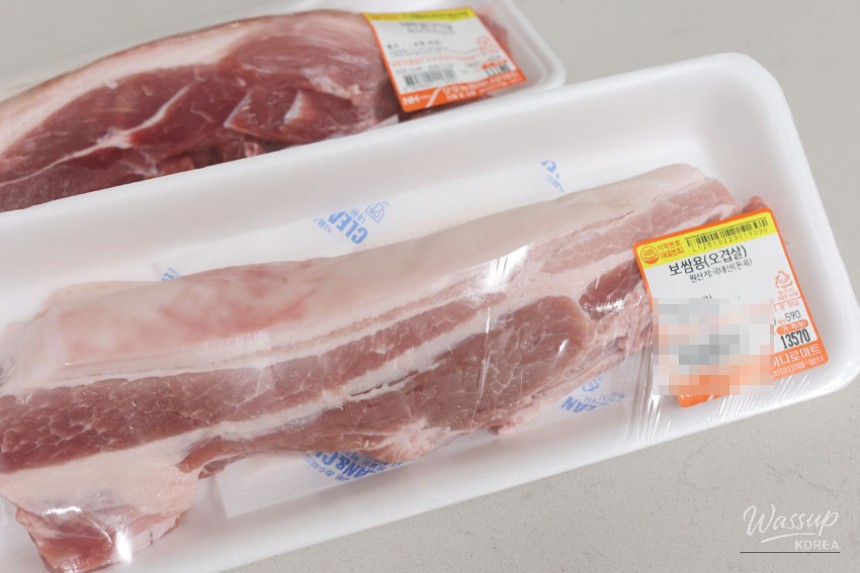
590g Pork Belly
2 Green onion (white part)
1 Onion
3 Bay leaves
1.5 tablespoons Soybean paste
5 cloves Garlic
0.5~0.7g Coffee
50~60ml Soju
1.2 liters Water
1. Preparing the Meat
First, prepare the main ingredient, the meat. As you can see in the picture, I prepared about 604g of pork shoulder.
I also prepared 590g of pork belly for Bossam (Suyuk). I prepared so much, but we ate it all, so it must have been delicious.
2. Adding all Ingredients to the Pot
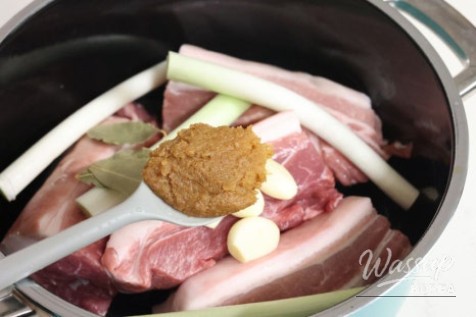
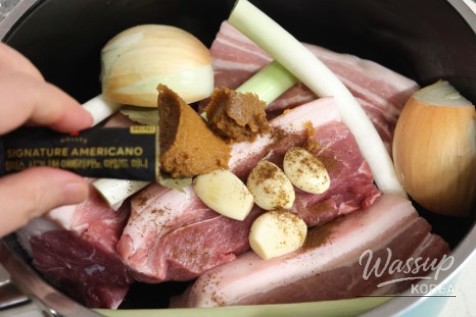
Cut the large pieces of meat into halves. Use a kitchen towel to blot out any remaining blood on the surface. Then, put all the ingredients into a pot with a wide bottom.
Trim the ends of the garlic and add 5 cloves. I wanted to add more, but that's all I had. I usually add 7-8 cloves.
Cut the 2 green onion (white parts) in half and add them to the pot. Add 3 bay leaves.
Add 1.5 tablespoons of Korean soybean paste to add a savory flavor and remove any unpleasant smell from the pork.
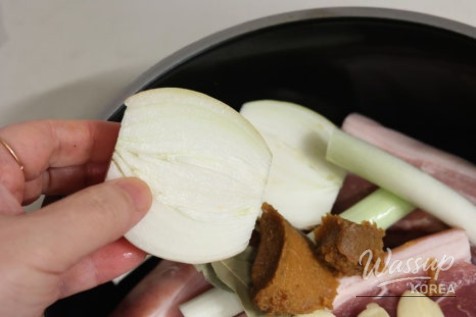
Cut 1 large onion in half and add it to the pot.
Add about 0.5~0.7g of coffee and 50~60ml of leftover Soju.
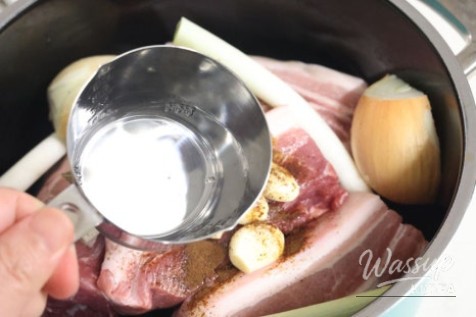
Finally, add 1.2 liters of water. Adjust the amount of water depending on how submerged the meat is.
3. Boiling the Suyuk
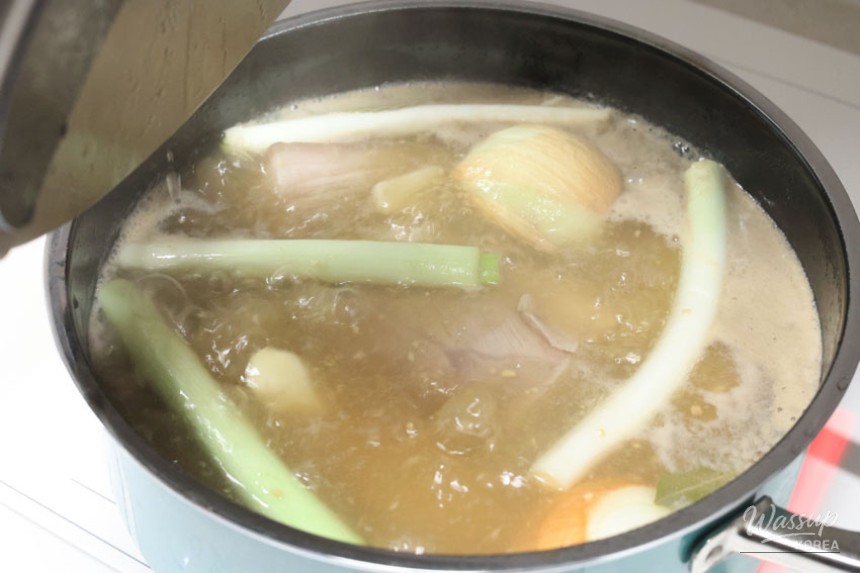
As you can see, add water until the ingredients are fully submerged. Close the lid and start boiling on the highest setting of the small burner on the induction stove. When the water starts to boil vigorously,
set the Suyuk boiling time to 40 minutes and lower the heat to level 8 on the small burner of the induction stove. Simmer thoroughly.
This is how it looks after 20 minutes of boiling. Flip the meat with tongs and close the lid to boil for the remaining time.
This is how it looks after an additional 20 minutes at level 8 without adjusting the heat. So, this is what it looks like after 40 minutes of boiling. To check if it's cooked, poke the thickest part of the meat with chopsticks. If the chopsticks go in smoothly and no blood comes out when you remove them, it's a sign that it's cooked well.
If blood comes out even after boiling for the same amount of time, boil for an additional 5-10 minutes.
So, after boiling to this point,
4. Slicing
I didn't slice all of it at once. I took out one piece of pork shoulder Suyuk and one piece of pork belly Suyuk and sliced them into bite-sized pieces. Now, all that's left is to enjoy it with delicious kimchi :-)
5. Completion (Plating)
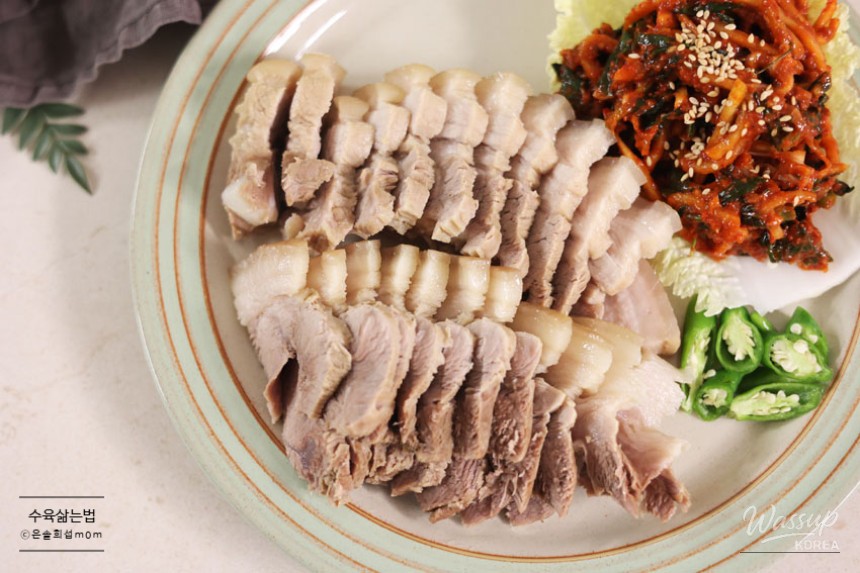
This is how it looks when I put it on a plate with pickled vegetables. You can also add sliced garlic or chili peppers. I was out of fresh garlic, so I used pickled garlic instead.
You can also add salted shrimp paste. I was going to make it, but I didn't have any garlic... ^^;;
Even without it, everyone enjoyed it so much.
If you look at each piece,
the top one is the boiled pork shoulder, and the bottom one is the boiled pork belly. You can easily tell the difference just by looking at them.
When you make Suyuk with pork shoulder, it's not dry and has a unique chewy and lean taste. It's also cost-effective.
When you make Suyuk with pork belly,
it's rich in fat, making it tender and savory.
Tasting each piece alternately,
I could definitely tell the difference in taste.
In conclusion, both tasted great, so I thought it would be great to include both in the Suyuk recipe anytime. It was also tender and chewy, making the texture great.
The most important thing when enjoying delicious Suyuk is that if the boiling time is too long, the meat will become dry and the fat layer will become mushy, making the texture less appealing.
Also, the flavor will decrease, and unpleasant smells may arise. So, boil it for the right amount of time to enjoy it moist and tender.








Source :https://blog.naver.com/psy9133/224075600152
No comments yet.