Winter Temples: A Journey Through Korea's Timeless Beauty
37-41 Jeondeungsa-ro, Gilsang-myeon, Ganghwa-gun, Incheon
전등사


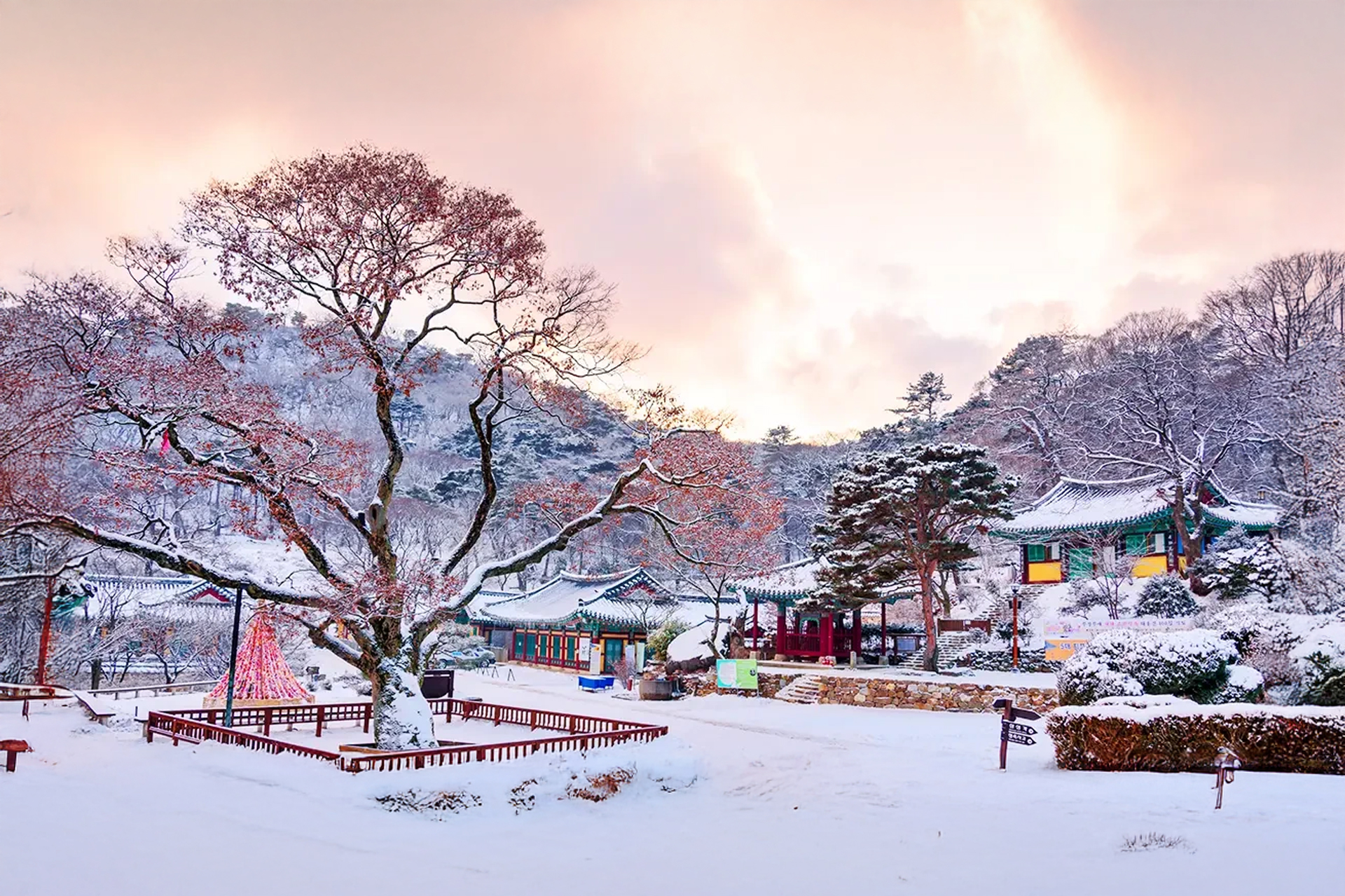
Korea’s millennium-old temples undergo a mystical transformation when the first snow falls, turning ancient wooden structures into silver-capped masterpieces. These spiritual sanctuaries, where history and nature are deeply intertwined, offer a profound sense of tranquility that feels as if time itself has stood still amidst the white landscape.
From the coastal fortress of Ganghwa Island to the bustling heart of Gangnam and the camellia forests of Gochang, these top-rated winter destinations provide more than just a view. They offer a space for deep reflection and a chance to experience the "historical breath" of Korea in its most serene and quietest season.
Jeondeungsa Temple: A Silver Fortress on Ganghwa Island
Where Ancient History Meets Winter Silence
Often cited as the first place to visit when it snows, Jeondeungsa Temple (전등사) in Incheon carries a history dating back to the 4th-century Goguryeo Dynasty. Leaning against the ancient Samrangseong Fortress, its rooftops and stone walls shine like silver when blanketed in soft snow. It is a site of immense historical significance, having once stored the Annals of the Joseon Dynasty.
The temple grounds house national treasures like the Daeungjeon and Yaksa-jeon halls. Beyond its religious role, Jeondeungsa stands as a symbol of national resilience, marked by monuments from the Byeongin Yangyo. Participating in a temple stay here during winter allows visitors to truly resonate with the silence and the weight of a thousand years of history.

Bongeunsa Temple: An Urban Oasis of White
Tranquility Amidst the Skyscrapers of Gangnam
It is often surprising to find Bongeunsa Temple (봉은사), a 1,200-year-old sanctuary, hidden among the glass skyscrapers of Seoul’s Gangnam district. Visiting the day after a heavy snowfall offers a rare chance to enjoy a quietude that silences the surrounding city noise. The blue winter sky provides a stunning backdrop for the snow-dusted Beophwangru and Daeungjeon.
While famous for its spring blossoms, winter at Bongeunsa offers a unique visual contrast where the bright red fruits of cornus trees peek through the white snow. After exploring the grounds, visitors can warm up at Yeonhidaewon, a traditional tea house located within the temple, offering a cup of tea with a panoramic view of the calm winter scenery.

Seonunsa Temple: Camellias in the Snow
The Mystical Atmosphere of Gochang’s Dosol Mountain
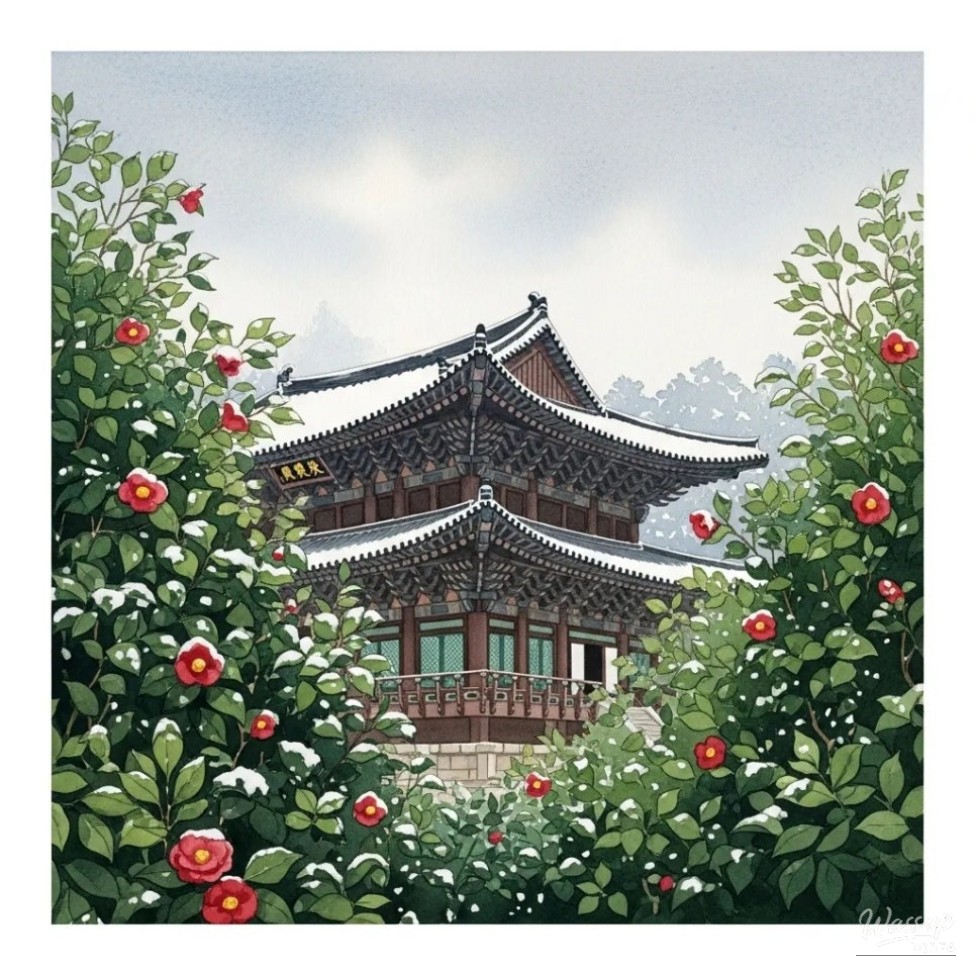
Seonunsa Temple (선운사) in Gochang is renowned for its lush camellia forest, a natural monument with trees aged around 500 years. Even in the dead of winter, these trees retain their deep green leaves, creating a vibrant contrast against the white snow. The path through this forest behind the Daeungjeon is a favorite trail for winter travelers seeking a mystical atmosphere.
A further hike to the Dosolam Temple, perched precariously on a cliff, offers a profound sense of awe. Surrounded by the snowy mountain landscape, the temple feels like a hidden world. With a 1,400-year history, Seonunsa allows visitors to appreciate both the delicate beauty of nature and the enduring value of Korean cultural assets.

Essential Tips for Winter Temple Exploration
Stay Safe and Warm While Experiencing History
To fully enjoy these ancient sites, it is best to visit between dawn and dusk when the lighting highlights the snow's texture. While admission to Jeondeungsa and Seonunsa is free, visitors should be prepared for small parking fees. Wearing warm, waterproof clothing is essential, and shoes with slip-resistant soles are a must as the stone paths can be quite slippery.
Many of these temples are located near local restaurants that specialize in regional temple food or warm mountain herbs, which are perfect for warming up after a cold walk. Planning your trip to include these local flavors will make your winter pilgrimage even more memorable and comforting.

The quiet breath of a thousand-year-old temple in the snow offers a level of comfort that modern life rarely provides. Have you ever experienced the profound silence of a temple stay during a winter snowfall? If you're planning a visit to one of these temples, would you like me to find some recommended local restaurants nearby to help you warm up after your journey?
No comments yet.