The History of Yesan: A Journey Through Time
177 Beonyeong-ro, Yesan-eup, Yesan-gun, Chungcheongnam-do
예산 1100년 기념관



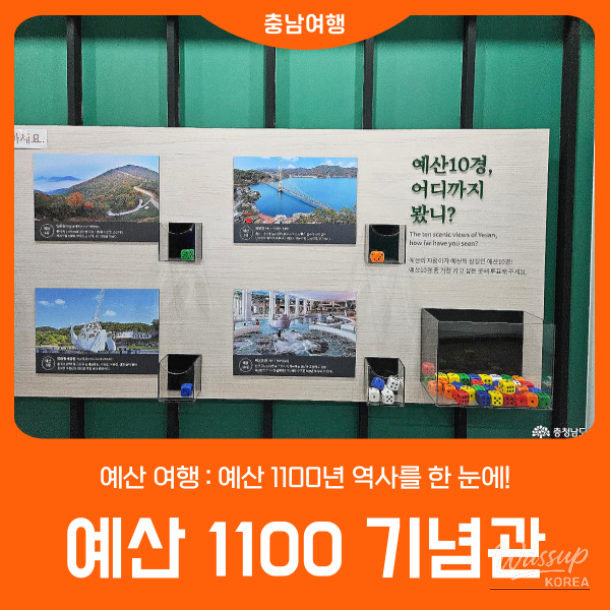
In the heart of Chungcheongnam-do, the city of Yesan celebrates a staggering milestone: over 1,100 years of documented history. To honor this legacy, the Yesan 1100 Memorial Hall was established on the scenic Cherry Blossom Road. While many locals frequent the building for its modern swimming pool and public library, the true treasure lies on the third floor—a historical and cultural hall that meticulously traces the city's journey from ancient kingdoms to the modern era.
Whether you're curious about why the name "Yesan" first appeared in the year 919 or want to discover how the West Sea once reached this inland city, the memorial hall offers a comprehensive look at the region's strategic, religious, and economic importance. It is more than just a museum; it is a cultural starting point for anyone looking to truly understand the spirit of Chungcheong province.
The Birth of a Name: From Osan to Yesan
A Historical Identity Formed in 919 AD
The memorial hall takes its name from the year 919, during the Goryeo Dynasty, when the name "Yesan-hyeon" was officially adopted. Before this, the area was known as Osan-hyeon during the Baekje period and Gosan-hyeon under Unified Silla. This long-standing identity is a point of great pride for the residents, representing over a millennium of continuous regional history.
The third-floor cultural hall serves as a portal to this past. Visitors can explore exhibits detailing how Yesan was a pivotal battleground during the unification struggles between Wang Geon of Goryeo and Gyeon Hwon of Hubaekje. It was here that King Taejo Wang Geon issued significant public proclamations, marking Yesan as a central nervous system for the nascent Goryeo Dynasty.
Naepo: Where the Sea Met the Land
Uncovering the Water-Bound Trade Routes of the Past
One of the most surprising historical facts revealed at the hall is the origin of the name "Naepo." In ancient times, the waters of the West Sea reached deep into the inland plains of Yesan. This geography allowed for fertile agricultural land on the Yeongdong Plain and established Yesan as a vital hub for maritime trade. The hall explains how names like Sapgyo are deeply rooted in this water-based history.
The strategic importance of this terrain is further highlighted by Imjoseong, one of Yesan's ten scenic spots. This fortress was the center of the Baekje Restoration Movement led by Heukchi Sangji. Standing at the intersection of history and geography, the memorial hall helps visitors visualize how these ancient landscapes dictated the course of Korean history.
A Sanctuary of Buddhist Art and Culture
Home to Sudeoksa and the First Seated Buddha
Yesan’s historical significance isn't limited to politics and trade; it is a cornerstone of Korean Buddhist history. The memorial hall features the story of Sudeoksa Temple, which houses one of the oldest wooden structures in Korea. Additionally, the stone seated Buddha in Hwajeon-ri is recognized as the first of its kind in the country, marking a critical evolution in Buddhist art history.
The historical and cultural hall also provides a dedicated space for "hands-on" experiences. Currently, a special exhibition of old photographs allows visitors to see the rapid industrial transformation of the city, providing a nostalgic look at the lives of Yesan residents through the 20th century.

Family-Friendly Facilities and Visitor Tips
Parking, Libraries, and the Kids Park
The Yesan 1100 Memorial Hall is part of the larger Yesan & You Happiness Center. This makes it an excellent destination for families, as the complex includes a modern public library and a Kids Park (kids' café). Parents can explore the historical exhibits while children enjoy the play facilities, or vice versa.
- Parking: The facility features an expansive parking lot that is free of charge, ensuring a stress-free visit even during weekends.
- Accessibility: The historical hall is located on the 3rd floor. Look for the dedicated elevator that leads directly to the cultural exhibits.
- Walking Distance: Located near the town center, it is easily accessible by foot for those staying in Yesan-eup.
Exploring the roots of a city that has thrived for 1,100 years offers a profound perspective on the endurance of culture. Have you ever visited a city that was once a port, only to find it inland today? If you're visiting the memorial hall, would you like me to help you plan a follow-up trip to the ancient wooden halls of Sudeoksa Temple nearby?
No comments yet.