Exploring the Architectural Significance of the Muryangsujeon Hall



1. Introduction.
Before visiting the Beoseoksa Temple, I considered reading the renowned book titled "Resting Against the Curved Pillars of Muryangsujeon" at a second-hand bookstore. However, upon browsing through it, I realized that it merely contained selected writings from the esteemed writer Choi Soon-woo, rather than in-depth information about Muryangsujeon itself, which led me to decide against purchasing it.
Muryangsujeon is a building of great architectural, historical, and Buddhist significance, often described in complex terms online. Although it was built on the outskirts of the once-bustling city of Kaesong, it now stands as a representative architecture of the Goryeo Dynasty, illustrating the unpredictable nature of history.
If one were to utilize Choi Soon-woo's book, I believe it would be necessary to focus solely on Muryangsujeon without explanations of other artifacts, as there is much to discuss regarding this hall. However, contrary to my initial thoughts, the book "The World of Dancheong in Korean Mountain Temples" provides a general overview of Muryangsujeon, allowing me to extract key points and utilize available photographs within copyright limits to explain the structure of Beoseoksa.
I initially considered incorporating this into an existing travelogue, but I felt it would disrupt the flow of the writing, so I decided to create a separate piece instead. I plan to base this on the work of Noh Jae-hak and later incorporate additional materials to form a more systematic narrative.
2. Background of Beoseoksa.
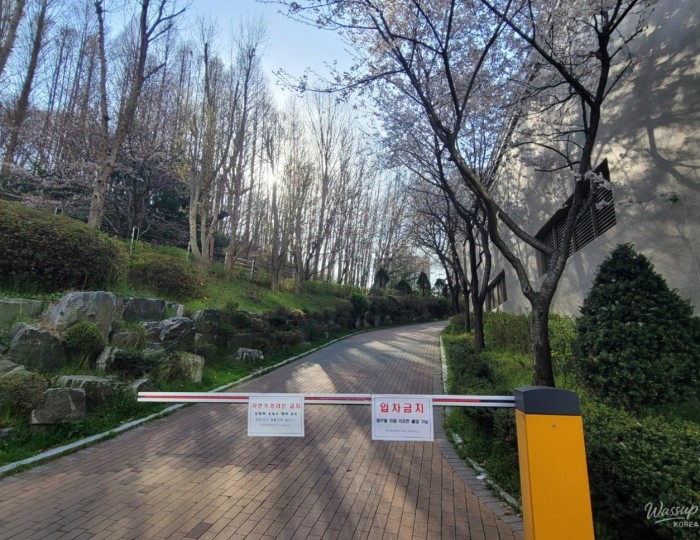
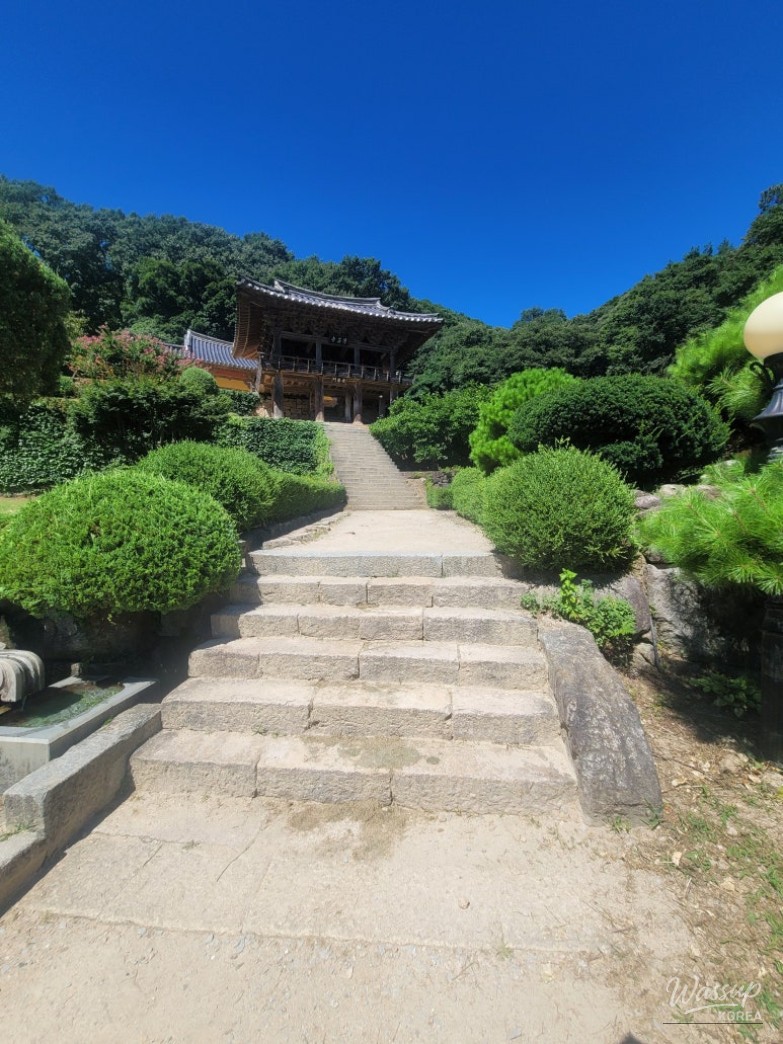
From my personal experience visiting, the path leading to Beoseoksa feels like a gradual ascent along stone steps through a flat field. While it was hot during summer, the climb did not feel steep.
There are various Buddhist doctrines, but it is said that Beoseoksa's formation is based on two concepts: the "Seven Places and Eight Meetings" from the "Flower Garland Sutra" and the Pure Land concept from the "Amitabha Sutra."
The term "Seven Places and Eight Meetings" refers to significant locations and gatherings during the Buddha's lifetime, which may indicate important teachings he delivered. The Pure Land concept outlines nine methods (three high, three medium, three low) for beings to attain the Pure Land.
Considering these foundations, the concept applied by Master Uisang at Beoseoksa likely aligns with "Amitabha Faith," which seeks rebirth in a pure land where everyone is free from suffering and filled with happiness.
3. The Structure of Beoseoksa.
As mentioned in travelogues, the ascent to Beoseoksa presents a vast ridge, reminiscent of an escalator, without a steep feeling. The construction utilizes various architectural techniques such as vertical, horizontal, and diagonal elements, aiming to create a path leading to Muryangsujeon.
4. Muryangsujeon.
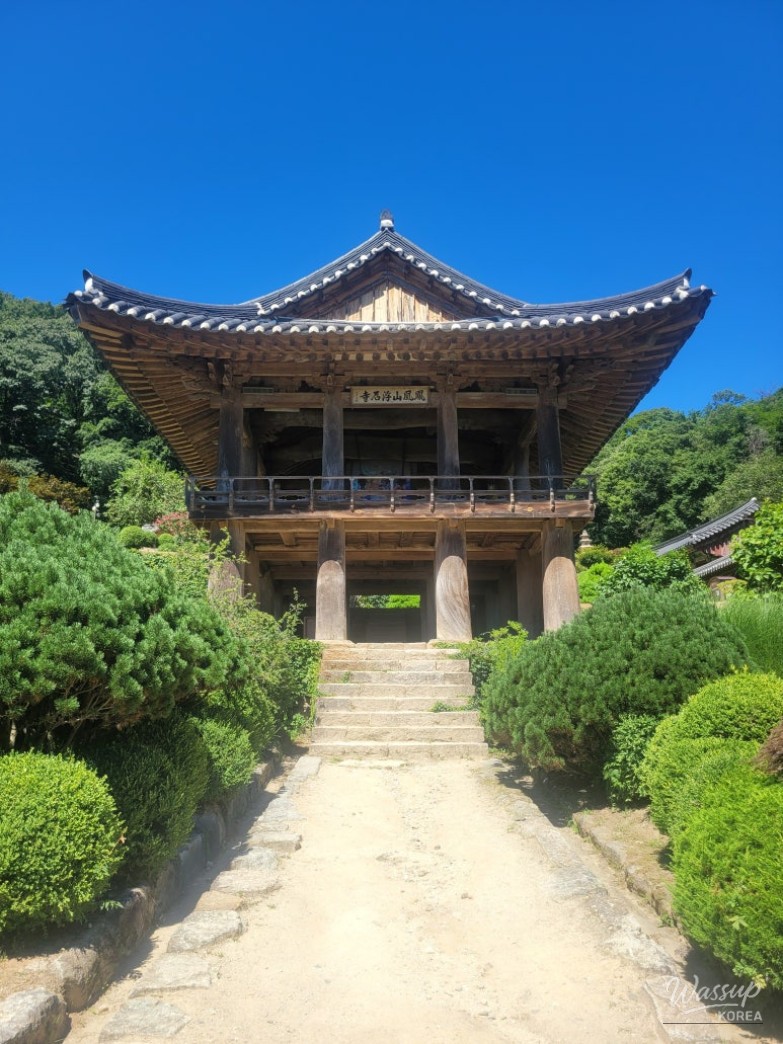
Muryangsujeon is the hall enshrining Amitabha Buddha. While I could link to a detailed report on Muryangsujeon, I find the information overwhelming, and thus, I will not elaborate further here. However, the hall's famous "curved pillars" are noteworthy. These pillars are broader in the middle compared to the top and bottom, contributing to the hall's aesthetic appeal.
5. About the Amitabha Statue.
The Amitabha statue at Beoseoksa is significant, as it embodies the gesture of "subduing Mara," symbolizing the Buddha's enlightenment. The inscription on the "Beoseoksa Wonyung National Master Stele" states that only the Amitabha statue is enshrined in Muryangsujeon, emphasizing its exclusivity.
6. Conclusion.
Today, I explored Muryangsujeon. Although my understanding is still limited, I hope this writing serves as a foundation for future studies on the subject.

Source :https://blog.naver.com/kyle092/224160725193
No comments yet.