Exploring Cultural Heritage: A Journey Through Seoul
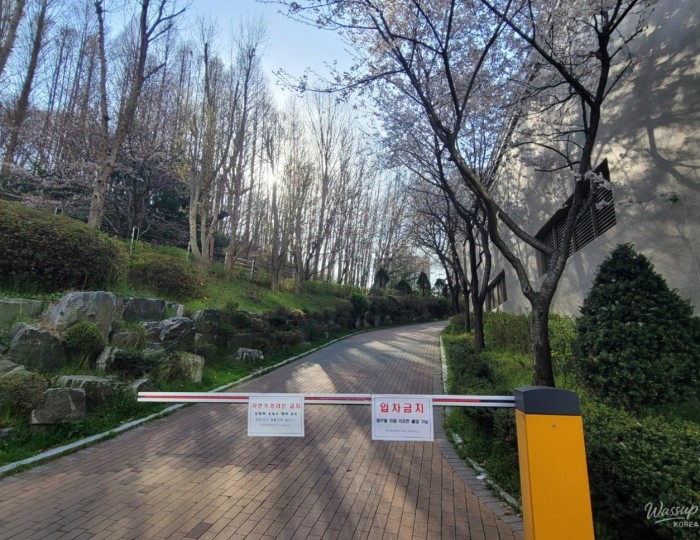
서울특별시 서대문구 현저동 941


This post continues the cultural heritage exploration from Day 1, focusing on reflections, corrections, and deeper understanding gained five years later while reviewing old records and photographs.
Day 2 unfolds against the unique backdrop of May 2020, when COVID-19 reshaped daily life, academic schedules, and even teacher training interviews, blending personal memory with historical places in Seoul.
The journey moves through Seochon, Deoksugung Palace, Won-gudan, and the former Mitsukoshi Department Store, connecting modern Korean literature, colonial history, and personal growth.
Day 2 Begins During an Unusual Time
May 2020 remains a strange and unforgettable period. Due to COVID-19, many academic schedules were delayed, including teacher training interviews, which were conducted through Zoom instead of in person.
At the time, interviews took place online from dorm rooms rather than the Education Science Building. The unfamiliar format felt awkward yet memorable, especially with multiple interviewees sharing the same virtual space.
Attempting to Visit Lee Sang’s House in Seochon
The original plan for Day 2 was to visit Lee Sang’s house in Seochon. At the time, the purpose was framed as examining modernity and intellectual thought during the 1920s and 1930s through his literary works.

Looking back, this motivation was shaped strongly by a demanding modern Korean literature course that required reading Lee Sang’s original texts. The academic struggle and fascination blended together, fueling the decision to include his house in the exploration.
However, the visit ended in failure due to arriving during lunchtime, leading to a change in plans and a promise to return later.

Walking Through History at Deoksugung Palace
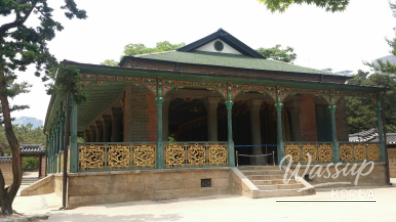
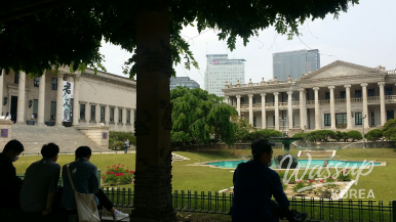
Deoksugung Palace became the next destination. Originally the home of Prince Wolsan, it later served as King Seonjo’s temporary residence after the Imjin War and held Queen Inmok during Gwanghaegun’s reign.
The palace holds deep historical significance, spanning the founding of the Korean Empire in 1897 and the loss of sovereignty in 1910. Buildings such as Seokjojeon and Jungmyeongjeon embody these turbulent transitions.
While reflecting on history, there was also a quiet sense of relief after finishing midterm exams, blending personal emotion with the solemn atmosphere of the palace grounds.

Seokjojeon and Jungmyeongjeon Reflections
Due to COVID-19 restrictions, only limited exhibition areas inside Seokjojeon were accessible. Despite this, the space still conveyed the gravity of the Eulsa Treaty and King Gojong’s reform efforts.
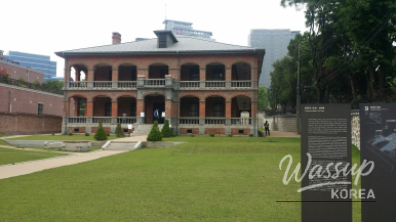
Jungmyeongjeon, often overlooked due to its location, stood out as the site where the Eulsa Treaty was signed. Interactive exhibits, quizzes, and photo zones added depth to the historical experience.

Won-gudan, Hwanggungwoo, and the Meaning of Ritual
The site where the Chosun Western Hotel now stands once housed Won-gudan, a ceremonial altar symbolizing imperial authority during the Korean Empire.
After annexation, the Japanese Government-General demolished Won-gudan and built a Western-style hotel to host foreign guests. Today, only Hwanggungwoo remains as a reminder of those state rituals.
Although access to Hwanggungwoo was restricted due to an event, its symbolic role as a declaration of sovereignty remained clear.
From Mitsukoshi Department Store to Seoul Station
The walk continued to the present-day Shinsegae Department Store, originally the Mitsukoshi Department Store during the Japanese colonial period. Its location represented the commercial heart of Honmachi.
After liberation, the building’s role shifted through confiscation, renaming, and even use as a U.S. military base during the Korean War, reflecting Seoul’s layered modern history.
Standing on the rooftop in daylight later that day, memories of Lee Sang’s literary scenes surfaced naturally, blurring the boundary between text, place, and personal reflection.

Closing the Five-Year-Delayed Exploration
While waiting at Seoul Station, thoughts returned to Lee Sang’s imagery of coffee, movement, and modern life. Despite the difficulties caused by COVID-19, completing the exploration safely felt meaningful.
This marks the conclusion of an exploration report postponed for five years, revisited through memory, correction, and deeper understanding.


No comments yet.