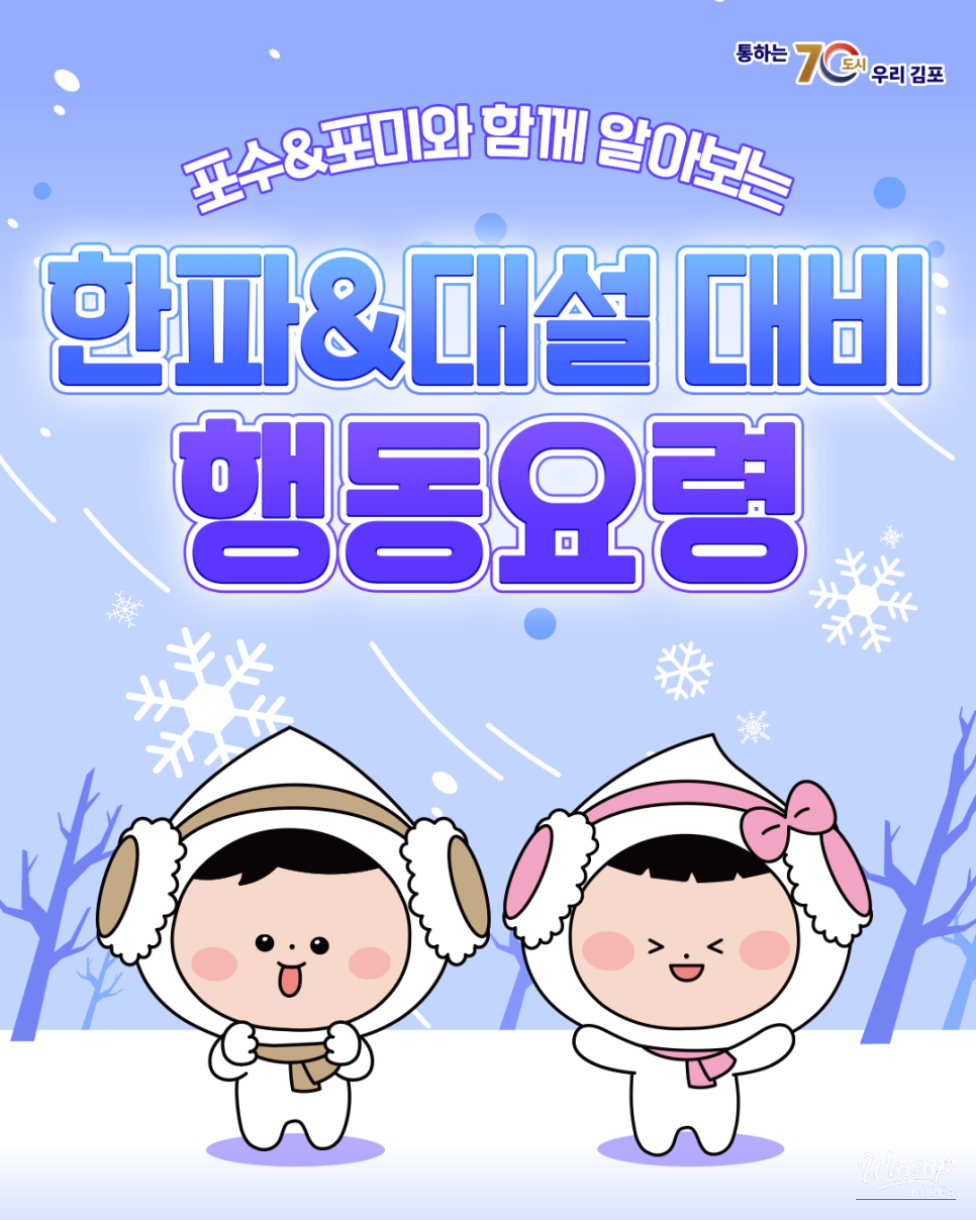
Winter Preparedness: Guidelines for Cold Waves and Heavy Snow


Cold waves can lead to hypothermia and frostbite, causing cold-related illnesses.
Heavy snowfall can rapidly accumulate, resulting in facility collapses and traffic accidents.
It is crucial to be aware of these risks, especially during winter.
Now, let's discuss the 'Guidelines for Dealing with Cold Waves and Heavy Snow.'
What are Cold Waves and Heavy Snow?
Cold waves can cause hypothermia and frostbite, and in severe cases, can lead to death.
Heavy snowfall can accumulate quickly, leading to various damages such as facility collapses and traffic accidents.
During winter, it is essential to be familiar with the 'National Action Guidelines' to prevent such incidents!
Guidelines for Cold Waves
Limit outdoor activities.
Refrain from outdoor activities, especially for vulnerable groups like children and the elderly.
Maintain warmth.
Wear scarves, gloves, and hats when going out, and avoid putting your hands in your pockets.
Prevent pipe freezing.
Insulate water meters and pipes with old clothes or heat packs to prevent freezing.
Keep a faucet running slightly.
When going out for more than a day, leave a faucet running slightly to prevent pipe freezing.
Maintain a safe distance.
Be cautious of icy roads and drive slowly while maintaining a safe distance.
Prepare winter supplies.
Prepare winter supplies like snow chains and check your vehicle's antifreeze.
If frostbite occurs,
Wash the affected area in warm water (40°C) and maintain warmth while quickly going to the hospital.
Do not use heaters indoors.
To prevent suffocation accidents, avoid using heaters in enclosed spaces like tents.
Guidelines for Heavy Snow
Check weather information regularly.
Stay updated on weather conditions to prepare for heavy snow.
Prevent falls.
Clear snow in front of your home or business to prevent falls.
Avoid slips.
Do not use bicycles or electric scooters to prevent slips.
Conduct snow removal safely.
Snow removal should be done during the day with at least two people, ensuring safety.
Avoid dangerous structures.
Stay away from trees and old structures that may collapse.
Drive cautiously.
Maintain a safe distance and drive slowly on snowy or icy roads.
Use snow chains.
Use snow chains or spray chains when it snows.
Stock essential supplies.
Keep emergency lighting, warming items (blankets, heat packs), easy meals, drinking water, and fuel at home and in your vehicle.
Familiarize yourself with these guidelines and have a safe and warm winter!


Source :https://blog.naver.com/gimpo2010/224152947973
No comments yet.